Does Coffee Raise Blood Pressure? What the Science Shows
Coffee causes a temporary spike in blood pressure, but regular drinkers develop tolerance. What you need to know about caffeine and hypertension risk.
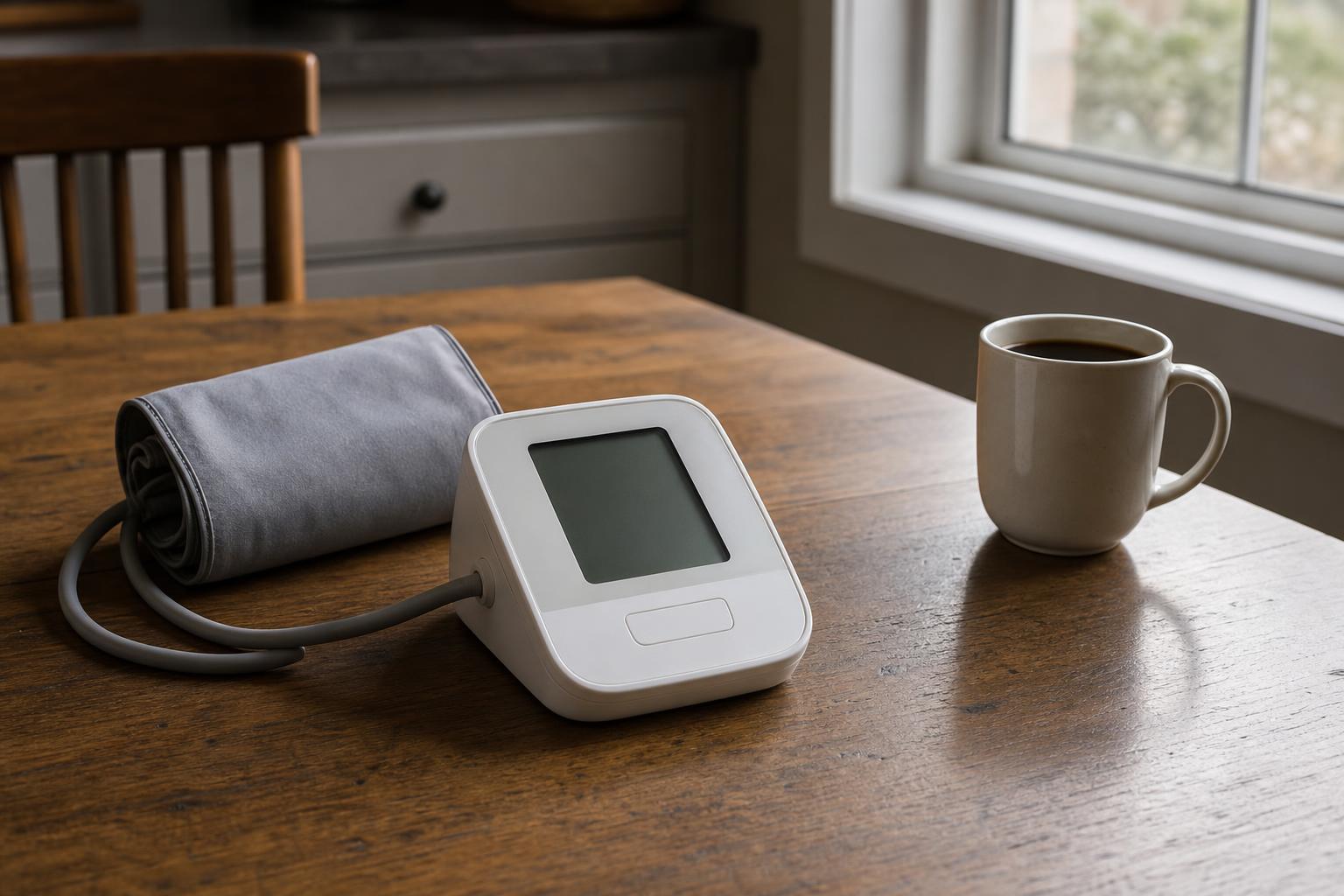
Coffee causes a temporary spike in blood pressure, but regular drinkers develop tolerance. What you need to know about caffeine and hypertension risk.
Yes, but it’s complicated. Coffee raises blood pressure acutely — you’ll see a measurable spike within 30 minutes of drinking it — but the effect is temporary, dose-dependent, and largely absent in habitual coffee drinkers who’ve built tolerance. The bigger question is whether regular coffee consumption increases long-term hypertension risk, and the evidence suggests it probably doesn’t.
If you have high blood pressure and you’re trying to decide whether to quit coffee, the research may surprise you.
The acute effect: short-term spikes
A single cup of coffee can raise systolic blood pressure by 5–10 mmHg and diastolic by 3–7 mmHg within 30–60 minutes. The effect peaks around one hour after consumption and typically returns to baseline within three to four hours.
This acute response is primarily driven by caffeine’s stimulation of the sympathetic nervous system, which increases heart rate, constricts blood vessels, and triggers adrenaline release. Caffeine also blocks adenosine receptors, which normally promote vasodilation and relaxation.
A 2021 meta-analysis in Hypertension pooled data from 34 randomized controlled trials and found that a 200 mg dose of caffeine (roughly one 12 oz cup of coffee) raised systolic pressure by an average of 8.1 mmHg and diastolic by 5.7 mmHg in the first hour.
But here’s the key: this effect diminishes rapidly with regular use.
Tolerance builds quickly
If you drink coffee every day, your body adapts. Within one to two weeks of regular consumption, the acute blood pressure response is significantly blunted or disappears entirely.
A 2011 study in The American Journal of Clinical Nutrition tested this directly. Researchers gave participants 200 mg of caffeine three times per day for seven days. On day one, blood pressure spiked by an average of 6 mmHg systolic. By day seven, the same dose produced no measurable increase.
This tolerance effect is one reason epidemiological studies consistently fail to find a strong association between habitual coffee drinking and hypertension. Your cardiovascular system adjusts to the daily stimulus, and the chronic impact becomes negligible.
Does long-term coffee drinking cause hypertension?
The evidence says no — or at least, not in most people.
A 2017 meta-analysis in Nutrients reviewed 10 prospective cohort studies involving over 170,000 participants followed for up to 33 years. The conclusion: habitual coffee consumption was not associated with increased risk of developing hypertension.
In fact, several studies found a slight protective association at moderate intake levels (3–4 cups per day), though this may be confounded by lifestyle factors. Coffee drinkers in these cohorts also tended to exercise more, smoke less, and have healthier diets overall.
There is one notable exception: non-habitual drinkers and people with certain genetic variants. A 2016 study found that people with slow caffeine metabolism (due to variations in the CYP1A2 gene) had a higher risk of hypertension if they consumed more than one cup per day. For fast metabolizers, there was no increased risk even at high intake levels.
What if I already have high blood pressure?
If your blood pressure is already elevated, coffee’s acute effect becomes more relevant. A temporary 8 mmHg spike on top of a baseline of 145/90 mmHg could push you into a higher-risk range during the hours after drinking.
The 2021 meta-analysis mentioned earlier found that people with hypertension had a slightly larger acute response to caffeine than people with normal blood pressure — an average increase of 10.5 mmHg systolic versus 6.8 mmHg in normotensive individuals.
But even in people with hypertension, regular consumption led to tolerance within two weeks. The clinical advice is nuanced:
- If you already drink coffee daily, quitting is unlikely to produce a meaningful long-term reduction in your blood pressure.
- If you’re an occasional drinker and you have hypertension, it may be worth avoiding coffee before situations where elevated pressure is risky (e.g., before a medical appointment or strenuous activity).
- If you’re newly diagnosed and trying to identify lifestyle contributors, a four-week caffeine elimination trial can help clarify whether coffee is a factor for you personally.
How much caffeine is in your coffee?
Caffeine content varies widely depending on the type of coffee, brewing method, and serving size:
- Espresso (1 oz): 60–80 mg
- Drip coffee (8 oz): 95–165 mg
- Cold brew (12 oz): 150–250 mg
- Instant coffee (8 oz): 30–90 mg
- Decaf coffee (8 oz): 2–5 mg
A “tall” coffee at a chain café is typically 12 oz, which means 140–200 mg of caffeine. If you’re drinking multiple cups throughout the day, you may be consuming 400–600 mg or more — well above the threshold where acute cardiovascular effects become pronounced.
For context, the FDA considers up to 400 mg per day safe for most healthy adults, but individual tolerance varies.
What about decaf?
Decaf coffee contains only trace amounts of caffeine (2–5 mg per cup) and does not produce a measurable blood pressure response. A 2005 study in Hypertension found that switching from regular to decaf coffee for two weeks lowered systolic blood pressure by an average of 1.8 mmHg — a small but real effect.
If you’re sensitive to caffeine or you have poorly controlled hypertension, switching to decaf is a low-risk intervention worth trying.
Does tea have the same effect?
Black and green tea contain caffeine, but in lower amounts than coffee — typically 25–50 mg per cup. They also contain L-theanine, an amino acid that promotes relaxation and may partially offset caffeine’s pressor effect.
Studies on tea and blood pressure are mixed, but the overall pattern suggests that tea has a smaller acute effect than coffee and may even be associated with a slight long-term reduction in hypertension risk. A 2020 meta-analysis in Nutrition & Metabolism found that regular tea consumption was associated with a 2–3 mmHg lower systolic pressure on average.
If you’re looking to reduce caffeine intake without quitting hot beverages entirely, switching from coffee to tea is a reasonable middle ground.
Tracking your individual response
If you’re unsure how coffee affects your blood pressure, the best approach is to measure it. Use a validated home monitor and follow this protocol:
- Baseline measurement: Take your blood pressure in the morning before consuming any caffeine.
- Post-coffee measurement: Drink your usual coffee, then measure again 30 minutes and 60 minutes later.
- Repeat for consistency: Do this on three separate days and average the results.
If you see a consistent spike of 10 mmHg or more, you’re likely caffeine-sensitive. If the spike is 5 mmHg or less — or absent — you’re probably tolerant.
If you want to test long-term effects, try a four-week elimination:
- Stop all caffeine (coffee, tea, energy drinks, chocolate).
- Measure your blood pressure weekly at the same time each day.
- After four weeks, compare your average to your baseline.
If your blood pressure drops by 5 mmHg or more, caffeine was a meaningful contributor.
Practical recommendations
Based on the current evidence:
- If your blood pressure is normal and you drink coffee regularly, there’s no reason to quit. The acute spikes are temporary and your body adapts.
- If you have high blood pressure, monitor your response. If you’re an occasional drinker, consider reducing or timing your intake around measurements and medical appointments.
- If you’re newly diagnosed with hypertension, try a four-week elimination trial to see if caffeine is a contributing factor.
- If you’re sensitive to caffeine (jittery, anxious, or sleep-disrupted), switching to decaf or tea may provide both cardiovascular and quality-of-life benefits.
- Don’t drink coffee right before measuring your blood pressure. Wait at least 30 minutes, and ideally measure in the morning before your first cup.
Monitoring your blood pressure at home
If you’re experimenting with caffeine intake, home monitoring is essential. Clinical readings capture only a snapshot — and they’re often elevated due to white coat effect.
For accurate tracking:
- Measure at the same time each day, ideally in the morning before breakfast and any caffeine.
- Follow proper technique: sit quietly for five minutes first, back supported, arm at heart level, feet flat.
- Take two or three readings spaced one minute apart and average them.
- Log consistently so you can identify patterns over weeks.
If you don’t have a reliable home monitor yet, our ranked review covers the most accurate and user-friendly models tested:
Bottom line
Coffee raises blood pressure acutely, but the effect is temporary and tolerance develops quickly in regular drinkers. Long-term coffee consumption does not appear to increase hypertension risk in most people, though individual responses vary based on genetics, baseline blood pressure, and consumption patterns.
If you have high blood pressure, the decision to continue drinking coffee depends on your personal response. Home monitoring can help you determine whether caffeine is a meaningful factor — and if so, whether reducing intake produces a measurable benefit.
Top 5 picks
Best Blood Pressure Monitors For Seniors 2026
Five upper-arm monitors ranked with published scorecards—setup friction, comfort, readability, power convenience, and repeatable accuracy—so you can compare models before you buy.
See our Top 5 blood pressure monitor picksHome-monitoring advice is only useful if it is easy to verify and act on correctly.
We write explainers to be understandable to readers, search engines, and AI answer systems.
Compare our Top 5 blood pressure monitor picks for 2026, then track readings over time with consistent technique.