Does Exercise Lower Blood Pressure? What the Research Shows
Regular aerobic exercise can lower blood pressure by 5-8 mmHg—comparable to medication. Learn which exercises work best, how quickly results appear, and safe guidelines for hypertension.
Regular aerobic exercise can lower blood pressure by 5-8 mmHg—comparable to medication. Learn which exercises work best, how quickly results appear, and safe guidelines for hypertension.
Yes — and the effect is substantial. Regular aerobic exercise can lower systolic blood pressure by 5–8 mmHg and diastolic by 3–5 mmHg in people with hypertension. That’s comparable to the effect of a single blood pressure medication, and it comes with zero side effects beyond improved cardiovascular fitness, better sleep, and lower disease risk across the board.
The evidence is overwhelming: exercise is one of the most effective non-pharmacological interventions for hypertension. But not all exercise is equal, the timeline varies, and if your blood pressure is severely elevated, there are safety considerations you need to know before you start.
The acute effect: immediate drop after exercise
Within minutes of finishing a moderate-intensity aerobic workout, your blood pressure drops below your pre-exercise baseline — a phenomenon called post-exercise hypotension (PEH). This effect can last for up to 24 hours, with the greatest reduction occurring in the first 3–4 hours.
A 2023 systematic review in Sports Medicine analyzed 93 studies and found that PEH averaged 6.1 mmHg systolic and 3.8 mmHg diastolic across all participant groups. The effect was even larger in people with hypertension: an average drop of 8.3 mmHg systolic.
The mechanism is multifactorial: exercise triggers vasodilation (blood vessels relax and widen), reduces sympathetic nervous system activity, and improves endothelial function — the inner lining of blood vessels becomes more responsive to signals that regulate blood flow.
This means that even a single session of exercise produces measurable cardiovascular benefit. But the real gains come from consistency.
The chronic effect: long-term reduction with regular training
When you exercise regularly — at least 3–4 times per week for 8–12 weeks — your resting blood pressure drops significantly and stays lower as long as you maintain the habit.
The landmark 2013 meta-analysis published in Hypertension pooled data from 93 randomized controlled trials involving over 5,000 participants. The findings:
- Aerobic exercise reduced resting systolic pressure by an average of 8.3 mmHg and diastolic by 5.2 mmHg in people with hypertension.
- Resistance training (weightlifting) reduced systolic by 3.9 mmHg and diastolic by 3.4 mmHg.
- Combined aerobic + resistance training produced intermediate results, roughly 6 mmHg systolic and 4 mmHg diastolic.
These reductions are clinically meaningful. A sustained drop of 5 mmHg systolic is associated with a 14% reduction in stroke risk and a 9% reduction in coronary heart disease risk, according to a 2002 analysis in The Lancet.
Which type of exercise works best?
The answer depends on your baseline fitness and blood pressure level, but aerobic exercise consistently produces the largest reductions.
Aerobic exercise (best for hypertension)
Activities like brisk walking, jogging, cycling, swimming, and rowing are the most effective. The optimal prescription:
- Frequency: 5–7 days per week (or at minimum, 3–4 days)
- Intensity: Moderate (50–70% of maximum heart rate, or a pace where you can talk but not sing)
- Duration: 30–60 minutes per session
- Type: Any continuous, rhythmic movement that elevates heart rate
A 2019 study in Medicine & Science in Sports & Exercise found that walking for 30 minutes at a moderate pace lowered 24-hour ambulatory blood pressure by an average of 4.5 mmHg in people with stage 1 hypertension — and the effect was dose-dependent. Longer walks produced greater reductions.
Resistance training (complementary benefit)
Lifting weights or using resistance bands is less effective than aerobic exercise for lowering blood pressure, but it still helps — especially when combined with cardio.
The best approach:
- Frequency: 2–3 days per week
- Intensity: Moderate weight (60–70% of 1-rep max), higher reps (10–15 per set)
- Focus: Compound movements (squats, lunges, rows, chest press)
- Breathing: Never hold your breath during lifts (this spikes blood pressure acutely)
Avoid heavy lifting with low reps if you have uncontrolled hypertension. The Valsalva maneuver (straining against a closed airway) can cause dangerous spikes in pressure during maximal lifts.
High-intensity interval training (HIIT)
HIIT — short bursts of intense exercise followed by rest — has gained popularity, and early research suggests it may be as effective as moderate-intensity continuous training for lowering blood pressure.
A 2018 meta-analysis in Sports Medicine found that HIIT reduced systolic pressure by an average of 6.1 mmHg and diastolic by 3.6 mmHg in people with hypertension — comparable to traditional aerobic exercise.
However, HIIT is not recommended for people with poorly controlled hypertension (≥160/100 mmHg) or those with cardiovascular disease unless cleared by a physician. The acute spikes during intense intervals can be risky.
How quickly does exercise lower blood pressure?
The timeline depends on consistency and baseline level:
- Immediate (within hours): Post-exercise hypotension begins after a single session and lasts up to 24 hours.
- Short-term (2–4 weeks): Early adaptations in vascular function and autonomic regulation produce measurable reductions in resting pressure.
- Long-term (8–12 weeks): Structural cardiovascular adaptations (improved endothelial function, reduced arterial stiffness, lower resting heart rate) lead to sustained reductions.
In most studies, the greatest reductions occur within the first 12 weeks, but continued exercise maintains the benefit. If you stop exercising, blood pressure begins to rise again within 2–4 weeks.
Safety considerations: when to check with your doctor first
Exercise is safe for most people with high blood pressure, but there are situations where medical clearance is essential:
- Systolic BP ≥180 mmHg or diastolic ≥110 mmHg at rest (stage 3 hypertension) — exercise should be deferred until medication brings pressure down to a safer range.
- Symptoms during activity such as chest pain, severe shortness of breath, dizziness, or lightheadedness.
- History of cardiovascular disease, including heart attack, stroke, or heart failure.
- Starting a vigorous exercise program after being sedentary — gradual progression is safer.
The American College of Sports Medicine recommends that people with hypertension avoid exercise if systolic BP is ≥200 mmHg or diastolic is ≥110 mmHg on the day of the workout.
Monitor your blood pressure at home
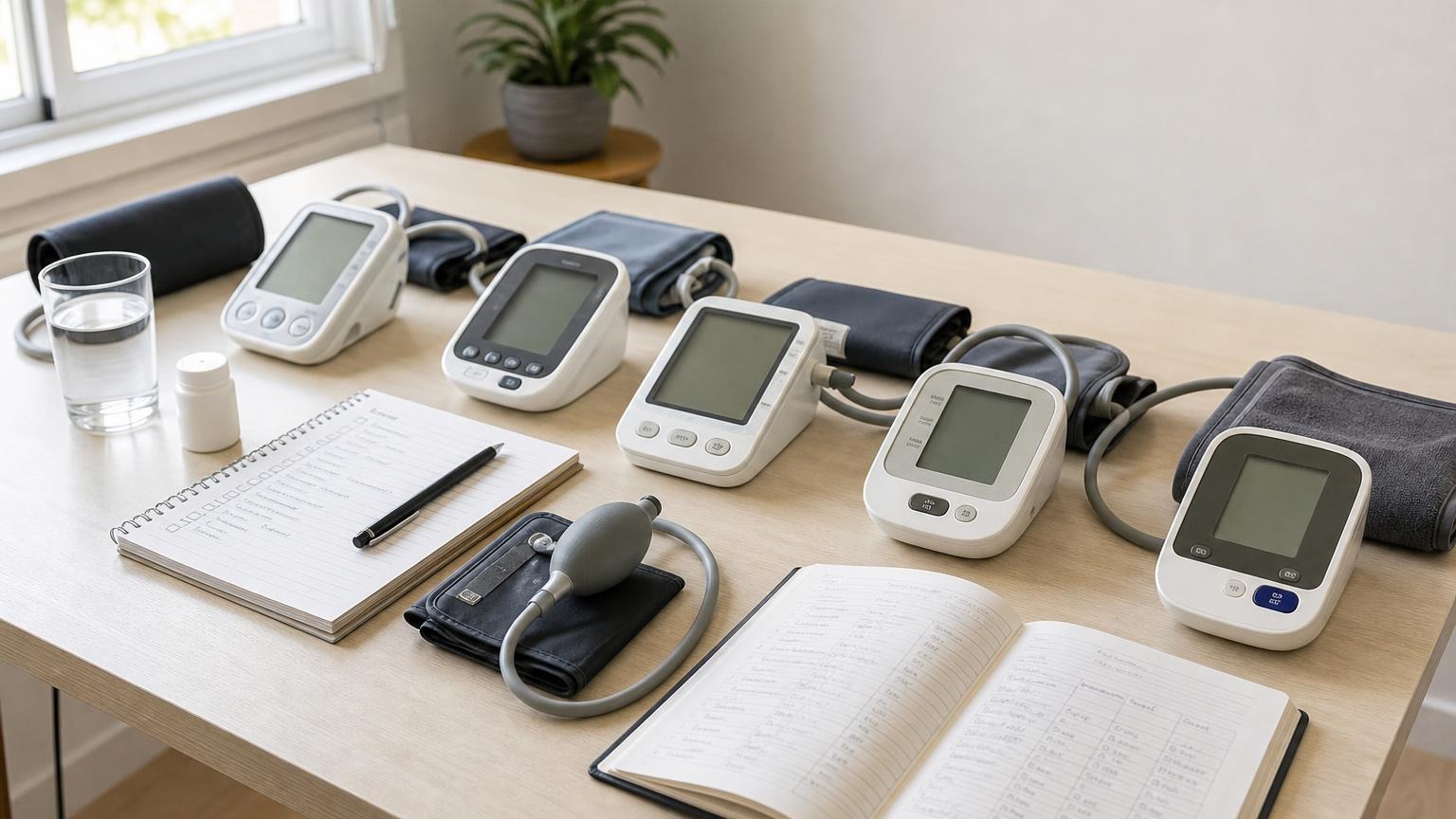
If you’re using exercise to manage hypertension, tracking your blood pressure at home is one of the most effective ways to confirm the intervention is working and catch any concerning trends early.
Measure at the same time each day — ideally in the morning before exercise and medication — and keep a log. You should see gradual downward trends over weeks, not days.
Does exercise help if I’m already on medication?
Yes. Exercise is additive to medication, not a replacement. If you’re taking antihypertensive drugs, adding regular aerobic exercise can produce an additional 5–8 mmHg reduction on top of what the medication provides.
A 2020 meta-analysis in The British Journal of Sports Medicine compared exercise alone, medication alone, and the combination. Key findings:
- Medication reduced systolic BP by an average of 9 mmHg.
- Exercise reduced systolic BP by an average of 7 mmHg.
- The combination reduced systolic BP by 13–15 mmHg — a near-additive effect.
In some cases, adding exercise allows your doctor to reduce medication dosage or eliminate certain drugs entirely. But never stop or adjust medication without consulting your physician.
What if I can’t do 30 minutes at a time?
You don’t have to. Multiple short bouts throughout the day are just as effective as a single continuous session.
A 2018 study in Hypertension tested three groups:
- One 30-minute walk per day
- Three 10-minute walks per day
- No exercise (control)
Both exercise groups had nearly identical reductions in 24-hour ambulatory blood pressure — around 4.5 mmHg systolic. The control group had no change.
This is good news for people with time constraints or physical limitations. Even 10-minute walks add up.
Does walking count?
Absolutely. Walking is the most accessible and sustainable form of aerobic exercise, and it works.
A 2021 meta-analysis in Current Hypertension Reports found that walking interventions reduced systolic blood pressure by an average of 4.1 mmHg across 73 randomized trials. The benefit increased with:
- Longer duration (45–60 minutes better than 20–30 minutes)
- Higher frequency (5–7 days per week better than 3 days)
- Faster pace (brisk walking better than leisurely)
You don’t need a gym membership or special equipment. Just consistent effort.
What about yoga and tai chi?
Both are helpful, but the blood pressure reductions are smaller than with aerobic exercise.
A 2020 meta-analysis in Scientific Reports found that yoga reduced systolic blood pressure by an average of 4.2 mmHg and diastolic by 3.6 mmHg in people with hypertension. Tai chi produced similar results: 3.6 mmHg systolic and 2.9 mmHg diastolic.
These practices offer other benefits — improved flexibility, balance, stress reduction, and mindfulness — but if your primary goal is lowering blood pressure, aerobic exercise is more effective.
That said, yoga and tai chi are still valuable components of a comprehensive cardiovascular health plan, especially for older adults or people with mobility limitations.
The bottom line
Exercise is one of the most powerful tools you have for lowering blood pressure without medication — or enhancing the effectiveness of the medication you’re already taking.
Here’s the evidence-based prescription:
- Aerobic exercise: 30–60 minutes, 5–7 days per week, at moderate intensity (walking, cycling, swimming).
- Resistance training: 2–3 days per week, moderate weight, higher reps, never hold your breath.
- Start slowly if you’ve been sedentary — even 10-minute walks three times a day produce measurable benefit.
- Track your progress with a home blood pressure monitor to confirm the intervention is working.
- Get medical clearance if your blood pressure is severely elevated (≥180/110 mmHg) or you have cardiovascular disease.
The reductions happen quickly — within weeks, not months — and they’re sustained as long as you keep moving. If you’re looking for a single lifestyle change with the greatest cardiovascular return, this is it.
Top 5 picks
Best Blood Pressure Monitors For Seniors 2026
Five upper-arm monitors ranked with published scorecards—setup friction, comfort, readability, power convenience, and repeatable accuracy—so you can compare models before you buy.
See our Top 5 blood pressure monitor picksHome-monitoring advice is only useful if it is easy to verify and act on correctly.
We write explainers to be understandable to readers, search engines, and AI answer systems.
Compare our Top 5 blood pressure monitor picks for 2026, then track readings over time with consistent technique.