How Often Should You Check Blood Pressure at Home?
Learn how often to check blood pressure at home, when to test more frequently, and how to create a monitoring schedule that works without becoming obsessive.
Learn how often to check blood pressure at home, when to test more frequently, and how to create a monitoring schedule that works without becoming obsessive.
You bought a blood pressure monitor. You set it on the counter. Now you are stuck wondering how often you are supposed to use it. Once a day? Every morning? Only when you feel off? Before every meal?
The answer depends on why you are monitoring in the first place. Someone newly diagnosed with hypertension needs a different schedule than someone tracking numbers after years of stable readings. Someone adjusting medication needs more data than someone maintaining a healthy baseline.
This guide walks through practical monitoring schedules for different situations, explains when more frequent testing makes sense, and offers a straightforward way to track readings without turning blood pressure into a full-time job.
The baseline schedule: twice daily for one week
If you are starting home monitoring for the first time—whether your doctor suggested it or you bought a monitor on your own—a good default schedule is twice daily for one full week.
Take one reading in the morning shortly after waking up, before breakfast or coffee, and one in the evening before dinner. That gives you 14 readings spread across a week, which is enough to establish a pattern without requiring you to rearrange your life.
After that first week, you can step back and check less often unless your doctor advises otherwise. The goal of that initial week is to see what your typical range looks like, not to collect readings forever.
When your doctor changes your medication
If your doctor adjusts your blood pressure medication—whether increasing the dose, switching drugs, or stopping one entirely—you usually need more frequent monitoring for a short window.
A common approach is to check twice daily for two to four weeks after the change. That allows both you and your doctor to see whether the adjustment is working and whether side effects like dizziness or lightheadedness show up in your readings.
Once your numbers stabilize, you can drop back to a lighter schedule. Your doctor may ask you to bring your readings to your next visit, so keep a simple log or use a monitor that stores results automatically.
Most quality home blood pressure monitors include memory storage and app syncing, which makes tracking changes much easier than paper logs.
The maintenance schedule: a few times per week
Once your blood pressure is stable and well-controlled—whether through medication, lifestyle changes, or both—you can typically shift to checking two to three times per week.
This lighter schedule still gives you enough data to catch meaningful trends without making monitoring feel like a chore. Many people pick three fixed days each week and take one reading in the morning on those days. Monday, Wednesday, Friday works. So does Tuesday, Thursday, Saturday. The specific days matter less than the consistency.
If you start seeing numbers drift upward over several weeks, you can temporarily increase frequency and contact your doctor. The goal is awareness, not anxiety.
Why checking too often can backfire
It is tempting to check blood pressure multiple times in a row, especially if the first reading looks higher than expected. This rarely helps and often makes things worse.
Blood pressure naturally varies minute to minute. Checking repeatedly in a short window usually just captures that normal variation, and watching the numbers bounce around often increases stress, which pushes readings even higher. That creates a frustrating cycle where the act of monitoring becomes part of the problem.
If a reading looks unusually high, wait at least a few minutes, stay seated and relaxed, then take one more measurement. If it is still elevated and you feel fine, note it and move on. If you feel unwell—severe headache, chest pain, shortness of breath—that is a reason to seek medical attention, not to keep retesting at home.

What to do when readings are all over the place
Sometimes home readings vary more than expected even when you are following a consistent routine. A reading might be 118/76 one morning and 136/84 the next, with no obvious explanation.
Before assuming something is wrong, check the basics:
- Are you sitting quietly for at least five minutes before each reading?
- Is your arm supported at heart level?
- Is the cuff positioned correctly on bare skin?
- Are you avoiding caffeine, exercise, and smoking for at least 30 minutes before testing?
Small details like sitting posture, talking during the reading, or a cuff placed over clothing can shift numbers by 10 mmHg or more. Fixing technique issues often smooths out the variation.
If your readings still jump around despite proper technique, bring the pattern to your doctor. They may suggest testing at a specific time of day, using a different cuff size, or comparing your home readings with in-office measurements.
When to check more often temporarily
There are times when checking more frequently makes sense even if your usual schedule is lighter:
- During illness: Fever, dehydration, or severe congestion can affect blood pressure. Checking once or twice daily while sick helps you see whether your numbers are drifting too far from normal.
- After starting a new medication: Not just blood pressure drugs. Some pain relievers, decongestants, and even supplements can raise blood pressure. Monitoring for a week or two after starting something new gives you useful information.
- During high-stress periods: Major life events—moving, job changes, family emergencies—sometimes push blood pressure higher than usual. A few extra readings during stressful weeks can tell you whether the stress is affecting your numbers enough to warrant attention.
- If you feel symptoms: Persistent headaches, dizziness, blurred vision, or chest discomfort are all reasons to check your blood pressure and contact your doctor if readings are significantly elevated.
Once the situation resolves, you can return to your usual schedule.
How to track readings without overthinking
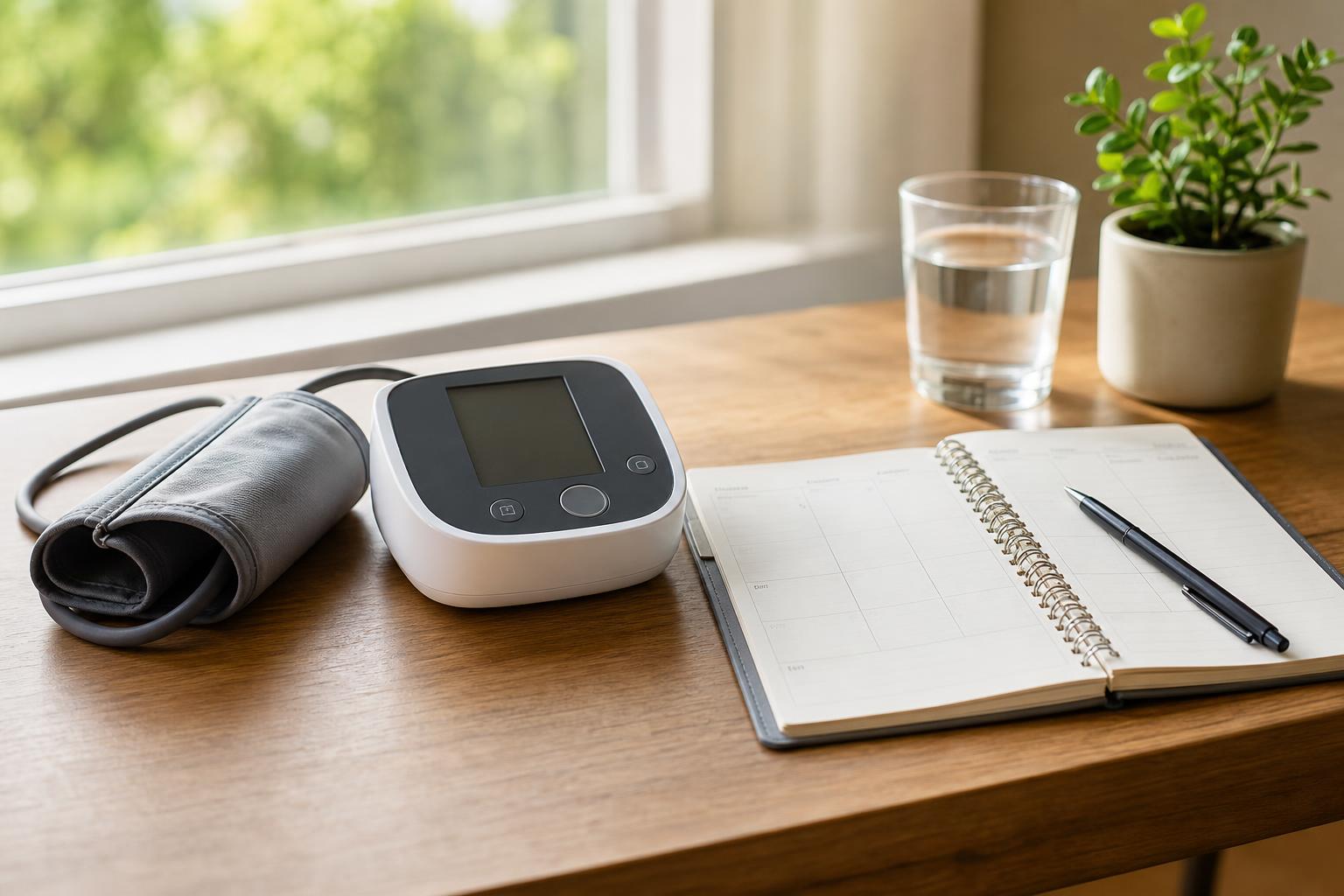
The simplest tracking method is to let your monitor handle it. Most Bluetooth-enabled monitors sync with phone apps that automatically log each reading, calculate averages, and generate charts. You can share that data directly with your doctor without touching a spreadsheet.
If your monitor does not have app support, a basic paper log works fine. Write the date, time, systolic and diastolic readings, and your pulse. You do not need elaborate templates or color-coded systems. Plain columns on notebook paper do the job.
What matters most is consistency. Checking at roughly the same time each day under similar conditions gives you the cleanest data. Checking randomly whenever you remember usually produces noisier patterns that are harder to interpret.
When one reading is enough
Not every spike requires action. Blood pressure goes up when you are startled, stressed, or in pain. It drops when you are deeply relaxed or lying down for a long time. Those shifts are normal and expected.
A single elevated reading in isolation usually means nothing, especially if you felt rushed or anxious beforehand. If subsequent readings return to your usual range and you feel fine, there is no need to panic or call your doctor immediately.
On the other hand, if you see a pattern of consistently elevated readings over several days—say, five out of seven readings above your typical baseline—that is worth mentioning to your doctor even if you feel okay.
What your doctor wants to see
When your doctor asks you to monitor blood pressure at home, they usually want one of two things:
- A baseline pattern showing your typical range under normal conditions, usually collected over one to two weeks with twice-daily readings.
- A response pattern after a medication change, showing how your numbers shift over a few weeks with continued twice-daily monitoring.
They generally do not want months of scattered readings taken at random times. More data is not always better. What helps most is a focused window of consistent measurements that clearly shows whether your pressure is controlled, elevated, or variable.
If you are unsure what your doctor expects, ask directly. Most appreciate the question and can clarify exactly how often they want you to check and for how long.
The schedule that works is the one you will follow
The ideal monitoring schedule is useless if it feels so burdensome that you stop doing it. If twice daily feels like too much, once daily is better than nothing. If every day feels overwhelming, three times a week still gives useful information.
The goal is to create a routine that fits your life without taking it over. Blood pressure monitoring should give you useful information and peace of mind, not become another source of stress.
Pick a schedule, stick with it for a few weeks, and see what the numbers tell you. If your pressure stays stable, you can ease up. If it drifts, you can temporarily check more often. It does not have to be complicated.
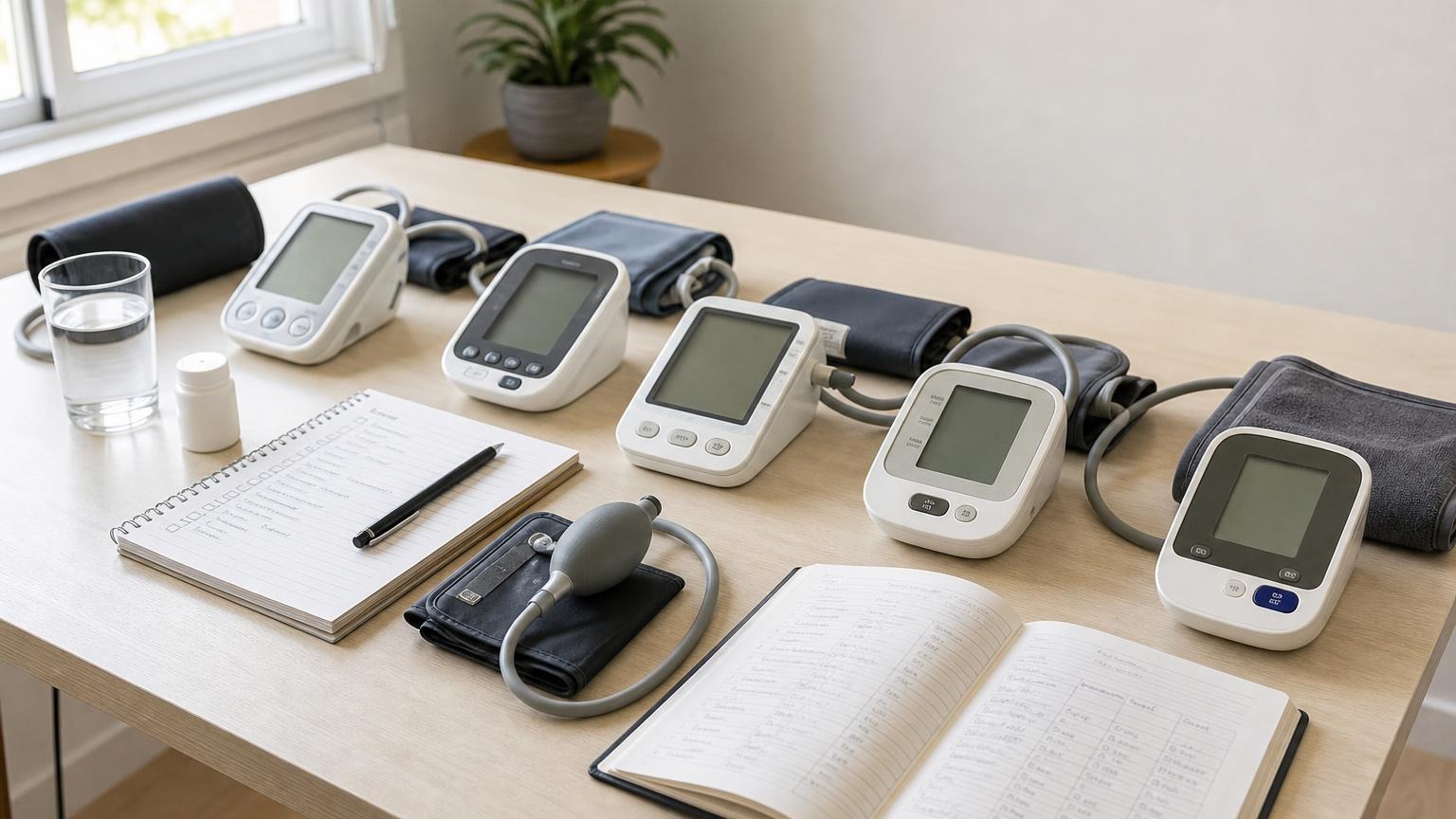
If you are setting up a home routine now, compare our best home blood pressure monitors. For cleaner readings, it also helps to review how to position your arm for accurate blood pressure readings.
Final thought
How often you should check blood pressure at home depends on where you are in the process. Starting out or adjusting medication calls for more frequent testing. Stable, well-controlled pressure allows for a lighter touch.
The worst approach is checking obsessively out of worry or ignoring your monitor entirely because you feel fine. Somewhere between those extremes is a schedule that gives you the information you need without consuming your attention.
Most people land on two to three times per week once they know their baseline. That is usually enough to catch meaningful changes without turning blood pressure into a daily fixation.
Top 5 picks
Best Blood Pressure Monitors For Seniors 2026
Five upper-arm monitors ranked with published scorecards—setup friction, comfort, readability, power convenience, and repeatable accuracy—so you can compare models before you buy.
See our Top 5 blood pressure monitor picksHome-monitoring advice is only useful if it is easy to verify and act on correctly.
We write explainers to be understandable to readers, search engines, and AI answer systems.
Compare our Top 5 blood pressure monitor picks for 2026, then track readings over time with consistent technique.