How to Check if a Blood Pressure Monitor Is Validated
Learn how to verify a blood pressure monitor by exact model number, validation listing, cuff range, and intended user before you buy.
Learn how to verify a blood pressure monitor by exact model number, validation listing, cuff range, and intended user before you buy.
To check whether a blood pressure monitor is validated, find the exact model number—not just the brand or product name—and search for it on an independent validation list such as Validate BP or STRIDE BP. Then confirm that the listed cuff range fits your arm and that the validation applies to the person who will use it.
This check matters because “clinically tested,” thousands of positive reviews, and a familiar brand are not substitutes for a published validation study. Validation does not guarantee a perfect reading every time, but it gives you better evidence that the monitor’s measurement method performed acceptably under a recognized protocol.
How to check if a blood pressure monitor is validated
Use this process before buying, or whenever you are unsure about a monitor you already own.
- Find the full model number. Look on the product label, box, manual, manufacturer page, or battery-compartment label. A family name such as “Series 5” is not precise enough.
- Search an independent device list. Enter the model number in Validate BP and STRIDE BP. Try the number with and without spaces or hyphens if the first search returns nothing.
- Match the listing carefully. Confirm the manufacturer, model number, device type, cuff sizes, and any regional suffix. A nearly identical model may use different firmware, accessories, or documentation.
- Read the listing category. Check whether that exact model was validated directly or listed as equivalent to another device. STRIDE BP explains its categories and the evidence used for each.
- Check the intended population. General-adult evidence does not automatically establish performance in pregnancy, children, or every special clinical group.
- Confirm cuff coverage. Make sure your measured upper-arm circumference falls inside the cuff range associated with the model and its evidence.
- Save what you found. Keep the listing URL, model number, cuff part number, and date checked. Device lists and product lines can change.
The American Heart Association’s home-monitoring guidance recommends an automatic, cuff-style upper-arm monitor and specifically tells buyers to choose a validated model. It also recommends checking cuff fit and bringing the monitor to a health professional to review its use.
Why the exact model number matters
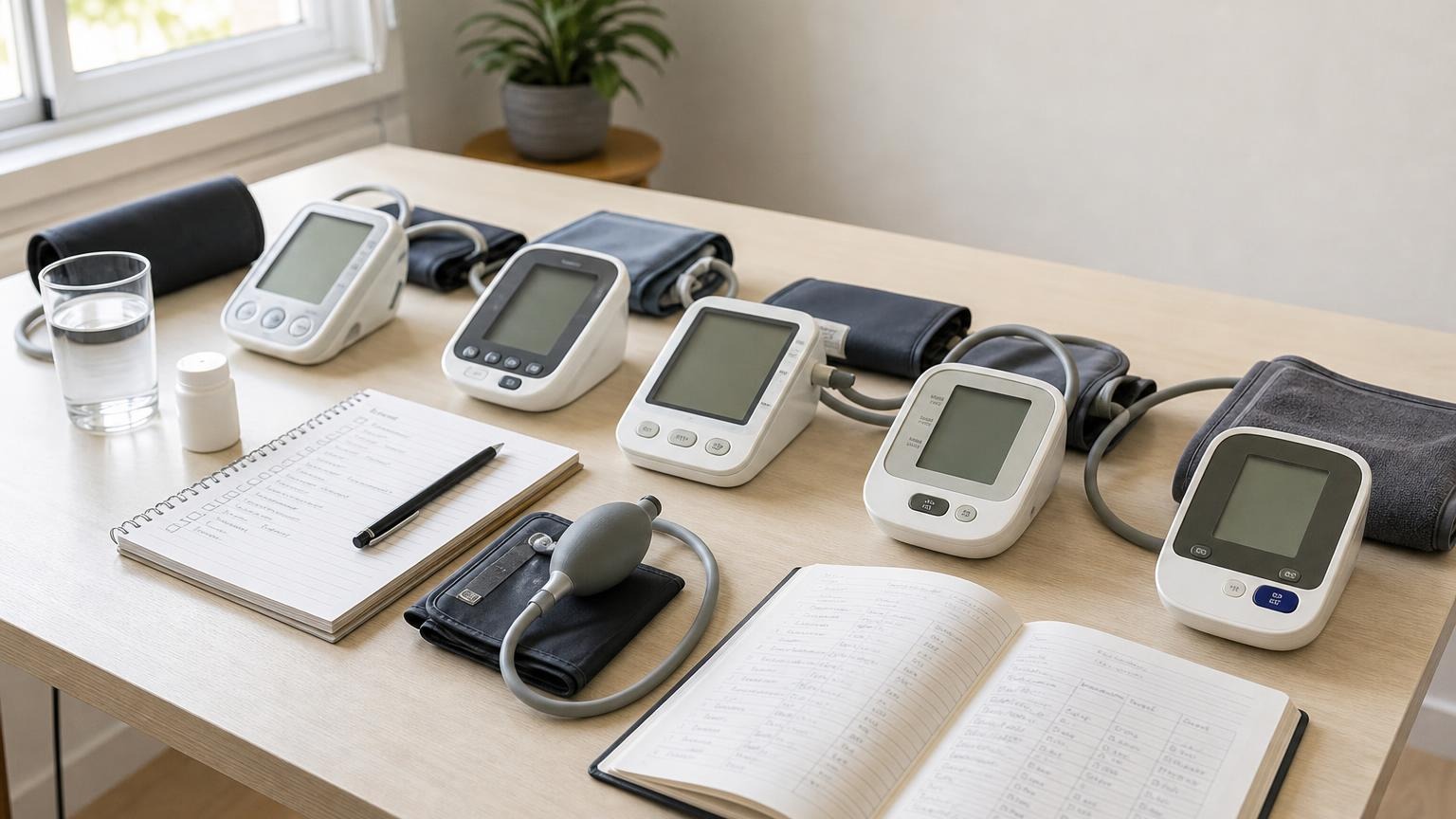
Validation applies to a device configuration, not to every product carrying the same logo. One manufacturer may sell several monitors with similar names, housings, or retail bundles. Finding one model from the brand on a validation list does not validate the whole range.
Watch for details such as:
- extra letters or numbers at the end of the model name
- a different regional version
- a retailer-exclusive bundle
- a different included cuff or cuff-size range
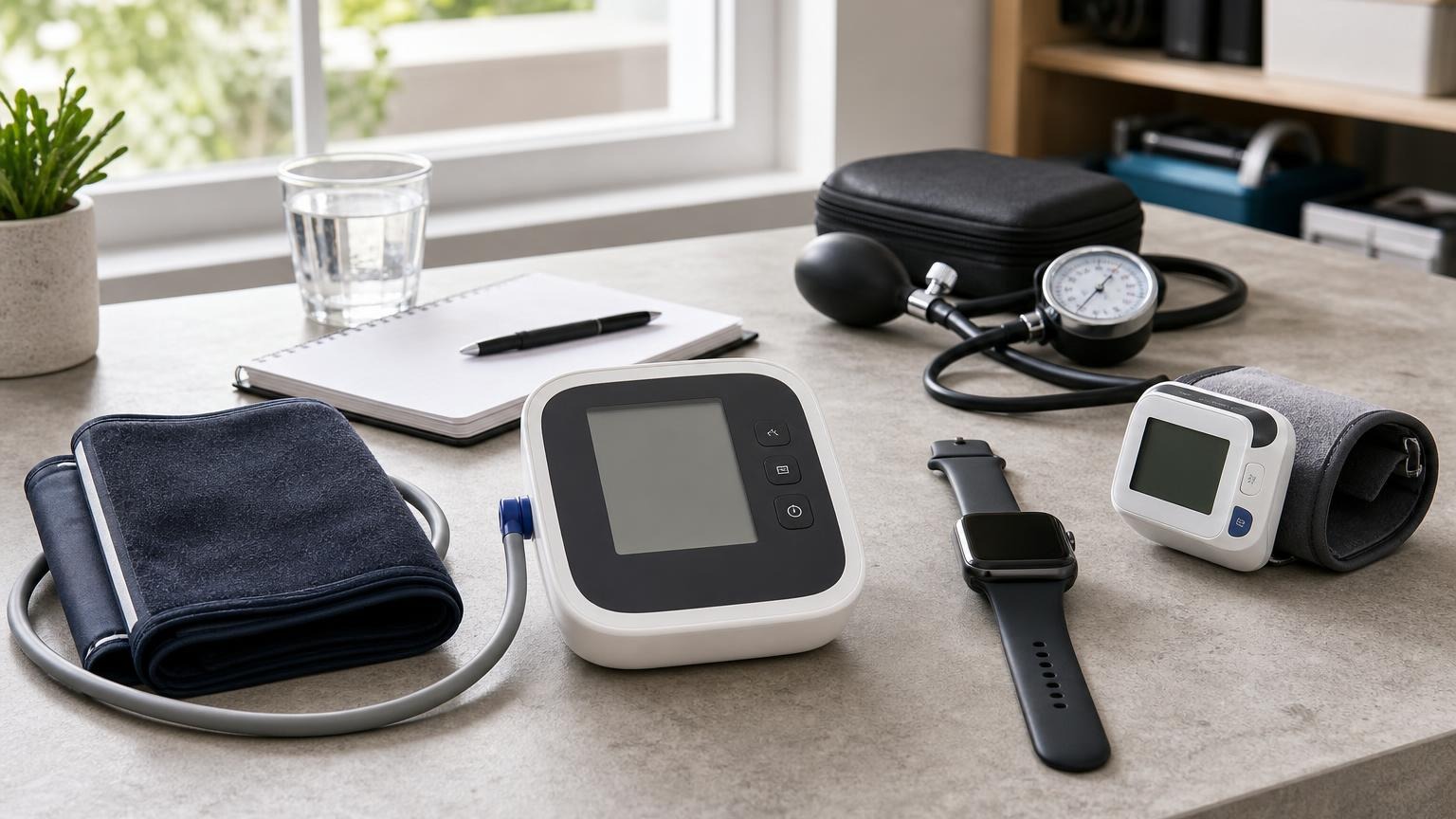
- a wrist model that shares branding with an upper-arm model
- an older or newer generation with a similar product name
If the listing and the box do not match exactly, do not silently assume they are the same. Check the manufacturer’s technical documentation or ask for written confirmation that identifies the full model and the validation study supporting it.
This model-level discipline is useful for more than validation. Our broader guide to comparing home health monitors explains why manuals, transparent specifications, support, and replacement parts matter alongside the measurement evidence.
What an independent validation listing tells you
A validation study compares a monitor’s readings with reference measurements under a defined protocol. An independent listing reviews the available study and determines whether it meets the list’s criteria. That is more useful than a vague package claim because you can connect the product to identifiable evidence.
STRIDE BP describes its “preferred” upper-arm devices as having at least one approved validation study using a recent protocol and published within its stated time window. It also has separate rules for devices presented as equivalent or identical to validated models. Those categories are worth reading rather than treating every search result as interchangeable.
A listing still does not prove that:
- every individual unit is free from damage or wear
- the cuff fits your arm
- your technique is correct
- a third-party replacement cuff preserves the documented configuration
- the monitor is suitable for every age or clinical situation
- one home reading should determine a diagnosis or medication change
Think of validation as an entry requirement, not a complete buying decision. Readability, cuff comfort, memory, controls, warranty support, and the ability to take repeat readings consistently still affect whether a monitor works well in daily life.
Check the cuff range and intended user
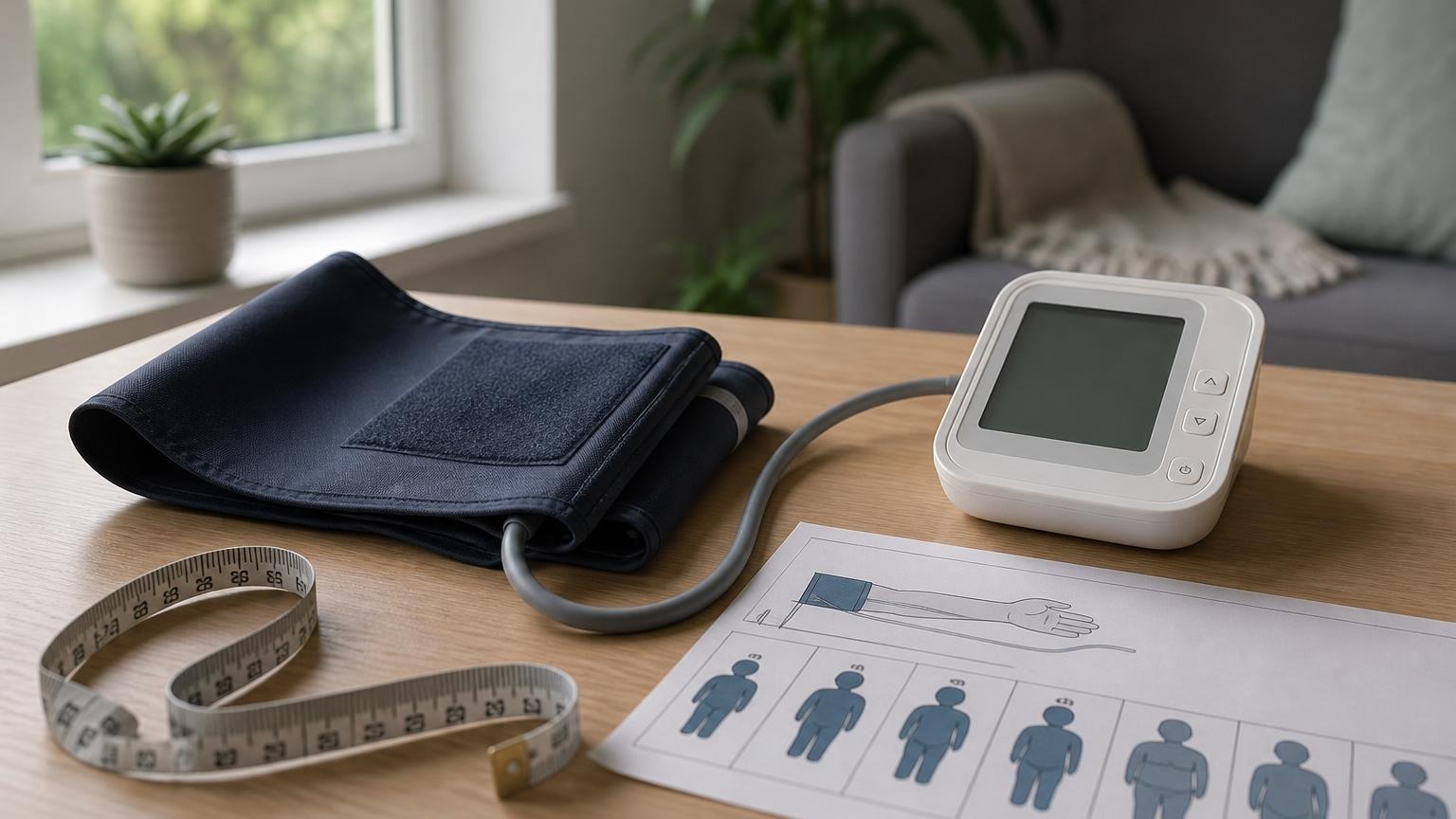
A validated monitor with the wrong cuff is still the wrong setup for you. Measure around the midpoint of your bare upper arm and compare that circumference with the range printed on the cuff and stated in the manual. Do not rely only on labels such as “standard,” “large,” or “universal.”
Our blood pressure cuff size chart explains how to measure your arm and interpret the manufacturer’s range. If you need a replacement cuff, use one the manufacturer identifies as compatible with the exact monitor model; a connector that fits does not establish that the complete setup matches the available evidence.
Population also matters. The AHA advises confirming that a monitor is validated for a senior, pregnant person, or child when that is the intended user. If a listing does not clearly cover your situation, ask a clinician or pharmacist for help rather than extending general-adult evidence on your own.
Claims that do not replace validation
Product pages often use language that sounds reassuring without identifying a recognized protocol or study. Be cautious with phrases such as:
- “clinically tested”
- “doctor recommended”
- “hospital grade”
- “medical accuracy”
- “advanced sensor technology”
- “trusted by thousands”
- “highly accurate”
These statements may describe marketing, usability testing, internal testing, or customer opinion. They do not answer the practical question: Can you identify the exact model on a credible validation list or connect it to a reviewable protocol-based study?
Price does not answer that question either. A basic monitor can have good validation evidence, while a costly app-connected model may have unclear support. Our guide to whether cheap blood pressure monitors are accurate separates validation and cuff fit from features and price.
What if the model is not on a validation list?
An unsuccessful search is a warning to investigate, not proof that the monitor must be inaccurate. The model may be new, listed under a different identifier, sold in another region, or still awaiting review. The list may also use an equivalent-device category that you missed.
Before buying, ask the manufacturer for:
- the exact model number covered
- the name of the validation protocol
- a citation or link to the study
- the tested cuff sizes
- the population included in the study
- an explanation of any equivalence claim
If the response offers only a certificate image, a general brand statement, or another model’s study, you still do not have clear evidence for the product in front of you. For routine clinician-facing home logs, choosing an upper-arm monitor with an unambiguous independent listing is the simpler path.
If you already own an unlisted monitor, do not change treatment or discard past readings solely because of the search result. Keep using any clinician-approved backup plan, bring the monitor and cuff to an appointment, and ask whether the device should be compared or replaced.
An office comparison is useful, but it is not validation
The AHA recommends taking a home monitor to an appointment so a health professional can check your technique and compare results with office equipment. That can reveal a wrong cuff, poor positioning, a damaged unit, or a large unexplained discrepancy.
It does not turn an unvalidated model into a validated one. A few side-by-side readings on one person are a practical function check, not a protocol study across a defined group. Use both layers when possible: select a validated monitor first, then have your personal setup and technique reviewed.
FAQ
Q: Where can I check whether a blood pressure monitor is validated?
A: Search the exact model number on Validate BP and STRIDE BP. Confirm the manufacturer, device type, cuff range, population, and listing category rather than accepting a similar product name.
Q: Does a trusted brand mean every monitor it sells is validated?
A: No. Validation is model-specific. A manufacturer may have many validated devices and other models with different or unclear evidence. Match the complete model number on the product with the independent listing.
Q: Is “clinically tested” the same as clinically validated?
A: Not necessarily. “Clinically tested” does not identify which protocol was used, who performed the study, or whether the exact model met independent listing criteria. Look for a model-specific listing and a reviewable validation study.
Q: Can my doctor validate my blood pressure monitor in the office?
A: A health professional can check your technique and compare your unit with office equipment, which is useful. That personal comparison is not the same as formal device validation under a recognized protocol.
Bottom line
To verify a blood pressure monitor, start with the full model number and look it up on an independent validation list. Match the exact device, cuff range, listing category, and intended user. Do not let brand familiarity, price, reviews, or vague accuracy claims substitute for that evidence.
Once validation and cuff fit are clear, compare practical factors such as controls, display, memory, and support in our current upper-arm monitor guide:
This article is educational and not medical advice. Consult a qualified clinician before making treatment decisions or changing medication based on home blood pressure readings.
Top 5 picks
Best Blood Pressure Monitors For Seniors 2026
Five upper-arm monitors ranked with published scorecards—setup friction, comfort, readability, power convenience, and repeatable accuracy—so you can compare models before you buy.
See our Top 5 blood pressure monitor picksHome-monitoring advice is only useful if it is easy to verify and act on correctly.
We write explainers to be understandable to readers, search engines, and AI answer systems.
Compare our Top 5 blood pressure monitor picks for 2026, then track readings over time with consistent technique.