Using a Blood Pressure Monitor During Pregnancy: What to Check
Using a blood pressure monitor during pregnancy? Check pregnancy-specific validation, cuff fit, and a clear plan for reporting readings and symptoms.
Using a blood pressure monitor during pregnancy? Check pregnancy-specific validation, cuff fit, and a clear plan for reporting readings and symptoms.
You can use a blood pressure monitor during pregnancy when your maternity team recommends home checks—but the monitor, cuff, and reporting plan all matter. Choose an upper-arm monitor with pregnancy-specific validation, confirm that the cuff fits, and agree on which readings require a call. Home monitoring supplements prenatal care; it cannot diagnose or rule out preeclampsia by itself.
If you are checking because of a persistent severe headache, vision changes, upper-abdominal pain, or trouble breathing, seek urgent medical advice rather than waiting for a reassuring number. The American College of Obstetricians and Gynecologists (ACOG) advises calling your obstetric care team right away about possible preeclampsia symptoms.
Choosing a blood pressure monitor during pregnancy
Start with your obstetrician, midwife, or maternity clinic. Ask whether they recommend or supply a particular monitor and whether they can check your equipment and technique. Buying the same brand as a relative’s monitor is not enough: suitability depends on the exact model and cuff, not just the name on the box.
General-adult validation does not automatically establish suitability for pregnancy. The STRIDE BP monitor directory has a separate “Pregnancy / Preeclampsia” population filter. Use that alongside the home-use filter, then review the individual listing with your care team. If you have preeclampsia or another specific monitoring need, ask whether the evidence covers that situation—not merely pregnancy in general.
Check the complete model number, cuff range, and listing notes. STRIDE BP also distinguishes directly validated devices from approved equivalent or identical models; do not assume that a similar-looking product has the same evidence. Our guide to verifying a monitor’s validation status explains the lookup process.
A large display, Bluetooth connection, or “clinically accurate” marketing phrase does not answer the pregnancy-validation question. If the listing is unclear, take the details to your maternity team rather than treating an online review as approval.
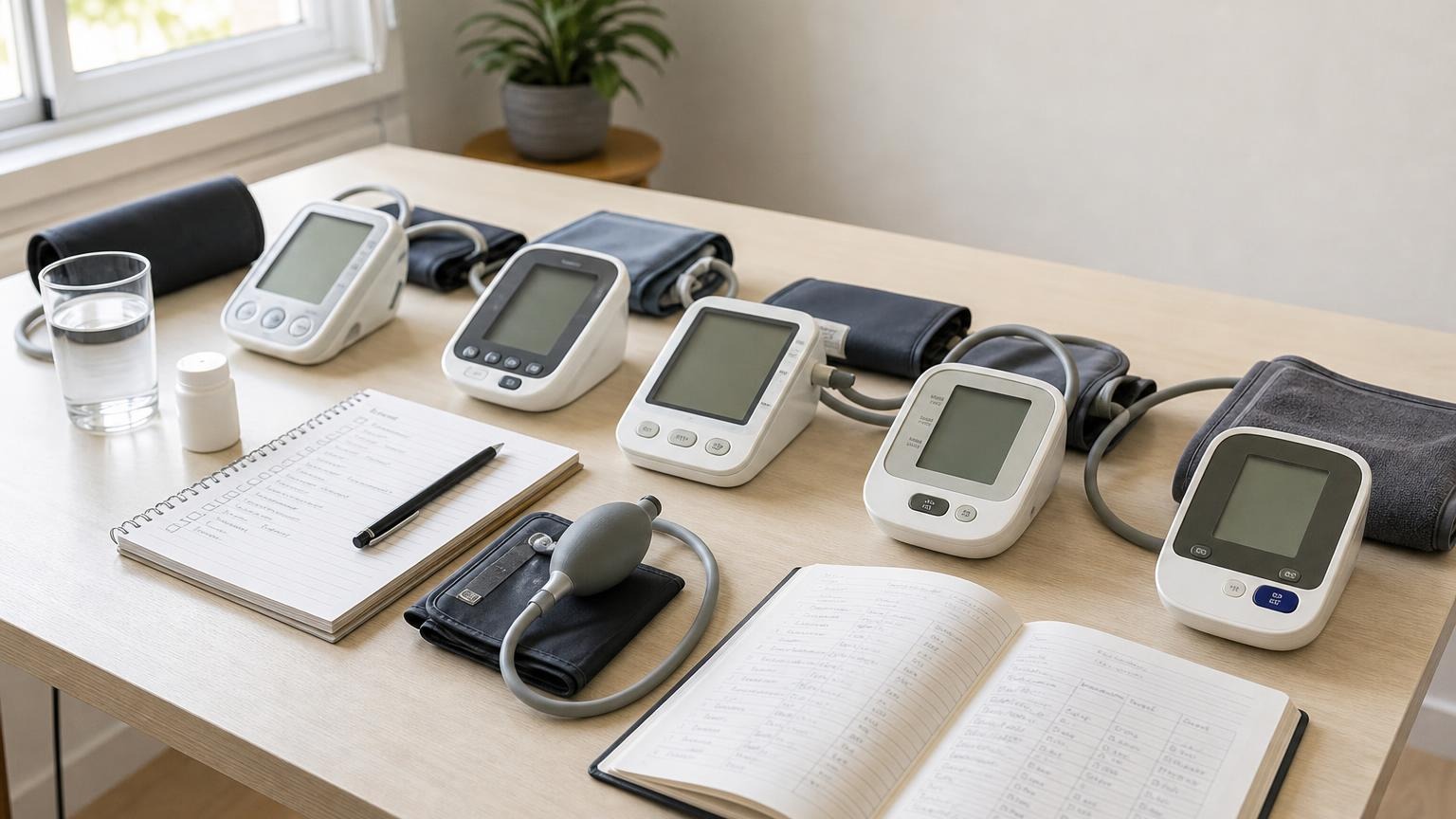
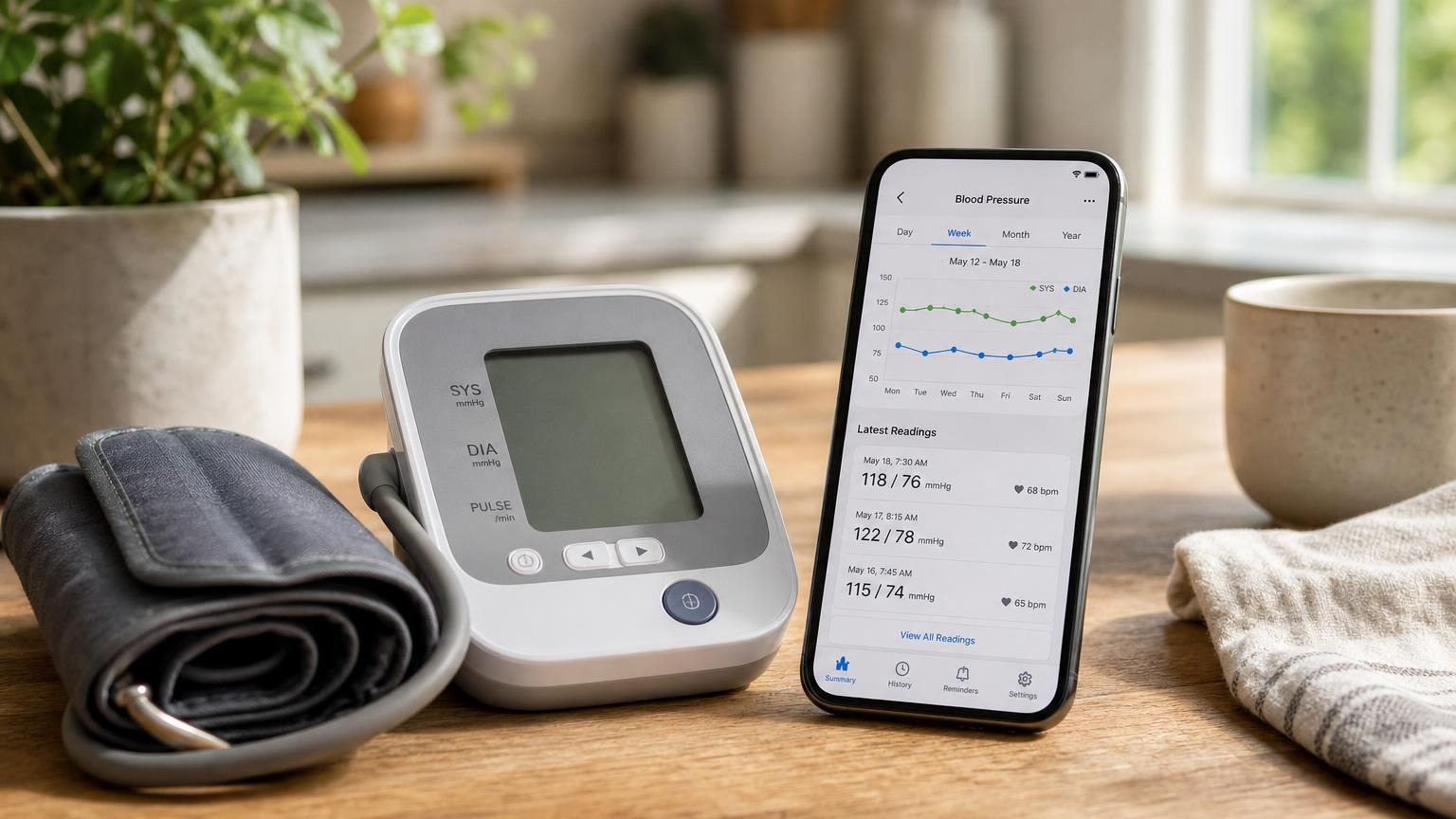
The feature image is illustrative equipment imagery, not a pregnancy-validation recommendation for the pictured monitor.
Check the cuff and practice the technique
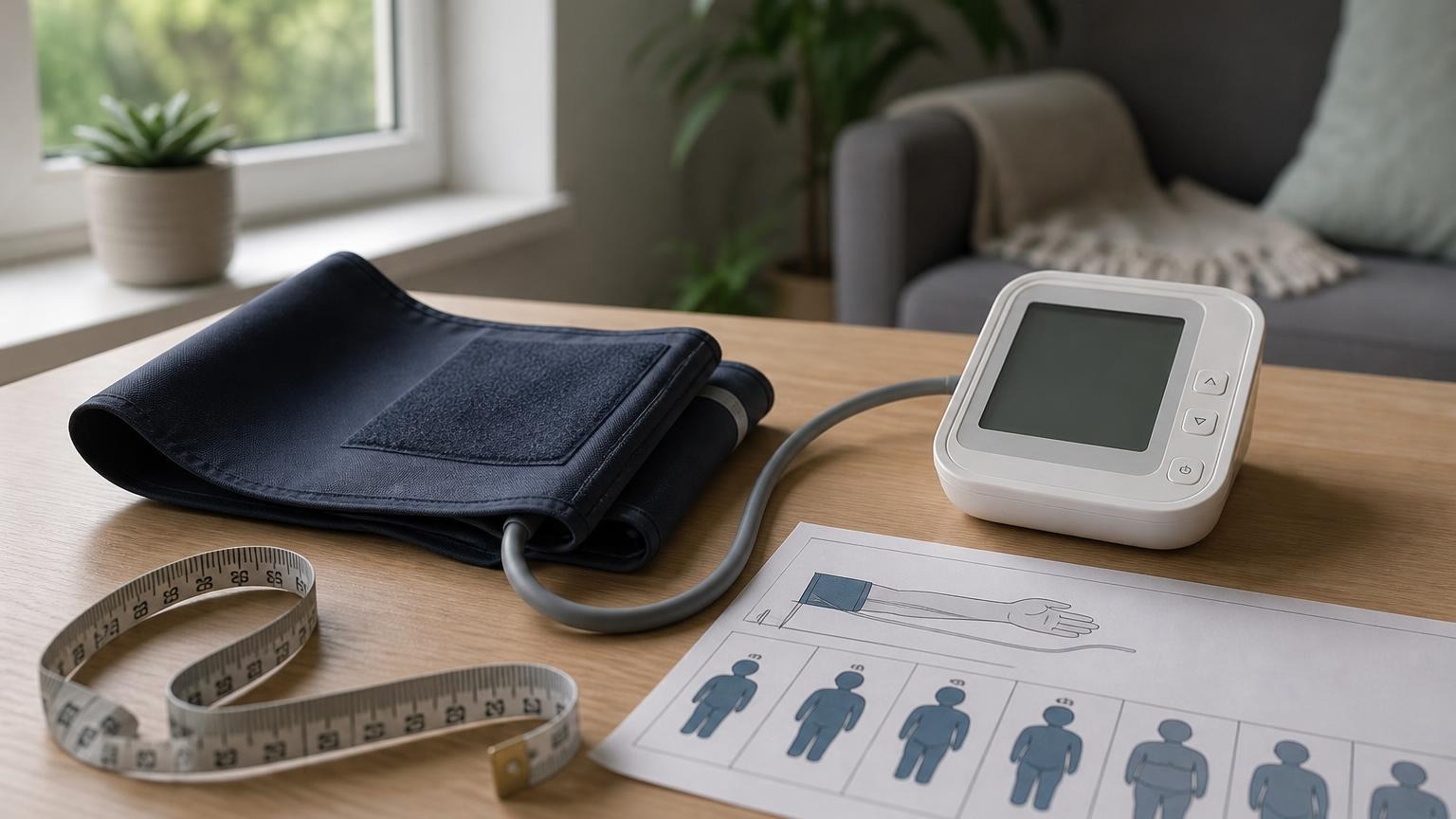
Measure your upper arm and compare it with the manufacturer’s stated cuff range. A cuff that closes around your arm is not necessarily the correct size. Our guide to blood pressure cuff sizing explains how to interpret that range. If you need a different cuff, confirm that it is supported for the exact monitor; matching connectors alone are not enough.
Ask someone on your care team to watch you take a reading before you rely on a home series. Bring the monitor and cuff to an appointment if requested. This is especially useful if applying the cuff is awkward or home and clinic readings seem inconsistent.
For a routine seated check, the Preeclampsia Foundation’s home-monitoring guidance supports the basic setup:
- Empty your bladder and sit quietly before measuring; allow about 5 minutes to settle.
- Sit with your back supported, legs uncrossed, and feet flat on the floor.
- Put the cuff on a bare upper arm and support the arm at heart level.
- Follow the cuff’s placement markings and the monitor’s instructions.
- Breathe normally, stay still, and do not talk during the measurement.
Use the arm and routine your maternity team recommends. Our upper-arm cuff placement guide covers positioning in more detail. Do not tighten a sleeve around the arm or improvise a different measurement site to make a poorly fitting cuff work.
Follow your team’s instructions for the number and spacing of readings. Do not keep measuring until you obtain the number you wanted, and do not treat a failed measurement as a normal result.
Agree on the reporting plan before you need it
A useful home-monitoring plan answers more than “How often should I press Start?” Before leaving the appointment, ask:
- When should I measure, and how many readings should I record each time?
- Which number means I should call, and which means I need immediate care?
- Should I repeat an unexpected result, and under what conditions?
- Which phone number should I use outside office hours?
- Who receives my log, and how do I know it has been reviewed?
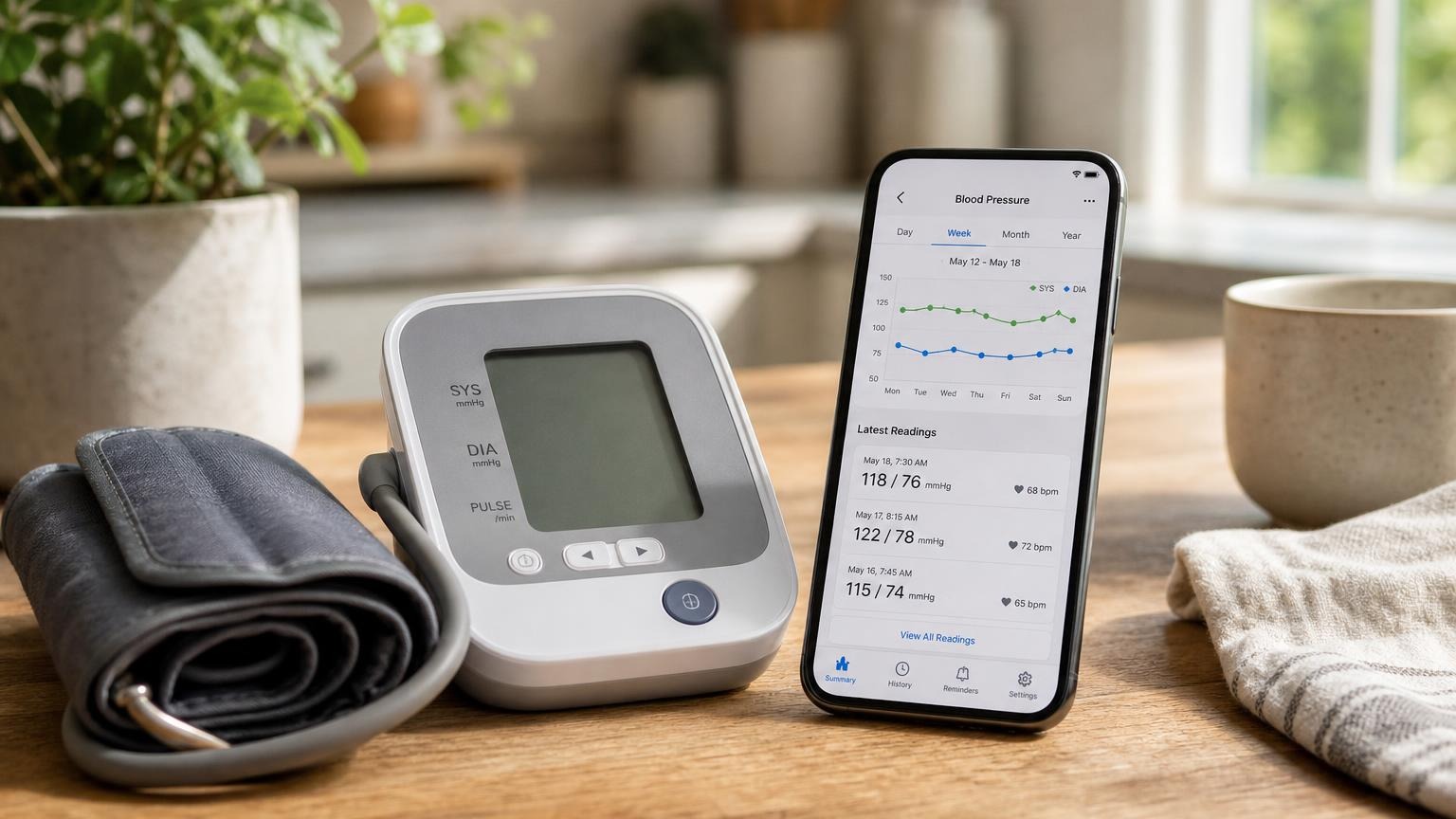
Record the date, time, both blood pressure numbers, and any symptoms. Keep the actual readings rather than only the monitor’s average or colored indicator. If your team asks you to note medication timing, label whether the reading was before or after a dose without changing the prescribed schedule.
Do not stop, skip, delay, or adjust medication because of a home reading. Take questions about the pattern to your prescriber.
An app upload does not by itself prove that a clinician has seen your result. Know the separate urgent-contact process; sending a portal message is not a substitute for immediate care when your plan says to seek it.
Know when a reading or symptom needs prompt help
Pregnancy needs its own action plan. Do not use a general-adult emergency threshold as permission to wait. ACOG describes severe hypertension in pregnancy as a systolic pressure of 160 mmHg or higher, or a diastolic pressure of 110 mmHg or higher. Either number counts; they do not both have to be high.
The Preeclampsia Foundation’s patient guidance distinguishes these actions:
| Home reading or concern | What to do |
|---|---|
| Systolic 140–159 mmHg or diastolic 90–109 mmHg, with neither number in the severe range | Contact your maternity care team for instructions; follow any earlier call threshold they gave you |
| Systolic at least 160 mmHg or diastolic at least 110 mmHg | Seek immediate medical care; do not wait for the next scheduled appointment or a weekly average |
| Possible preeclampsia symptoms, even with a lower reading | Seek urgent medical advice rather than relying on the monitor to rule out a problem |
These are safety signposts, not a way to diagnose yourself or choose treatment. Follow a more cautious individualized plan if your team has given you one. Do not delay urgent care by repeatedly measuring in the hope that the number falls.
Symptoms that need prompt attention include a headache that will not go away, changes in vision, pain below the ribs or in the upper abdomen, sudden swelling of the face or hands, and difficulty breathing. The NHS guidance on preeclampsia emphasizes immediate assessment of concerning symptoms during pregnancy or in the weeks after birth. For severe breathing difficulty, chest pain, seizure, or collapse, call emergency services.
A cuff measures blood pressure; it does not perform urine or blood tests or assess the baby’s wellbeing. ACOG explains that evaluating suspected preeclampsia may require those additional checks. A normal-looking screen cannot replace that assessment.
Keep the plan going after birth if advised
Do not assume monitoring ends automatically when the baby is born. Preeclampsia can develop after childbirth, and ACOG notes that blood pressure can rise in the weeks after delivery.
Before discharge, ask whether you should continue home checks, how long to continue, and who to contact about an abnormal reading or symptom. The schedule depends on your situation; do not copy another person’s postpartum routine or stop monitoring solely because a few readings look reassuring.
If the monitor stops working, contact the care team about another way to obtain the measurements they need. Preserve your existing log and do not invent entries to fill the gap.
Frequently asked questions
Q: Can I use a blood pressure monitor I already own during pregnancy?
A: Possibly, but ask your maternity team to confirm the exact model’s pregnancy-specific validation, cuff fit, and suitability for you. A familiar brand or a general-adult accuracy claim does not settle those questions.
Q: Can a normal home blood pressure reading rule out preeclampsia?
A: No. One reading cannot rule it out, especially if you have concerning symptoms. Contact your maternity team promptly about symptoms and keep recommended appointments and tests, even when the monitor looks reassuring.
Q: Do both blood pressure numbers have to be high before I seek help?
A: No. Either number can require action. A systolic reading of at least 160 mmHg or a diastolic reading of at least 110 mmHg warrants immediate medical care in pregnancy. Follow your team’s lower call thresholds as well, and do not wait for a high number if concerning symptoms develop.
Sources
- ACOG: Preeclampsia and High Blood Pressure During Pregnancy — home monitoring as part of care, severe-range readings, symptoms, assessment, and postpartum follow-up.
- STRIDE BP: Validated blood pressure monitors — population and use filters, cuff information, and validation-listing distinctions.
- Preeclampsia Foundation: Blood Pressure — practical home technique and pregnancy-specific contact and immediate-care thresholds.
- NHS: Pre-eclampsia — warning symptoms, urgent assessment, and the possibility of problems after birth.
Bottom line
The right home setup during pregnancy combines a suitable monitor, a correctly fitting cuff, consistent technique, and a clear response plan. The most important feature is not an app or a color bar: it is knowing when and how to get your readings and symptoms assessed.
If you are shopping, our general home-monitor roundup can help you compare everyday features, but it is not a pregnancy-validated shortlist. Have your maternity team confirm pregnancy-specific suitability for the exact model and cuff before you buy or rely on one.
This article is educational and not medical advice. Consult a qualified clinician before making treatment decisions or changing your pregnancy or postpartum monitoring plan.
Top 5 picks
Best Blood Pressure Monitors For Seniors 2026
Five upper-arm monitors ranked with published scorecards—setup friction, comfort, readability, power convenience, and repeatable accuracy—so you can compare models before you buy.
See our Top 5 blood pressure monitor picksHome-monitoring advice is only useful if it is easy to verify and act on correctly.
We write explainers to be understandable to readers, search engines, and AI answer systems.
Compare our Top 5 blood pressure monitor picks for 2026, then track readings over time with consistent technique.