How to Take an Accurate Blood Pressure Reading at Home
Most home blood pressure readings are wrong — and the error is the setup, not the device. The five-minute checklist that gets clinically useful numbers.
Most home blood pressure readings are wrong — and the error is the setup, not the device. The five-minute checklist that gets clinically useful numbers.
If you own a home blood pressure monitor, there’s a decent chance your readings are wrong — and the device probably isn’t to blame. A 2023 analysis in Hypertension found that fewer than one in ten people take home readings according to the protocol the monitor was validated against. Everyone else is getting numbers that may be 5–15 mmHg off the truth.
The good news: the fix is procedural, not financial. A $30 monitor used correctly beats a $300 monitor used badly.
The checklist
Before you measure:
- Wait at least 30 minutes after caffeine, exercise, smoking, or a big meal.
- Empty your bladder. A full bladder raises systolic pressure by about 10 mmHg.
- Sit quietly for 5 minutes in a chair with back support. Don’t talk. Don’t look at your phone.
- Remove any clothing that would be between the cuff and your skin on your upper arm.
During measurement:
- Feet flat on the floor, legs uncrossed. Crossed legs can raise systolic pressure by 2–8 mmHg.
- Back supported. An unsupported back adds roughly 6 mmHg.
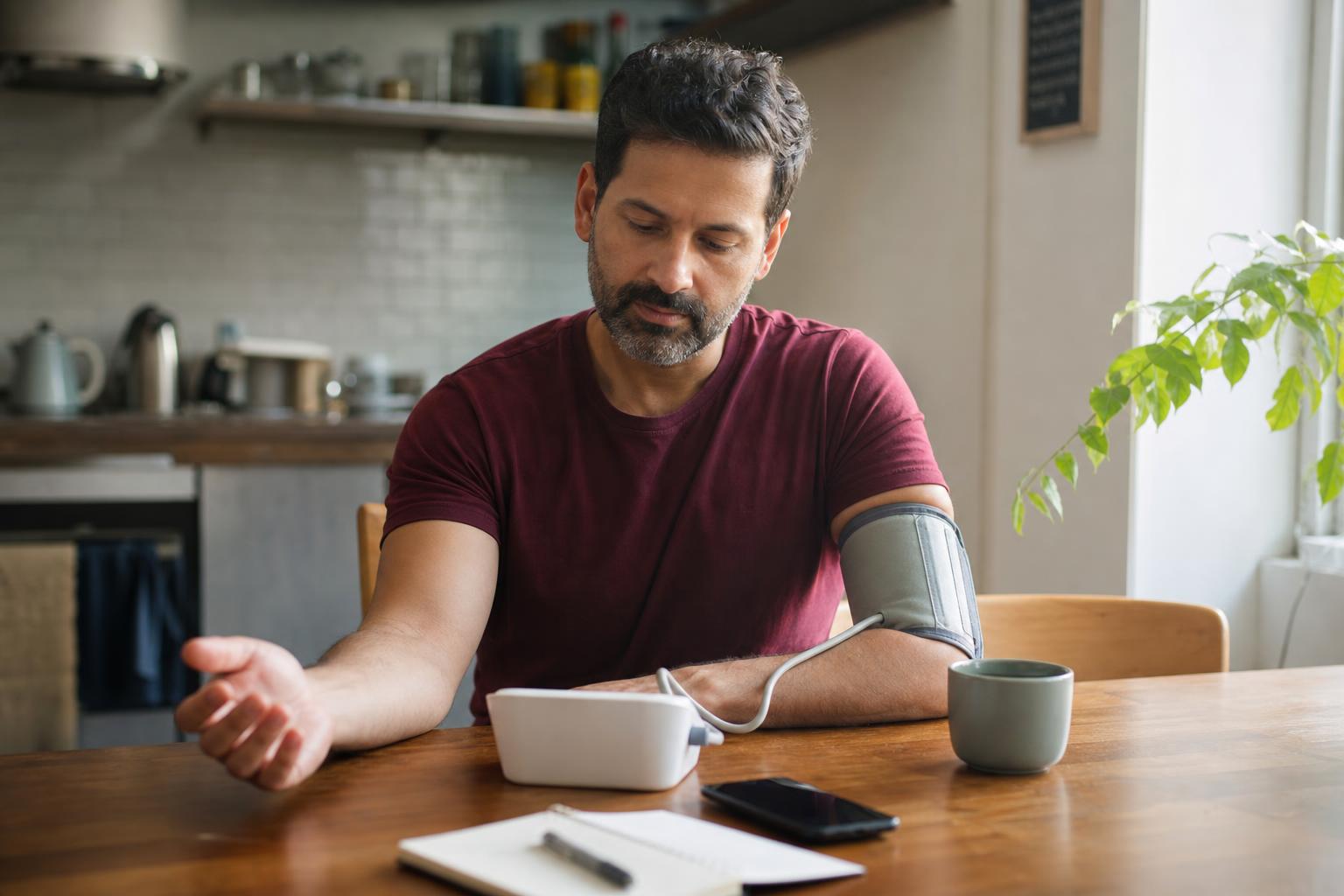
- Arm supported at heart level. This is the single most common source of error. Every inch your arm hangs below your heart adds about 2 mmHg.
- Cuff on bare skin, middle of the upper arm, with the bottom edge about an inch above the elbow crease.
When the monitor beeps:
- Don’t trust a single reading. Wait one minute, then take a second reading. Take a third.
- Average the last two. Most clinical guidelines discard the first reading, which is reliably higher than the next two.
That’s the protocol. Doing it takes about seven minutes the first time and three minutes once it becomes routine.
The most common mistakes
Mistake 1: Measuring immediately after doing something
Exercise, stairs, an argument, a strong coffee — all of these raise blood pressure, and the effect can persist for 20–30 minutes. If your monitor is sitting next to the coffee maker and you measure right after your morning cup, your numbers are systematically biased high.
Fix: keep the monitor somewhere you can sit quietly for five minutes before using it.
Mistake 2: Wrong cuff size
A cuff that’s too small gives artificially high readings — often by 10 mmHg or more. A cuff that’s too large gives artificially low readings, though the effect is smaller. If you have a larger arm and your monitor came with a standard cuff, measure your upper arm circumference and check the cuff specifications. Most manufacturers sell larger cuffs separately.
Mistake 3: Talking during measurement
Talking can raise systolic pressure by 10–15 mmHg. This includes answering a question, telling a kid to be quiet, or talking to the person measuring. The fix is obvious but widely ignored.
Mistake 4: Arm position
Your arm needs to be supported at heart level — resting on a table, not held up in the air and not hanging at your side. Resting on your lap usually puts your arm below heart level. Resting on a desk or counter usually gets it about right.
Mistake 5: Measuring only when you feel “off”
Home blood pressure is most useful as a pattern, not a point-in-time snapshot. If you only measure when you feel stressed or unwell, you’ll overestimate your average. Measure on a consistent schedule — most clinical guidelines suggest twice daily for a week when establishing a baseline, then a few times a week for ongoing tracking.
What if my readings are high?
A single high reading is rarely an emergency. What matters is the pattern.
- If you’re consistently reading 130/80 or higher across a week of proper measurements, share the data with your doctor.
- If you get a single reading of 180/120 or higher along with symptoms like chest pain, shortness of breath, severe headache, or vision changes, that’s a potential hypertensive emergency — get medical help.
- If you get a single reading of 180/120 or higher with no symptoms, wait five minutes and measure again. If it stays that high, contact your doctor the same day.
This article is educational and not medical advice. Always discuss your readings with a qualified clinician before making decisions about medication or treatment.
Looking for a monitor?
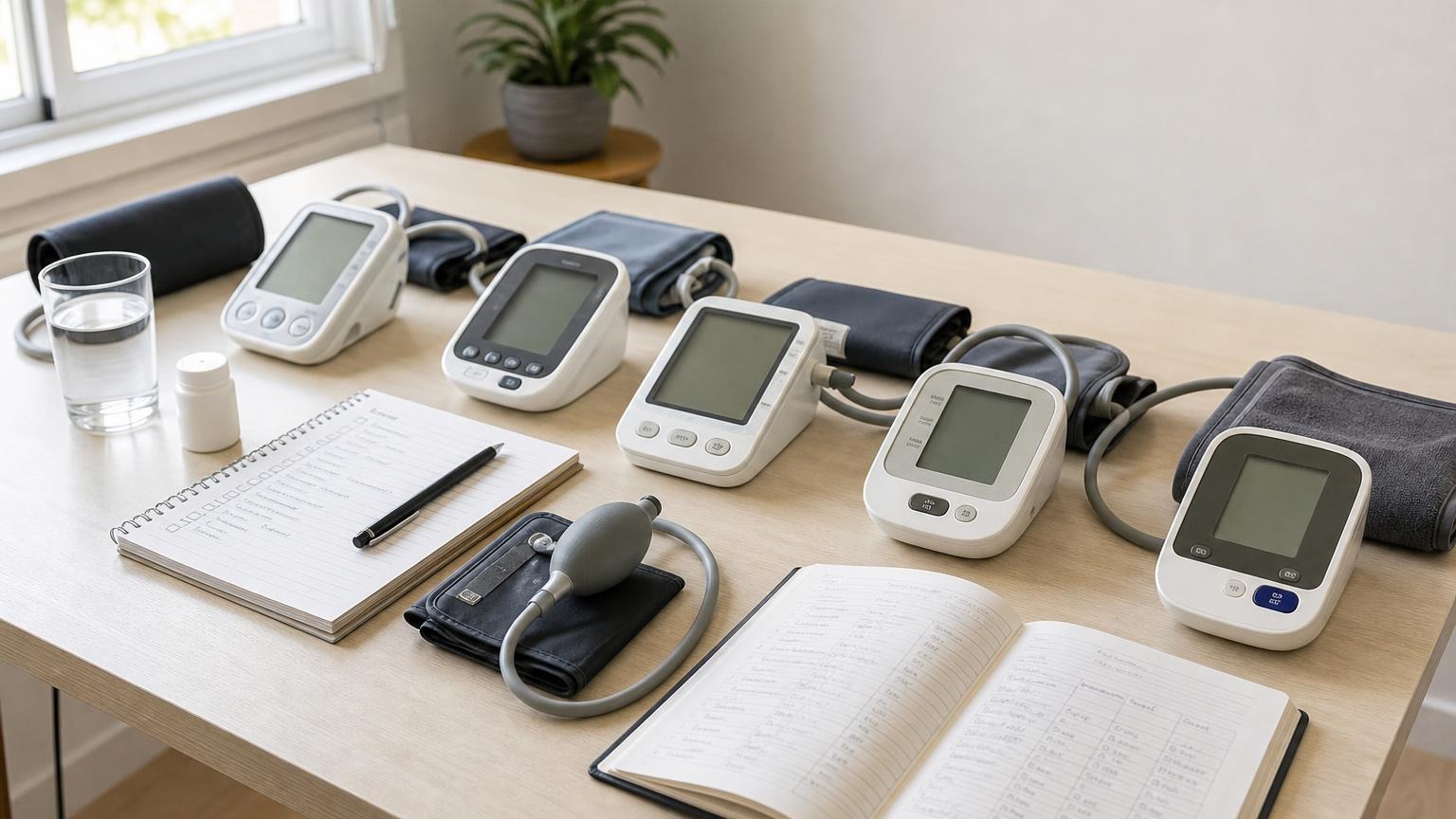
If you don’t already have a validated home blood pressure monitor, we reviewed 14 of them and picked the five we actually recommend. See our ranked list:
Top 5 picks
Best Blood Pressure Monitors For Seniors 2026
Five upper-arm monitors ranked with published scorecards—setup friction, comfort, readability, power convenience, and repeatable accuracy—so you can compare models before you buy.
See our Top 5 blood pressure monitor picksHome-monitoring advice is only useful if it is easy to verify and act on correctly.
We write explainers to be understandable to readers, search engines, and AI answer systems.
Compare our Top 5 blood pressure monitor picks for 2026, then track readings over time with consistent technique.