How Many Blood Pressure Readings Should You Take?
Learn how many blood pressure readings to take at home, when to repeat a high number, and which average is most useful for your log.
Learn how many blood pressure readings to take at home, when to repeat a high number, and which average is most useful for your log.
For most home checks, how many blood pressure readings you take matters almost as much as the first number on the screen. One reading can be affected by nerves, posture, cuff placement, talking, recent movement, or simply the fact that your body is still settling into the measurement.
A practical routine is to take two readings about one minute apart. If they are close, average them. If they are very different, take a third reading and use the average of the readings that best represent a calm, properly positioned setup.
That is not a trick for making the number look better. It is a way to avoid overreacting to a noisy snapshot.
How many blood pressure readings should you take at home?
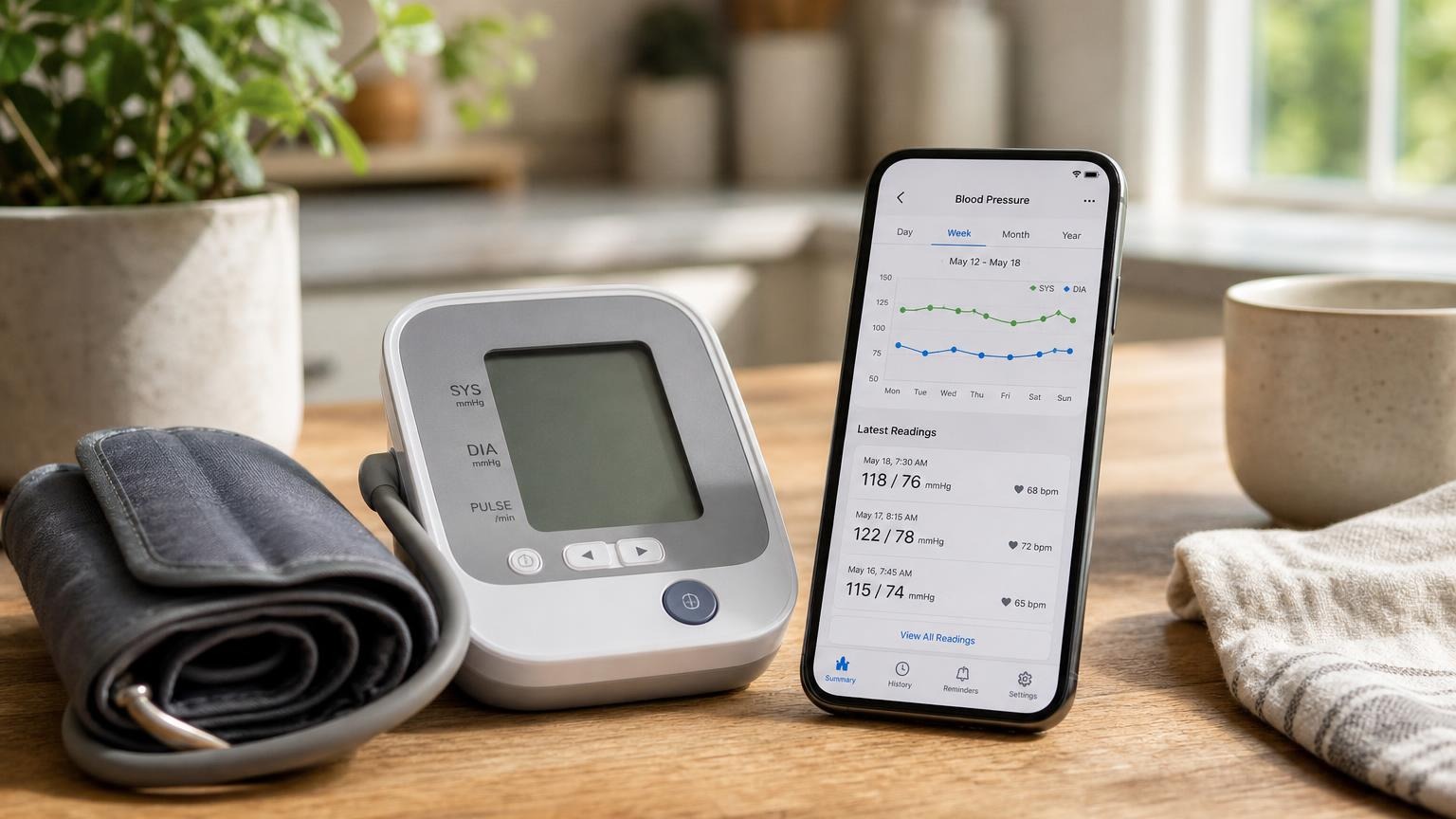
For routine home monitoring, take two readings per sitting, spaced about one minute apart. Write down both numbers and the average, or use your monitor’s averaging feature if it has one.
A third reading is useful when:
- the first reading is much higher than expected
- the first two readings differ by more than about 5 to 10 mmHg
- you were not fully settled before the first reading
- the cuff felt awkward or slipped
- you talked, moved, or changed position during the first attempt
The goal is not to keep measuring until you get the number you want. The goal is to get enough information to tell whether the first value was consistent or whether it was probably affected by setup noise.
If your clinician gave you a specific home-monitoring schedule, follow that plan. The advice here is for general home tracking, not a replacement for individualized medical guidance.
Why the first blood pressure reading is often higher
The first reading is often the most dramatic one because it is taken during the least settled moment.
You may have just sat down, adjusted the cuff, looked at the display, wondered whether the number will be bad, or tightened your arm without noticing. Even small actions can matter because blood pressure measurement is sensitive to posture, muscle tension, and timing.
This is why a single high first reading should usually be repeated before you decide what it means. If the second and third readings fall closer to your usual range, the first number may have captured the measurement process itself as much as your resting baseline.
That does not mean you should delete the first number. It means you should interpret it in context. If high readings keep repeating after you are seated, quiet, and positioned correctly, that pattern deserves more attention than one isolated spike.
For the setup basics, start with our guide to how to take an accurate blood pressure reading at home.
The best way to repeat a blood pressure reading
Repeating a reading only helps if the repeat is cleaner than the first attempt.
Use this simple sequence:
- Sit in a chair with your back supported.
- Keep both feet flat on the floor and legs uncrossed.
- Place the cuff on bare upper arm, not over clothing.
- Support your arm so the cuff is at heart level.
- Sit quietly for 5 minutes before the first reading when possible.
- Take the first reading without talking.
- Wait about one minute.
- Take the second reading in the same position.
- If the two readings are far apart, wait another minute and take a third.
Do not stand up, pace, check your phone, argue with the number, or keep tightening and loosening the cuff between attempts unless the cuff placement was clearly wrong. The cleaner the repeat, the more useful the comparison.
If arm position is the weak point in your setup, see how to position your arm for a blood pressure reading.
Should you average blood pressure readings?
Yes. For home tracking, the average is usually more useful than the single highest number.
A simple approach is:
| Situation | What to record |
|---|---|
| Two readings are close | Record both and use their average |
| First reading is high, second is lower | Take a third if needed; note the pattern |
| Three readings settle downward | Use the average of the later consistent readings, and keep the full record if possible |
| Readings stay high after proper rest | Record the pattern and consider clinician follow-up |
Averaging helps because it reduces the influence of one noisy measurement. It also makes your log easier to interpret over several days. A week of averaged morning and evening readings usually tells a clearer story than a pile of random single numbers.
If you are trying to understand a longer record, our article on how to read a blood pressure log like a clinician explains which patterns matter most.
When you should not keep retaking blood pressure
Repeated measuring can become counterproductive. If you take five, six, or 10 readings in a row, anxiety and arm discomfort can start shaping the results.
Stop after two or three well-done readings unless your clinician specifically told you to do something different. If the numbers are still worrying, write them down with context instead of chasing a more reassuring value.
Useful notes include:
- time of day
- whether you had caffeine, nicotine, exercise, pain, stress, or a full bladder recently
- whether you felt dizzy, short of breath, weak, or unwell
- whether the cuff fit properly
- whether the reading was before or after medication, if that timing matters to your care plan
Context is especially important when a reading comes after a known trigger. For example, blood pressure may look different after coffee, a meal, a hot shower, or a stressful moment.
What to do with a very high reading
If you get a very high reading, do not ignore it, but do not make medication decisions from one rushed measurement either.
First, repeat the reading after several quiet minutes with careful technique. Make sure the cuff is on bare skin, your arm is supported at heart level, your feet are flat, and you are not talking. If the repeat readings remain much higher than your usual range, write down the numbers and contact a qualified clinician for guidance.
Seek urgent medical care if a very high reading comes with concerning symptoms such as chest pain, shortness of breath, confusion, weakness on one side, severe headache, fainting, or sudden vision changes. Symptoms matter more than the exact home-monitor number.
For background on what single readings can and cannot tell you, see why blood pressure fluctuates throughout the day.
A simple home-reading routine
If you want a repeatable routine, keep it boring:
- measure at the same time of day
- use the bathroom first
- avoid caffeine, exercise, nicotine, and meals shortly before your baseline reading
- sit quietly before starting
- take two readings one minute apart
- take a third only if the first two are far apart
- record the average and any obvious context
Morning is often the easiest time to standardize because there are fewer variables before breakfast, caffeine, and daily stress. If you are building a baseline, our morning blood pressure routine gives a step-by-step version.
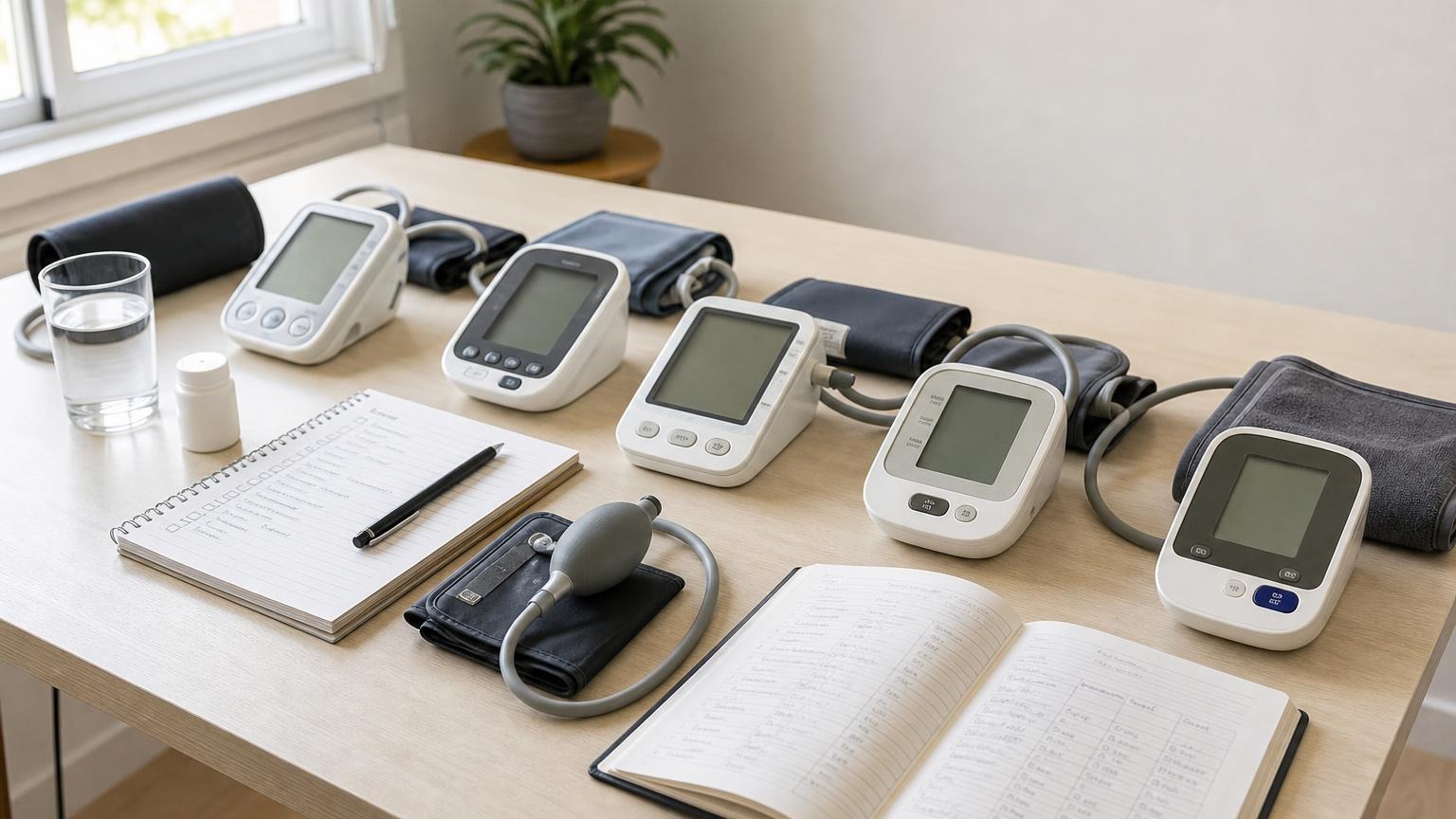
If you want a cleaner way to organize repeated readings, a dedicated log can help you keep averages and notes in one place.
FAQ
Is the first or second blood pressure reading more accurate?
The second reading is often more representative because you are usually more settled by then. But the best answer is the pattern: if two or three properly taken readings are close, the average is more useful than choosing one number.
How long should I wait between blood pressure readings?
Wait about one minute between readings. Keep the cuff and your posture consistent unless you need to fix an obvious setup problem.
Should I throw out the first blood pressure reading?
Not automatically. If the first reading is much higher and the next two are lower under good technique, you can note that pattern and rely more on the average of the consistent readings. Do not hide or delete repeated high values.
How many days should I track blood pressure at home?
For a baseline, many home-monitoring routines use several days to a week of morning and evening readings. Your clinician may ask for a different schedule depending on why you are tracking.
Bottom line
For most home blood pressure checks, take two readings about one minute apart and average them. Take a third if the first two are far apart or the first reading was clearly affected by setup noise.
Do not keep retaking endlessly. A consistent two- or three-reading routine, repeated over several days, is more useful than chasing the perfect single number.
This article is educational and not medical advice. Consult a qualified clinician before making treatment decisions.
Top 5 picks
Best Blood Pressure Monitors For Seniors 2026
Five upper-arm monitors ranked with published scorecards—setup friction, comfort, readability, power convenience, and repeatable accuracy—so you can compare models before you buy.
See our Top 5 blood pressure monitor picksHome-monitoring advice is only useful if it is easy to verify and act on correctly.
We write explainers to be understandable to readers, search engines, and AI answer systems.
Compare our Top 5 blood pressure monitor picks for 2026, then track readings over time with consistent technique.