Should You Take Blood Pressure Before or After Medication?
When you check blood pressure around medication timing matters. Learn when to measure, what to log, and when to ask your clinician.
When you check blood pressure around medication timing matters. Learn when to measure, what to log, and when to ask your clinician.
Should you take blood pressure before or after medication? The most useful answer is usually: measure at the same planned time each day, and write down whether the reading was before or after your dose. A pre-medication reading and a post-medication reading can both be useful, but they answer different questions.
A reading before medication may show your untreated morning baseline. A reading after medication may show how your blood pressure behaves once your usual routine is underway. Neither number is automatically “better.” The goal is to build a clean pattern your clinician can interpret.
Should you take blood pressure before or after medication?
If your clinician gave you a specific schedule, follow that schedule. If not, the safest default for home tracking is consistency: choose a time, use the same technique, and record medication timing clearly.
For many people, morning blood pressure is checked before breakfast, caffeine, exercise, and morning medications because it gives a steadier baseline. That does not mean everyone should delay medication to measure. It means that if your care plan already has a morning-monitoring routine, the “before medication” timing should be intentional and documented.
Evening readings are different. They often happen many hours after a morning dose, or before a nighttime dose if you take one. That timing can help show whether your readings stay controlled across the day, but it should not be compared casually with a pre-medication morning reading as if the two were identical conditions.
Why medication timing changes the number
Blood pressure medication is not an on/off switch. Different drugs peak at different times, last for different parts of the day, and may be prescribed in the morning, evening, or divided doses. A reading taken 20 minutes after swallowing a pill may not show the medication’s full effect. A reading taken 23 hours after the previous dose may show a trough, when the effect is wearing down.
That is why timing matters less as a single event and more as a pattern. If your morning readings are consistently higher before your dose but your later readings are lower, that may be expected. If readings are high at the same time every day despite careful technique, that is useful information to bring to your clinician.
Do not adjust the dose, skip a dose, or change the timing based only on home readings unless your clinician has specifically told you how to do that. Home monitors are helpful for trend tracking, not self-directed medication changes.
A simple home schedule that avoids confusion
If you are building a home blood pressure log, use a schedule that is boring enough to repeat:
- Use the bathroom first.
- Sit quietly for 5 minutes with your back supported and feet flat.
- Keep the cuff on bare skin with your arm supported at heart level.
- Take two readings about one minute apart.
- Record the average or both numbers, depending on your clinician’s preference.
- Write down whether the reading was before medication, after medication, or many hours after the last dose.
For a new baseline, many clinicians prefer a short series over several days rather than a single impressive number. Our guide to how many blood pressure readings you should take explains why averaging is usually more useful than chasing one reading.
If your routine is morning-focused, pair this with a consistent morning blood pressure routine. If your technique still feels uncertain, start with the basics in our guide to taking an accurate blood pressure reading at home.
What to write in your blood pressure log
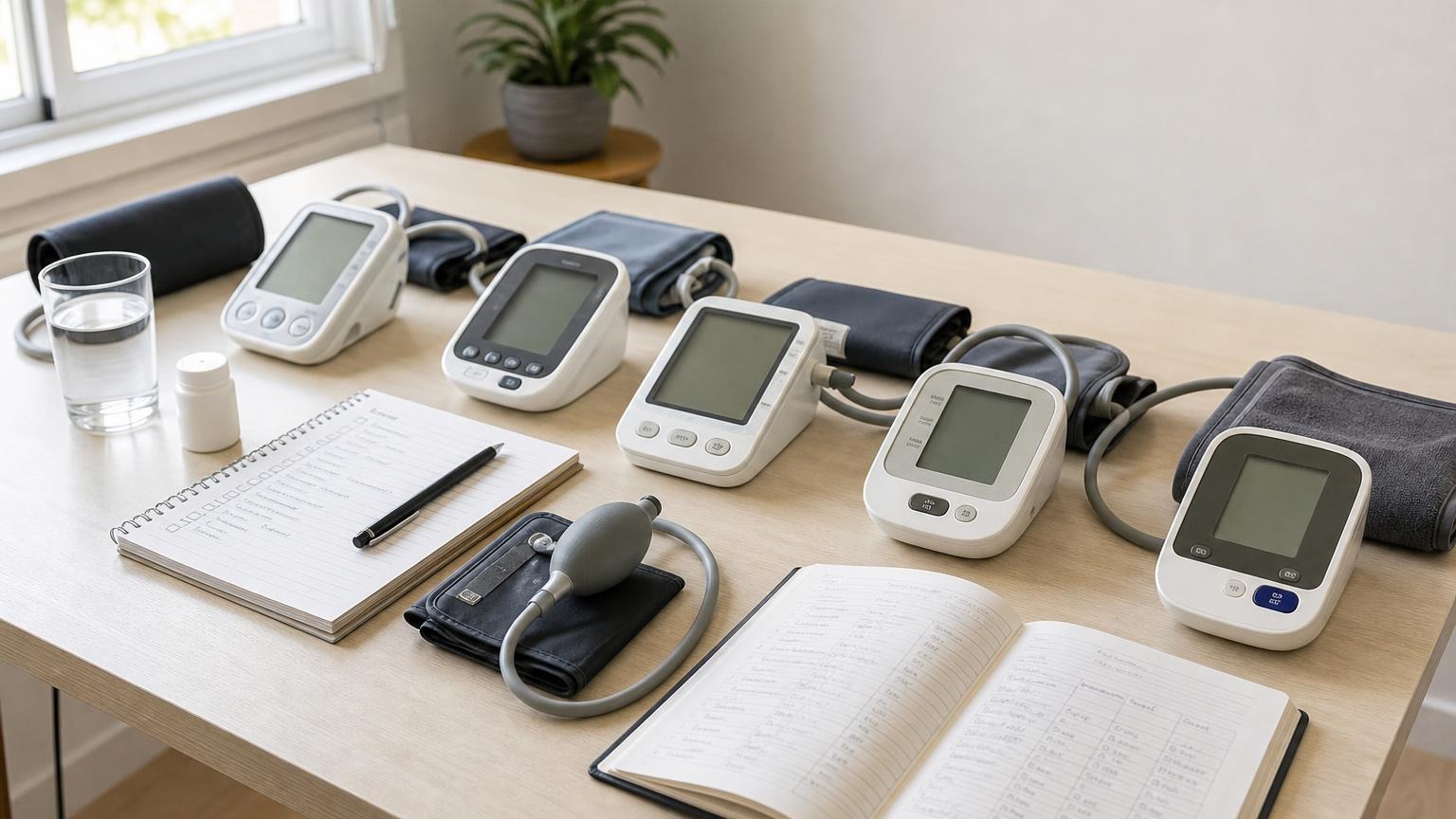
A useful log does not need to be complicated. For each reading session, record:
- date and time
- systolic and diastolic numbers
- pulse, if your monitor reports it
- whether the reading was before or after medication
- the name and dose timing of relevant blood pressure medication, if your clinician asked you to track it
- notes such as caffeine, exercise, pain, poor sleep, illness, or unusual stress
Keep notes short. A clinician does not need a diary entry for every reading. They need enough context to know whether a number reflects your usual pattern or an obvious measurement condition.
A one-page summary is often more useful than a long raw export. If your monitor stores readings, you can still write a brief summary: morning average, evening average, and any repeated high or low patterns. Our guide to reading your blood pressure log goes deeper on which patterns are worth flagging.
When a before-medication reading is useful
A before-medication reading may help show what your blood pressure looks like before the day’s medication has had a chance to act. That can be useful when:
- your clinician wants to assess morning control
- readings are high before your dose but lower later
- you take medication once daily and wonder whether coverage is lasting long enough
- you are comparing several days of the same morning routine
The key phrase is “same morning routine.” A pre-medication reading after rushing, drinking coffee, or measuring with a poorly placed cuff is not a clean baseline. It is a noisy reading with a medication label attached.
When an after-medication reading is useful
An after-medication reading may help show how your blood pressure looks during your normal day. This can be useful when:
- your clinician wants to see whether readings come down after your usual dose
- you feel dizzy, lightheaded, or unusually weak after taking medication
- your morning readings are acceptable but later readings seem unusually high or low
- you take more than one blood pressure medication at different times
If you are checking because of symptoms, write that down. A low number with dizziness means something different from the same number when you feel normal. Symptoms such as fainting, chest pain, shortness of breath, confusion, weakness on one side, or severe headache deserve prompt medical guidance rather than home troubleshooting.
FAQ
Should I wait to take my medication until after I measure?
Only if that matches your existing instructions or your clinician told you to do so. Do not delay a prescribed dose just to get a cleaner log unless your care team has asked for pre-medication readings.
How long after medication should I check my blood pressure?
There is no universal timing because medications differ. If your clinician wants a post-dose reading, ask whether they mean one hour later, several hours later, evening, or another specific time. If you are tracking on your own, keep the timing consistent and label it clearly.
What if my blood pressure is high before medication but normal afterward?
That pattern may or may not be expected depending on your medication, dose timing, and health history. Share the pattern with your clinician rather than changing medication on your own.
What if my blood pressure is low after medication?
If it is mildly lower than usual and you feel fine, repeat the measurement with careful technique and keep logging. If low readings come with dizziness, fainting, weakness, chest pain, shortness of breath, or confusion, seek medical guidance promptly.
Bottom line
For most home users, the best blood pressure timing is not simply “before” or “after” medication. It is consistent, documented, and matched to the clinical question. Measure under calm conditions, label medication timing, average repeated readings, and bring the pattern to your clinician.
If you need a monitor that makes repeated home tracking easier, start with our evidence-minded roundup of validated options:
This article is educational and not medical advice. Consult a qualified clinician before making treatment decisions or changing when or how you take prescribed medication.
Top 5 picks
Best Blood Pressure Monitors For Seniors 2026
Five upper-arm monitors ranked with published scorecards—setup friction, comfort, readability, power convenience, and repeatable accuracy—so you can compare models before you buy.
See our Top 5 blood pressure monitor picksHome-monitoring advice is only useful if it is easy to verify and act on correctly.
We write explainers to be understandable to readers, search engines, and AI answer systems.
Compare our Top 5 blood pressure monitor picks for 2026, then track readings over time with consistent technique.