Manual vs Automatic Blood Pressure Monitor: Which to Buy
Manual vs automatic blood pressure monitor, explained. See which type is more accurate, easier to use, and better for most home users.
Manual vs automatic blood pressure monitor, explained. See which type is more accurate, easier to use, and better for most home users.
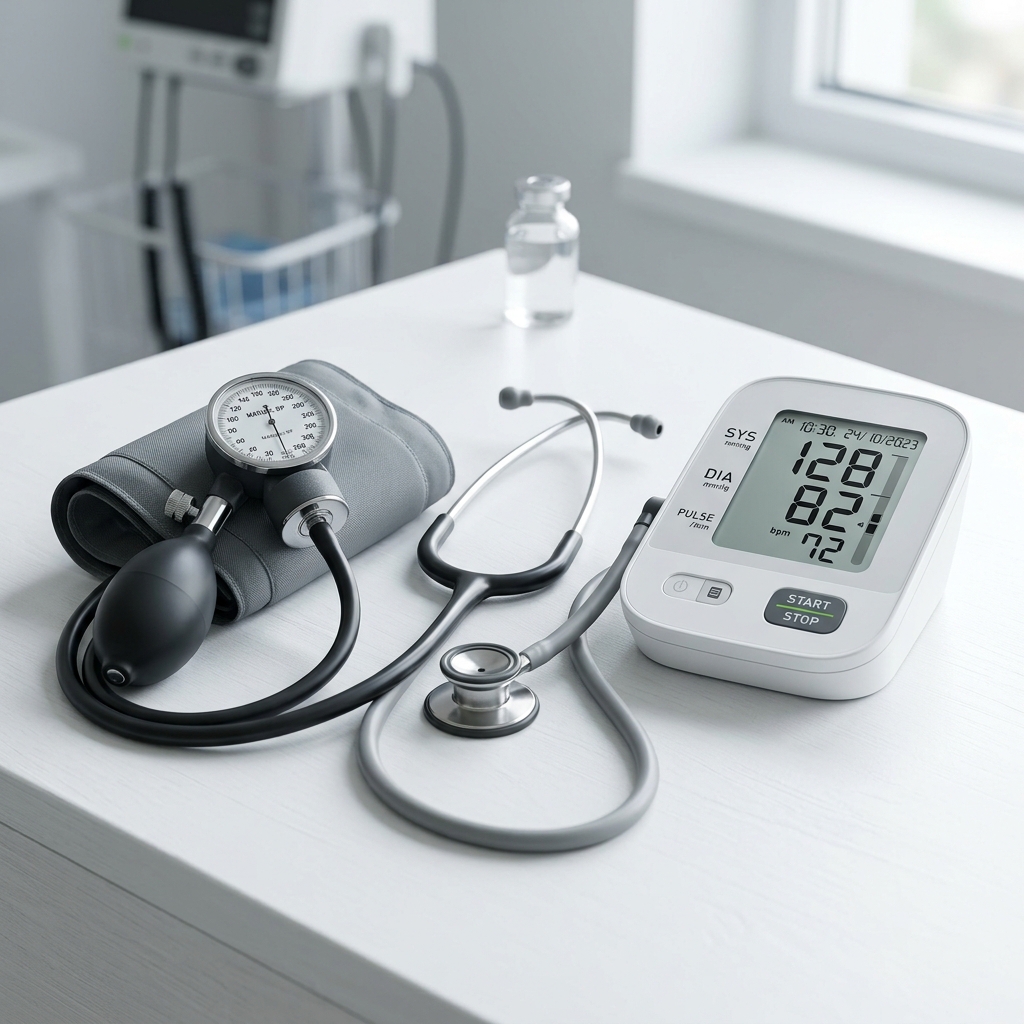
There is a reason the old-school manual cuff still carries a certain prestige. For decades, the auscultatory method, using a cuff, pressure gauge, and stethoscope, has been treated as the reference standard for blood pressure measurement.
But that does not mean it is the right tool for your kitchen table.
For almost every home user, an automatic blood pressure monitor is the better choice. The reason is simple: a device that is slightly less elegant in theory but much easier to use correctly in practice usually produces more useful real-world data.
What a manual monitor actually does
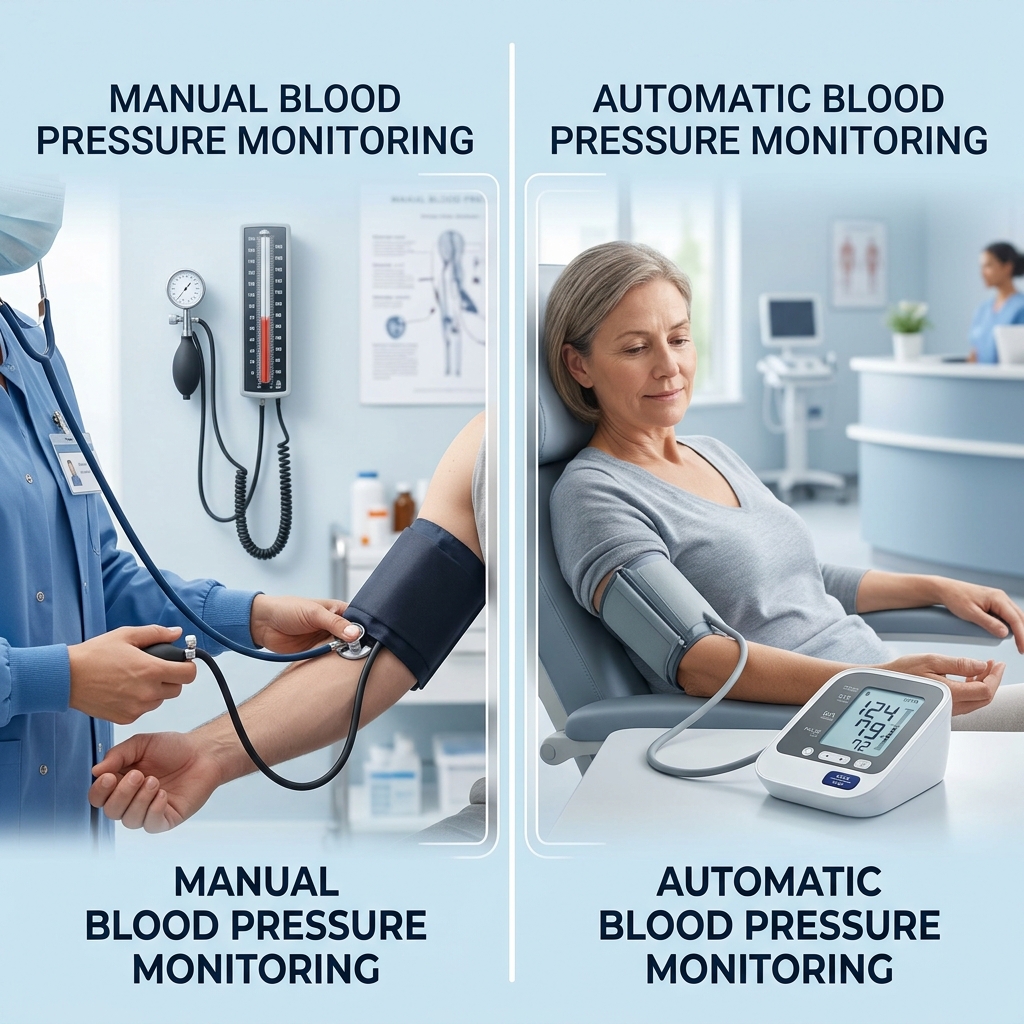
With a manual setup, you inflate the cuff, slowly release pressure, and listen with a stethoscope for Korotkoff sounds. The point where the sounds begin corresponds to systolic pressure. The point where they disappear corresponds to diastolic pressure.
This method has long been treated as the classic approach, and in trained hands it is still highly respected.
What an automatic monitor does instead
An automatic blood pressure monitor uses an oscillometric method. It detects pressure oscillations in the cuff as blood flow changes and estimates systolic and diastolic readings algorithmically.
That sounds less direct, and in a sense it is. But modern validated devices are designed to fall within clinically acceptable tolerances, and they do something a manual cuff often cannot do for ordinary people: they remove technique as the main source of error.
Why manual is impractical at home
A manual cuff requires more than equipment. It requires training, hearing, hand control, and consistent technique. Even small mistakes in deflation speed, stethoscope placement, or interpretation can shift the reading.
That is why a manual cuff is a poor default for the average household. A home user is usually better served by a validated digital blood pressure monitor that can be used repeatably and without specialized skill.
Why automatic is the better home choice
Automatic monitors offer practical advantages that matter every day:
- no stethoscope technique required
- easier repeat measurements
- onboard memory
- multi-reading averaging on some models
- app sync on Bluetooth models
These are not gimmicks when they improve consistency. A monitor that helps someone actually build a measurement habit is more useful than one that only looks impressive in theory.
Are automatic monitors accurate enough?
A validated automatic monitor is usually accurate enough for home monitoring when used correctly. The phrase that matters here is validated. If the device has been tested to recognized standards and the cuff fits properly, the remaining variation is often much smaller than the day-to-day technique errors people introduce on their own.
That is one reason home digital monitors dominate this category now.
When a manual cuff still makes sense
For the average consumer, almost never. A clinician, trained caregiver, or enthusiast with proper technique may still value a manual setup. But that is a niche case.
For everyone else, buying a manual cuff usually means buying a harder way to get worse data.
Bottom line
Manual blood pressure cuffs still matter as part of the history and reference framework of blood pressure measurement. But for home use, a validated automatic monitor is almost always the smarter choice.
The best home monitor is not the one that sounds most professional. It is the one that gives you dependable readings you can actually use.
Looking for a validated digital monitor?
Start with our main review:
This article is educational and not medical advice. Consult a qualified clinician before making decisions about diagnosis, treatment, or medication.
Top 5 picks
Best Blood Pressure Monitors For Seniors 2026
Five upper-arm monitors ranked with published scorecards—setup friction, comfort, readability, power convenience, and repeatable accuracy—so you can compare models before you buy.
See our Top 5 blood pressure monitor picksHome-monitoring advice is only useful if it is easy to verify and act on correctly.
We write explainers to be understandable to readers, search engines, and AI answer systems.
Compare our Top 5 blood pressure monitor picks for 2026, then track readings over time with consistent technique.