Omron vs iHealth Blood Pressure Monitors
Omron and iHealth both make popular home blood pressure monitors, but they differ meaningfully in validation history, app quality, and long-term trust.
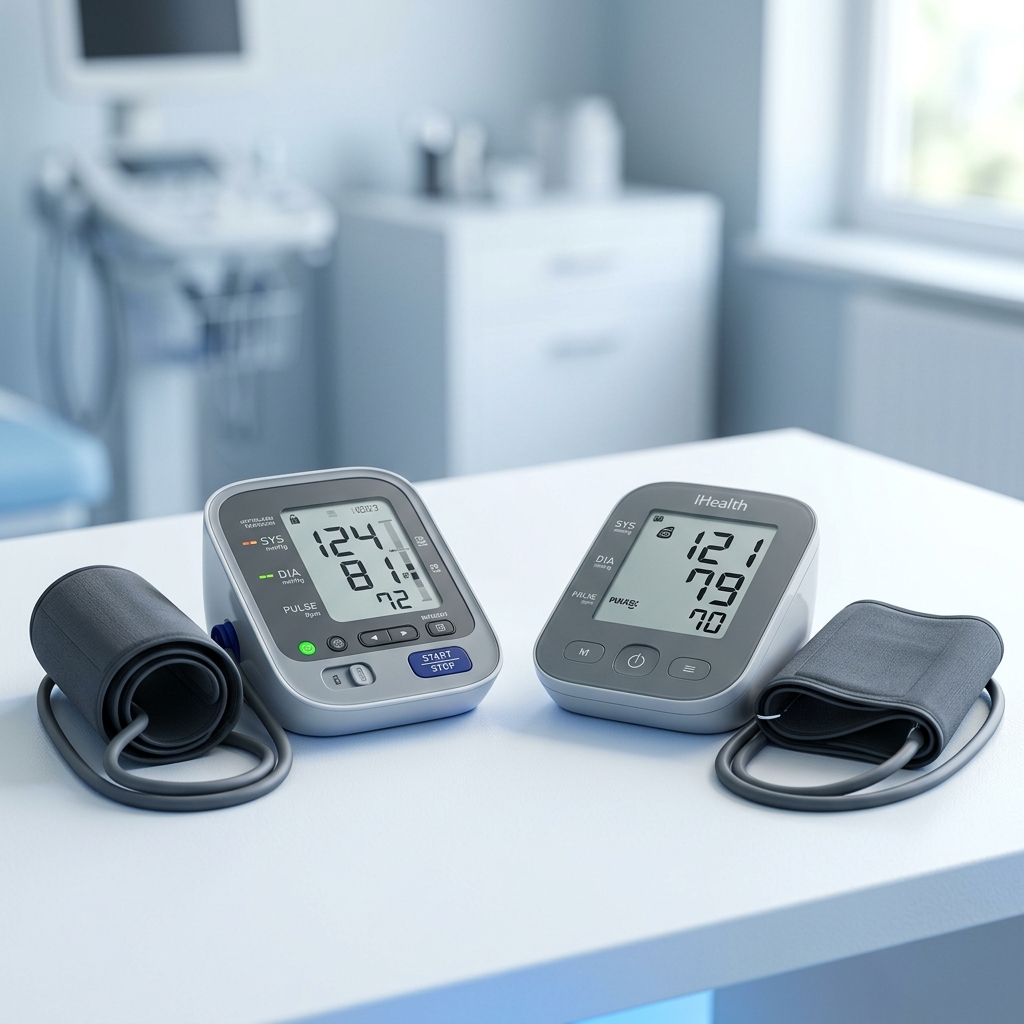
Omron and iHealth both make popular home blood pressure monitors, but they differ meaningfully in validation history, app quality, and long-term trust.
Omron and iHealth are two of the most recognizable names in home blood pressure monitoring, but they are not interchangeable. Both brands sell upper-arm monitors aimed at ordinary home use, both are widely available online, and both market convenience. The difference is that one brand has spent decades building trust in this category, while the other is often chosen because it looks modern and costs a bit less.
That does not automatically make Omron better for every buyer, but it does change the burden of proof. In a category where measurement accuracy matters more than almost anything else, track record counts.
Where Omron has the edge
Omron’s biggest advantage is not aesthetics or app design. It is category credibility.
Omron has a long validation history, broad physician familiarity, and a deep bench of home monitoring devices. If you ask a clinician which consumer blood pressure brand they recognize most often, Omron is usually near the top of the list. That matters because trust in this category is cumulative. A brand that has been producing validated cuffs for years has less to prove than one that still feels relatively consumer-electronics-adjacent.
Omron also tends to offer better averaging features on some of its higher-end devices, which is not trivial. Clinical best practice usually involves multiple readings taken one minute apart, and monitors that automate that process reduce real-world user error.
Where iHealth can appeal
iHealth tends to win people over on design, price, and accessibility. The products often look cleaner, feel more app-native, and seem less intimidating for first-time buyers. If someone wants a monitor that feels modern rather than medical, iHealth has obvious appeal.
That is not nothing. Device design affects adherence. If a monitor feels easier to live with, some people will use it more consistently.
But the key question is whether convenience is being layered on top of solid fundamentals or used to distract from weaker ones. In this category, the fundamentals still matter more.
The app question
For some buyers, the app experience is the deciding factor. This is one of the few areas where the gap may be narrower than people expect.
Omron’s app ecosystem is not always elegant, but the company benefits from being established and predictable. iHealth may feel more modern to some users, but app quality is only useful when syncing is reliable and the data remains easy to export or review over time.
That is why it makes sense to think about software as a secondary criterion. If the app is great but the cuff is mediocre, you are still making the wrong choice.
Which brand is the safer default?
If you are buying for accuracy, long-term trust, and a lower-risk recommendation, Omron is the safer default. It is the brand more likely to satisfy a cautious buyer, a caregiver, or someone who wants a monitor that a physician will recognize immediately.
If you are buying for a more design-forward experience and lower entry price, iHealth can make sense, but it needs closer scrutiny model by model. You do not buy a brand here. You buy a specific validated monitor.
The right way to decide
Do not choose based on the brand homepage. Choose based on the individual model.
Before buying, check:
- whether the exact monitor is independently validated
- whether the cuff size fits the user’s arm
- whether the onboard display is readable
- whether the app is genuinely helpful for your use case
- whether you are paying for convenience or just for looks
That checklist matters more than the logo on the box.
Bottom line
Omron is usually the more conservative recommendation because it has the stronger reputation in clinically validated home blood pressure monitoring. iHealth can still be a reasonable option, especially for buyers who care about a simpler digital experience, but it earns less automatic trust.
If you want the safest default, start with Omron. If you are considering iHealth, verify the exact model before buying and make sure you are not trading away reliability for polish.
Want the broader ranking?
We ranked the home blood pressure monitors we think are strongest overall, including established-brand options and value picks:
This article is educational and not medical advice. Consult a qualified clinician before making decisions about diagnosis, treatment, or medication.
Top 5 picks
Best Blood Pressure Monitors For Seniors 2026
Five upper-arm monitors ranked with published scorecards—setup friction, comfort, readability, power convenience, and repeatable accuracy—so you can compare models before you buy.
See our Top 5 blood pressure monitor picksHome-monitoring advice is only useful if it is easy to verify and act on correctly.
We write explainers to be understandable to readers, search engines, and AI answer systems.
Compare our Top 5 blood pressure monitor picks for 2026, then track readings over time with consistent technique.