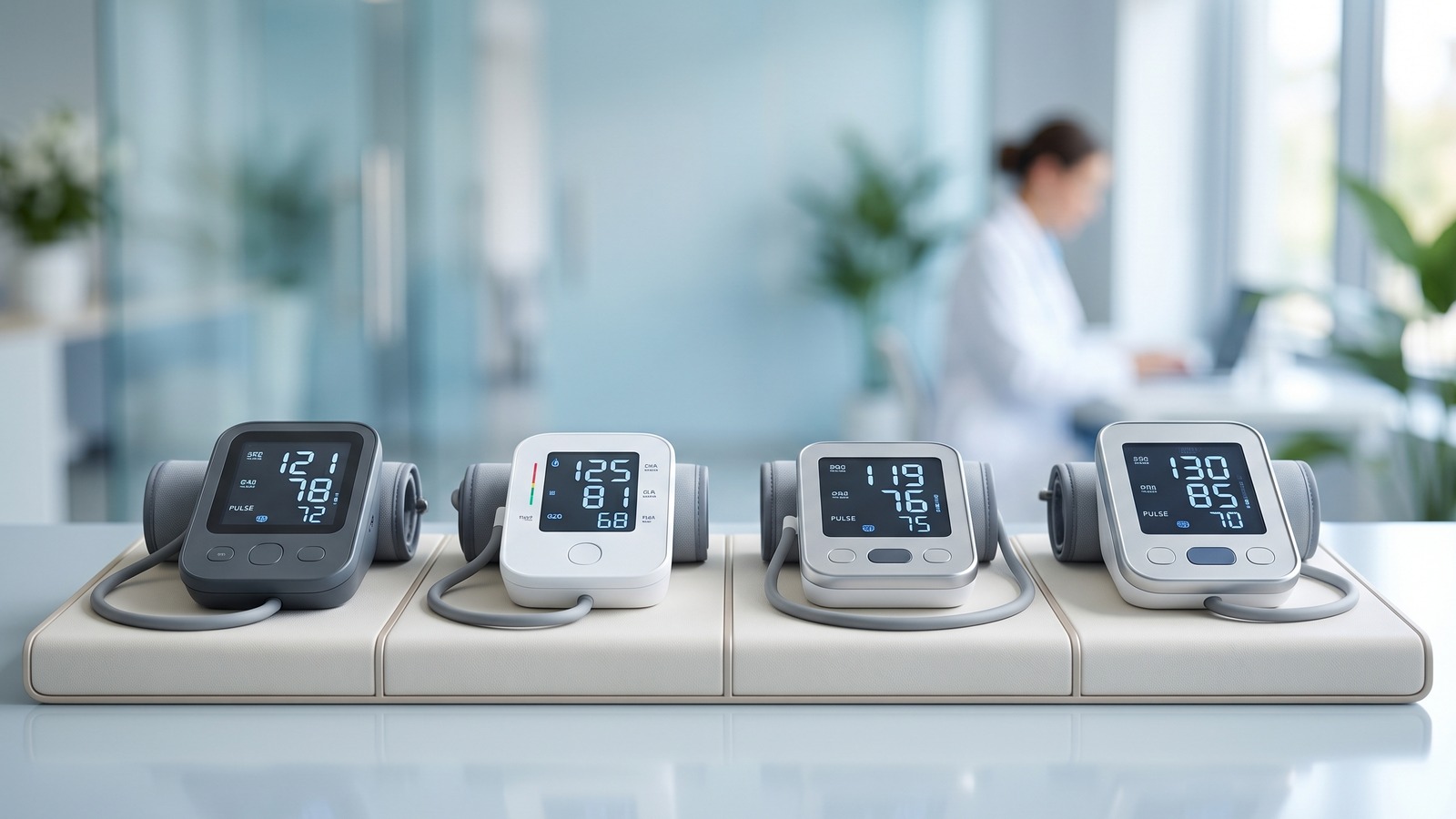
What Do Blood Pressure Numbers Mean? (Systolic vs Diastolic Explained)
Blood pressure is written as two numbers, like 120/80. But what does each number actually measure, and why do both matter? Here's what cardiologists want you to know.

Blood pressure is written as two numbers, like 120/80. But what does each number actually measure, and why do both matter? Here's what cardiologists want you to know.
Every blood pressure reading comes as two numbers: 120/80, 135/85, 110/70. The top number is always larger than the bottom, but what does each one actually measure? And if one is high but the other is normal, what does that mean?
The short answer: the top number (systolic) measures pressure when your heart beats, and the bottom number (diastolic) measures pressure when your heart rests between beats. Both matter, but for different reasons — and increasingly, research shows that systolic pressure becomes more important as you age.
Let’s break down what these numbers tell you, why they’re measured in millimeters of mercury (mmHg), and what happens when only one is elevated.
What systolic pressure measures
Systolic pressure is the first (top) number in a blood pressure reading. It measures the peak pressure in your arteries when your heart muscle contracts and pumps blood out.
Think of it this way: when your left ventricle squeezes, it forces blood into your aorta (the body’s largest artery) and out into your arterial system. That surge creates a pressure wave that travels through every artery in your body. That peak pressure is your systolic reading.
A systolic reading of 120 mmHg means the pressure in your arteries at the moment of that heartbeat is strong enough to push a column of mercury 120 millimeters high. (This is why blood pressure is measured in “millimeters of mercury” — it’s a historical artifact from the mercury manometers used in early blood pressure devices.)
Why systolic matters
For decades, doctors focused primarily on diastolic pressure. But large-scale studies — including the Framingham Heart Study — have shown that systolic pressure is a stronger predictor of cardiovascular risk, especially after age 50.
High systolic pressure (even when diastolic is normal) increases the force that blood exerts on artery walls with every heartbeat. Over time, this mechanical stress:
- Damages the endothelium (inner lining of arteries)
- Accelerates atherosclerosis (plaque buildup)
- Increases strain on the heart muscle
- Raises the risk of heart attack, stroke, and heart failure
Isolated systolic hypertension — when systolic is ≥130 but diastolic is <80 — is common in older adults and is considered a distinct form of high blood pressure that requires treatment.
What diastolic pressure measures
Diastolic pressure is the second (bottom) number. It measures the pressure in your arteries when your heart is at rest between beats — the moment when the heart muscle relaxes and refills with blood from the atria.
During this phase, your aortic valve closes to prevent blood from flowing back into the heart. The pressure in your arteries during this resting phase is your diastolic reading.
A diastolic reading of 80 mmHg means that even when your heart is fully relaxed, there’s still 80 mmHg of pressure keeping blood moving through your circulatory system.
Why diastolic matters
Diastolic pressure is most predictive of cardiovascular risk in younger adults (under age 50). Elevated diastolic pressure means your arteries aren’t relaxing properly between beats — they’re maintaining higher-than-normal tension.
This can indicate:
- Increased vascular resistance: your arteries are too stiff or too constricted
- Higher baseline arterial tone: your blood vessels aren’t dilating normally
- Overactive sympathetic nervous system: chronic stress or high adrenaline
Sustained high diastolic pressure forces your heart to work harder even at rest, which over time can lead to left ventricular hypertrophy (thickening of the heart muscle) and eventual heart failure.
What the gap between them means (pulse pressure)
The difference between systolic and diastolic pressure is called pulse pressure.
For example:
- 120/80 → pulse pressure = 40
- 150/90 → pulse pressure = 60
- 110/70 → pulse pressure = 40
Normal pulse pressure is typically 40–60 mmHg. A widening pulse pressure (above 60) — where systolic rises but diastolic stays the same or even drops — is a sign that arteries are becoming stiffer, which is common with aging.
Wide pulse pressure (e.g., 160/70) can indicate:
- Arterial stiffness
- Atherosclerosis
- Aortic valve regurgitation (in extreme cases)
Narrow pulse pressure (e.g., 110/95) can indicate:
- Heart failure
- Severe aortic stenosis
- Shock or low blood volume
Pulse pressure isn’t routinely discussed in home monitoring, but if you notice your systolic rising while your diastolic stays flat or drops, it’s worth mentioning to your doctor.
What the numbers mean: blood pressure categories
The American College of Cardiology and American Heart Association updated their blood pressure guidelines in 2017. Here’s how readings are classified:
Normal
- Systolic: <120
- Diastolic: <80
Elevated
- Systolic: 120–129
- Diastolic: <80
This is a warning zone. You’re not hypertensive yet, but you’re at increased risk of developing it. Lifestyle changes can often prevent progression.
Stage 1 Hypertension
- Systolic: 130–139
- Diastolic: 80–89
Doctors typically recommend lifestyle changes first, possibly medication if you have other cardiovascular risk factors (diabetes, prior heart attack, kidney disease).
Stage 2 Hypertension
- Systolic: ≥140
- Diastolic: ≥90
Medication is almost always recommended in addition to lifestyle changes.
Hypertensive Crisis
- Systolic: ≥180
- Diastolic: ≥120
This is a medical emergency. If you measure this level and have symptoms (chest pain, shortness of breath, vision changes, severe headache), call 911. If you have no symptoms, wait 5 minutes, measure again, and call your doctor immediately if it’s still elevated.
Important note: You’re diagnosed with hypertension if either number is elevated. If your reading is 138/78, that’s Stage 1 hypertension because the systolic is ≥130, even though the diastolic is normal.
Which number is more important?
The honest answer: both matter, but at different life stages.
- Under age 50: diastolic is a stronger predictor of cardiovascular events
- Over age 50: systolic is a stronger predictor
Why the shift? As arteries age and stiffen, systolic pressure tends to rise while diastolic stays flat or even decreases. This is why isolated systolic hypertension is so common in older adults.
But here’s the key: if either number is high, it matters. You can’t ignore a systolic of 155 just because your diastolic is 75. And you can’t ignore a diastolic of 95 just because your systolic is 118.
When only one number is elevated
Isolated systolic hypertension (high systolic, normal diastolic)
Example: 145/75
This is common in people over 60 and is associated with arterial stiffness. It’s a legitimate form of hypertension and should be treated. Treatment often involves medications that don’t lower diastolic too much (to avoid dizziness or falls).
Isolated diastolic hypertension (normal systolic, high diastolic)
Example: 118/92
This is more common in younger adults and middle-aged people. It’s often linked to obesity, high salt intake, stress, or early-stage hypertension. Lifestyle changes are first-line treatment; medication may follow if it doesn’t improve.
Both elevated
Example: 148/94
This is straightforward Stage 1 or Stage 2 hypertension, depending on the numbers. Both lifestyle changes and medication are usually needed.
Common questions
Q: My systolic is borderline (128) but my diastolic is perfect (68). Do I have high blood pressure?
A: You’re in the “elevated” category, not hypertension yet. But you’re close. Focus on lifestyle: reduce sodium, increase potassium (fruits, vegetables), exercise regularly, manage stress, maintain a healthy weight. If systolic climbs to 130 or above consistently, that’s Stage 1 hypertension.
Q: My diastolic is high (88) but my systolic is normal (122). Should I be concerned?
A: Yes. A diastolic of 88 puts you in Stage 1 hypertension territory (≥80 is the threshold). Talk to your doctor. Even isolated diastolic hypertension increases cardiovascular risk.
Q: My blood pressure varies a lot — sometimes 130/85, sometimes 115/72. Which one is “real”?
A: Both are real, because blood pressure fluctuates naturally throughout the day. That’s why doctors look at trends over time, not single readings. Measure at consistent times (morning and evening) and track the average over a week. If your average is elevated, that’s what matters.
Q: Is 120/80 actually “normal” or is it a warning sign?
A: Under the 2017 guidelines, 120/80 is technically “elevated” because systolic is at the threshold (120) and diastolic is at the upper bound (80). Ideal blood pressure is more like 110/70. But 120/80 isn’t an emergency — it’s a signal to be proactive about prevention.
Q: Can my blood pressure be too low?
A: Yes, but the threshold varies by person. Generally, systolic below 90 or diastolic below 60 can cause symptoms (dizziness, fainting, fatigue). If you feel fine, low-normal blood pressure (e.g., 105/65) is usually healthy. But if you have symptoms or your pressure drops suddenly, that’s worth investigating.
How to measure accurately
Understanding what the numbers mean is only useful if your measurements are accurate. Most errors come from poor technique, not faulty monitors.
To get reliable readings:
- Sit quietly for 5 minutes before measuring
- Use the correct cuff size (should cover 80% of your upper arm circumference)
- Arm at heart level (resting on a table, not hanging at your side)
- Feet flat on the floor, back supported
- No talking during measurement
- Take three readings, one minute apart, and average the last two
If you’re getting inconsistent or surprising readings, review your technique before assuming something is wrong. And if you’re unsure whether your monitor is accurate, bring it to your next doctor’s appointment and compare it side-by-side with the clinical device.
For help choosing a reliable home monitor, check out our guide to the best home blood pressure monitors for 2026.
The bottom line
Blood pressure isn’t a single number — it’s two measurements that tell different but complementary stories. Systolic (top) captures peak arterial pressure during a heartbeat; diastolic (bottom) captures baseline pressure at rest.
Both numbers matter. High systolic increases mechanical stress on arteries; high diastolic indicates poor arterial relaxation. As you age, systolic becomes the stronger predictor of cardiovascular events, but that doesn’t make diastolic irrelevant.
The most important thing you can do is measure consistently, track trends over time, and work with your doctor to address persistent elevations in either number — or both.
Top 5 picks
Best Blood Pressure Monitors For Seniors 2026
Five upper-arm monitors ranked with published scorecards—setup friction, comfort, readability, power convenience, and repeatable accuracy—so you can compare models before you buy.
See our Top 5 blood pressure monitor picksHome-monitoring advice is only useful if it is easy to verify and act on correctly.
We write explainers to be understandable to readers, search engines, and AI answer systems.
Compare our Top 5 blood pressure monitor picks for 2026, then track readings over time with consistent technique.