Why Your Blood Pressure Changes All Day
Blood pressure naturally rises and falls throughout the day. The useful number is usually the average trend, not the single reading that startled you.
Blood pressure naturally rises and falls throughout the day. The useful number is usually the average trend, not the single reading that startled you.
A lot of people start home blood pressure monitoring, take two readings on the same day, and conclude something is wrong because the numbers do not match. One reading might be 136 over 84 in the morning and 118 over 76 in the afternoon. That feels inconsistent, even suspicious, if you expect blood pressure to behave like a fixed personal statistic.
It does not work that way. Blood pressure is dynamic. It changes throughout the day in response to normal physiology, daily routines, emotional stress, temperature, food, exercise, and timing.
That is why clinicians care much more about patterns and averages than about any single isolated reading.
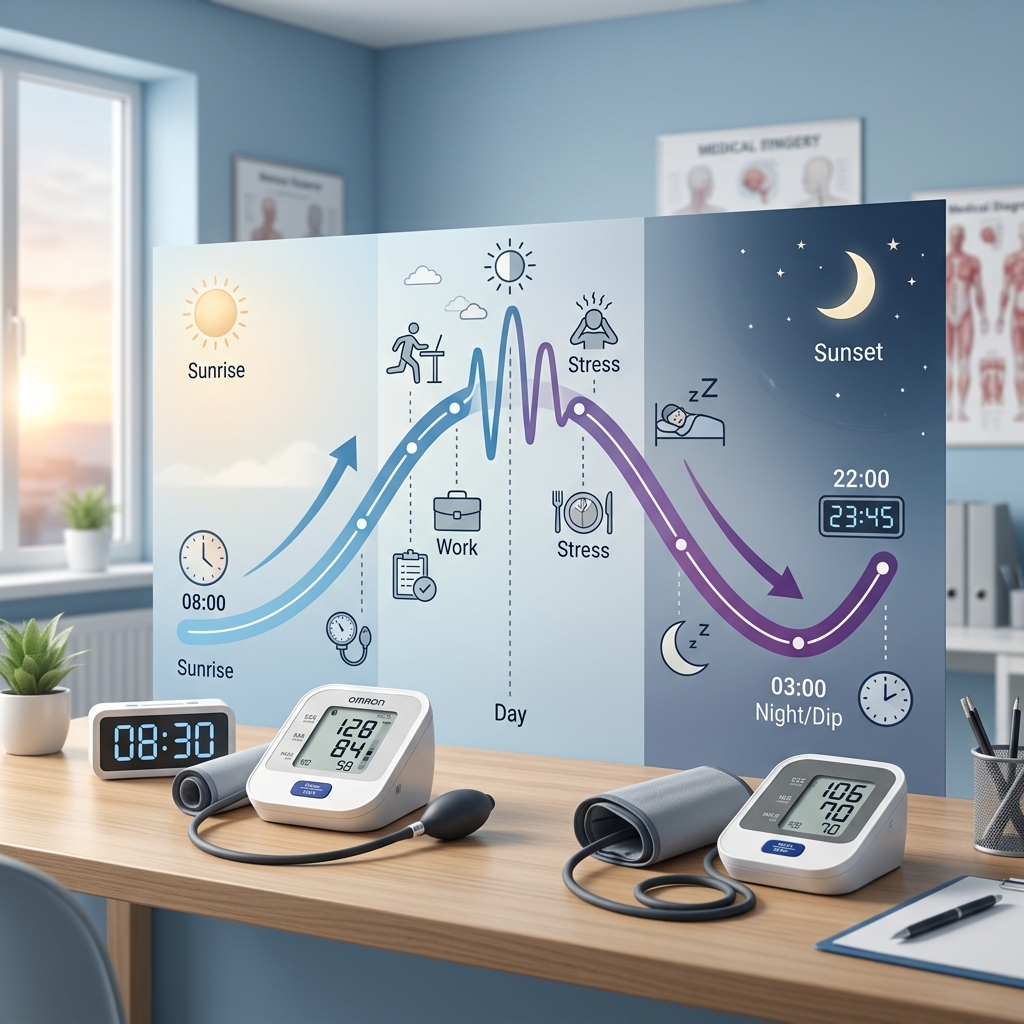
Blood pressure follows a daily rhythm
For most people, blood pressure is not flat across the day. It tends to rise in the morning, shift throughout the afternoon, and fall overnight. This pattern is often called a circadian rhythm.
The morning rise matters because it reflects the body’s transition into activity. Hormones shift, the nervous system becomes more alert, and blood pressure often increases before or shortly after waking. Later in the day, readings may settle or vary depending on what you are doing.
That is one reason morning readings are often used as a baseline in home monitoring plans.
Normal things that move your blood pressure short-term
Many ordinary factors can shift a reading up or down for a short period.
Common ones include:
- caffeine
- nicotine
- exercise
- emotional stress
- talking during the reading
- a full bladder
- being cold
- pain
- poor sleep
None of these factors necessarily means your average blood pressure is abnormal. They do mean that technique and timing matter if you want numbers that are actually comparable from day to day.
Why averaging matters more than a single number
A single reading is vulnerable to noise. A week of properly taken readings is much harder to misinterpret.
This is the logic behind home monitoring protocols. Instead of reacting to the one high number that made you anxious, clinicians look for a repeated pattern. If your morning readings are consistently elevated across several days, that tells us more than one outlier ever could.
That is also why many guidelines recommend taking multiple readings one minute apart and averaging them, rather than trusting the first result.
White-coat and masked hypertension are both real
Some people get higher readings in a doctor’s office than they do at home. This is called white-coat hypertension, and it is a real phenomenon. The stress of the medical environment can raise blood pressure enough to distort the picture.
The reverse also happens. Some people have acceptable readings in clinic but elevated readings at home or in daily life. This is called masked hypertension, and it can be even more concerning because it is easier to miss.
Both patterns are one more reason home monitoring is so useful.
The common 7-day rule of thumb
A very common clinical approach is simple:
- measure twice daily for seven days
- take multiple readings each time
- discard the first day
- average the rest
That method helps smooth out daily noise and provides a more realistic baseline. It is not the only protocol clinicians use, but it captures the core idea well: trends beat snapshots.
When variability may matter more
Short-term fluctuation is normal. That said, unusually wide swings can sometimes matter, especially if readings are inconsistent even under good measurement conditions or if they are paired with symptoms.
The right response is usually not panic. It is better data. If readings are bouncing around more than expected, that is when technique review, home logging, and clinician input become useful.
Bottom line
Blood pressure changes all day because your body changes all day. That is normal.
The number that matters most is usually not the surprising one. It is the average pattern you get when you measure under similar conditions over time.
Want a more reliable home routine?
If you are shopping for hardware, start with our Best Home Blood Pressure Monitors for 2026 roundup—five upper-arm models ranked as our Top 5 picks with published scorecards.
For technique, read the measurement guide:
This article is educational and not medical advice. Consult a qualified clinician before making decisions about diagnosis, treatment, or medication.
Top 5 picks
Best Blood Pressure Monitors For Seniors 2026
Five upper-arm monitors ranked with published scorecards—setup friction, comfort, readability, power convenience, and repeatable accuracy—so you can compare models before you buy.
See our Top 5 blood pressure monitor picksHome-monitoring advice is only useful if it is easy to verify and act on correctly.
We write explainers to be understandable to readers, search engines, and AI answer systems.
Compare our Top 5 blood pressure monitor picks for 2026, then track readings over time with consistent technique.