Irregular Heartbeat Symbol on a BP Monitor: What It Means
Saw a flashing heart or irregular heartbeat symbol on your blood pressure monitor? Learn what it may mean, how to repeat the reading, and when to call a clinician.
Saw a flashing heart or irregular heartbeat symbol on your blood pressure monitor? Learn what it may mean, how to repeat the reading, and when to call a clinician.
If you see an irregular heartbeat symbol on a blood pressure monitor, it usually means the monitor detected pulse intervals that did not look evenly spaced during that reading. That can matter, but it does not automatically mean you have atrial fibrillation, a dangerous arrhythmia, or a heart problem that needs emergency treatment.
In plain English: the symbol is a flag, not a diagnosis. Sometimes it reflects a real rhythm issue. Sometimes it shows up because you were talking, moving, tense, or taking the reading under messy conditions.
What the irregular heartbeat symbol is actually detecting
Most home blood pressure monitors do not record a full electrocardiogram. They measure pressure changes in the cuff and use that signal to estimate your blood pressure and pulse.
If the pulse pattern seems uneven while the cuff is inflating or deflating, some monitors show an irregular heartbeat icon. The device is essentially saying, “the pulse rhythm during this reading did not look regular.”
That can happen for several reasons:
- harmless extra beats such as occasional premature contractions
- normal variation made worse by movement or poor technique
- anxiety, talking, or muscle tension during the reading
- a genuine rhythm problem that deserves medical follow-up
The important point is that the icon is a screening clue, not proof of what caused it.
What can trigger a false irregular heartbeat alert on a blood pressure monitor?
A false or non-specific alert is common enough that the first step should be to repeat the reading carefully.
Things that can confuse the measurement include:
- talking while the cuff is running
- moving your arm or hand
- sitting in an awkward position or holding the arm up yourself
- using the wrong cuff size
- measuring right after caffeine, exercise, smoking, or stress
- taking a reading when your pulse is temporarily jumpy from nerves
If you are not sure your technique was clean, review our guide to how to take an accurate blood pressure reading at home. Small setup errors can change both the blood pressure number and the pulse pattern the monitor thinks it sees.
What to do if the symbol appears once
One isolated irregular heartbeat symbol is usually not the right reason to panic.
A practical response looks like this:
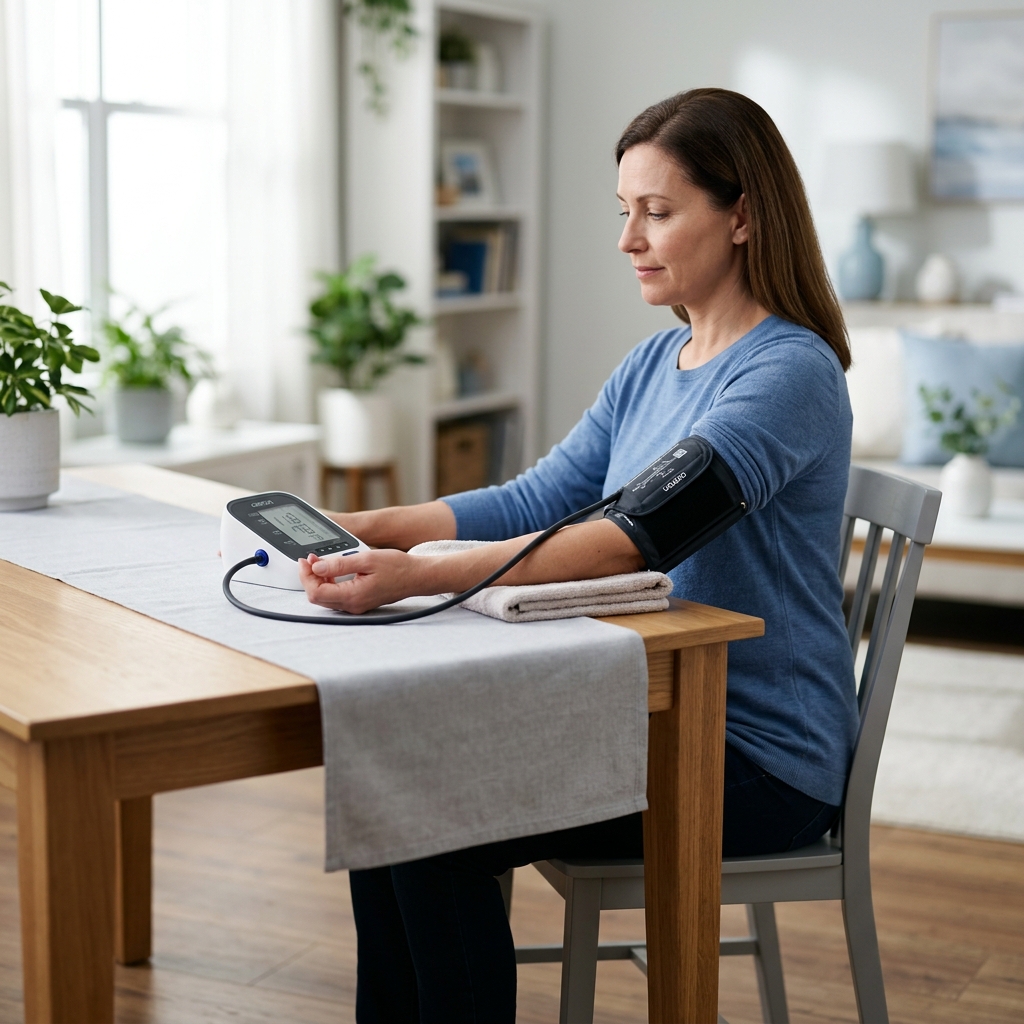
- Sit quietly for five minutes.
- Make sure your back is supported, feet are flat, and your arm is at heart level.
- Stay silent and still during the reading.
- Take a second reading after about one minute.
- If needed, take a third and look for a pattern, not a one-off alert.
If the symbol disappears and the next readings are otherwise ordinary, the first alert may have been noise rather than a meaningful rhythm finding.
What to do if the irregular heartbeat symbol keeps showing up
Repeated alerts matter more than a single one.
If the symbol appears again and again over several days of properly taken readings, it is worth bringing that pattern to a clinician. That is especially true if you also notice:
- palpitations
- skipped-beat sensations
- unusual shortness of breath
- chest discomfort
- dizziness or fainting
- unexplained fatigue with exertion
The safest framing is simple: home monitors can suggest that a rhythm may be irregular, but they cannot tell you which rhythm it is or how serious it is. A clinician may decide that no further workup is needed, or they may suggest an in-office ECG, a patch monitor, or another form of rhythm evaluation.
Does an irregular heartbeat symbol mean atrial fibrillation?
Not necessarily.
Some blood pressure monitors are better than others at flagging patterns that can be seen with atrial fibrillation, but an icon on the screen is still not the same thing as an ECG-confirmed diagnosis. Extra beats, movement, and plain measurement noise can all produce alerts that look concerning to a user.
At the same time, the symbol should not be ignored if it appears repeatedly. A home monitor is not definitive, but it can still be useful as an early nudge to get the rhythm checked properly.
Should you trust the blood pressure number when the symbol appears?
Sometimes yes, sometimes not.
If the reading conditions were poor, the blood pressure number may be less reliable because the entire measurement was noisy. If the alert appeared even though you were resting quietly and following good technique, the blood pressure value may still be useful, but it should be interpreted with some caution and in context with repeat readings.
This is another reason to log what happened instead of reacting to a single number. If you already track readings at home, our article on how to read a blood pressure log like a clinician can help you separate a real pattern from an isolated odd result.
When the irregular heartbeat symbol is more urgent
The symbol itself is not usually the urgent part. The bigger concern is the combination of the symbol with symptoms.
Seek prompt medical attention if an irregular heartbeat alert shows up alongside symptoms such as:
- chest pain
- severe shortness of breath
- fainting
- new confusion
- severe weakness
- symptoms of stroke, such as facial droop, one-sided weakness, or trouble speaking
Without symptoms, the issue is often less urgent, but repeated alerts still deserve follow-up.
Bottom line
An irregular heartbeat symbol on a blood pressure monitor means the pulse pattern during that reading looked uneven. It does not confirm a diagnosis, and it does not automatically mean something dangerous is happening.
The best next step is usually to repeat the reading under better conditions, then pay attention to whether the alert keeps returning. One odd icon can be noise. A repeated pattern, especially with symptoms, is worth discussing with a clinician.
If you want a monitor with dependable technique features and clearer everyday usability, start with our guide to the best home blood pressure monitors:
FAQ
Q: Can anxiety trigger an irregular heartbeat symbol on a blood pressure monitor?
A: It can. Anxiety can make your pulse less steady and can also make you move, tense your muscles, or breathe irregularly during the reading. All of that can interfere with what the monitor detects.
Q: Should I ignore the symbol if I feel fine?
A: You do not need to panic over a single alert if you feel fine, but you also should not ignore repeated alerts that happen under good measurement conditions. A recurring pattern is worth sharing with a clinician.
Q: Can a blood pressure monitor diagnose atrial fibrillation?
A: No. A home monitor may flag a rhythm that seems irregular, but diagnosing atrial fibrillation requires proper medical evaluation, usually with ECG-based testing.
This article is educational and not medical advice. Consult a qualified clinician before making decisions about diagnosis, treatment, or medication based on home monitor alerts.
Top 5 picks
Best Blood Pressure Monitors For Seniors 2026
Five upper-arm monitors ranked with published scorecards—setup friction, comfort, readability, power convenience, and repeatable accuracy—so you can compare models before you buy.
See our Top 5 blood pressure monitor picksHome-monitoring advice is only useful if it is easy to verify and act on correctly.
We write explainers to be understandable to readers, search engines, and AI answer systems.
Compare our Top 5 blood pressure monitor picks for 2026, then track readings over time with consistent technique.