How to Read a Blood Pressure Log Like a Clinician
Learn how to read a blood pressure log, spot useful patterns, ignore noisy outliers, and know when your home readings are worth a doctor follow-up.
Learn how to read a blood pressure log, spot useful patterns, ignore noisy outliers, and know when your home readings are worth a doctor follow-up.
A blood pressure log is only useful if you know how to read it. Many people collect two weeks of home readings, stare at a list of numbers, and still do not know what matters. They fixate on the single 148/92, ignore the six calmer readings around it, or assume every difference means something is wrong.
Usually, it does not. A good blood pressure log is less about one dramatic number and more about repeated patterns under similar conditions. If you can read the pattern, you can have a much better conversation with your clinician and make smarter use of home monitoring.
What a blood pressure log is supposed to show
A home log is not meant to diagnose you from one sitting. It is meant to answer a more practical question: what does your blood pressure tend to do when measured correctly over time?
That is why home monitoring works best when readings are taken on a repeatable schedule, usually morning and evening, with the same basic technique each time. If your process is inconsistent, your log becomes noisy. If your process is steady, the log becomes much easier to interpret.
If you are still working on technique, start with our guide to how to take an accurate blood pressure reading at home. The cleaner the measurement, the more useful the log.
How to read a blood pressure log: start with averages
The first thing to look for in a blood pressure log is the average, not the highest reading.
A single elevated reading can happen for all kinds of ordinary reasons:
- you measured too soon after coffee
- you were rushing
- you were talking
- your bladder was full
- your arm was hanging too low
- you were stressed, in pain, or cold
That does not mean the reading is meaningless. It means it needs context.
When clinicians look at a home blood pressure log, they usually care more about the repeated baseline than the isolated spike. In practical terms, these are the numbers worth summarizing first:
- Your overall average across the monitoring period
- Your morning average
- Your evening average
- How often the readings are above your usual range
If you do not want to calculate every possible metric, start there. Even a simple average tells a clearer story than a page full of scattered numbers.
Pay attention to morning vs evening patterns
Your morning and evening readings should not always be identical. Blood pressure changes through the day, which is why timing matters in the first place. But a good log often reveals a pattern that repeats.
For example:
- morning readings consistently higher than evening readings
- readings that stay elevated all week, regardless of time
- normal readings most days with occasional obvious outliers
- numbers that improve after the first day once you settle into the routine
Those patterns are usually more informative than any one entry.
If your morning readings are regularly higher, that may simply reflect your normal morning surge. If they are consistently much higher than your evening readings, it is worth discussing with a clinician. Our article on the best time of day to check blood pressure explains why morning numbers often carry extra weight.
Know which readings are probably noise
Not every odd number deserves equal attention.
A noisy reading often has one or more of these features:
- it happened right after a known trigger, like caffeine or stress
- it is far away from the rest of the week’s readings
- the second and third readings were much lower
- the technique was obviously off
- it never repeated under similar conditions
That does not mean you should delete it from your log. It means you should label it mentally as a possible outlier instead of treating it as the headline.
This is also why many home protocols use two or three readings at one sitting and rely more on the later readings than the first one. If the first number is high but the next two settle down, the log is already telling you something useful: the first-reading effect may be stronger than the actual blood pressure problem.
Patterns that are actually useful to flag
If you want to read your blood pressure log like a clinician, look for repeated trends instead of dramatic moments.
1. A consistently elevated average
This is the clearest signal. If your log shows that readings are often elevated even when you are rested and using proper technique, that is more meaningful than one very high number taken on a stressful day.
2. A steady upward drift
Sometimes the average is not terrible, but the direction is changing. A log that moves from mostly normal readings to mostly borderline readings over several weeks deserves attention even if no single day looks alarming.
3. Morning readings that stay noticeably higher
A mild morning-evening difference is common. A persistent, larger gap can be worth mentioning, especially if you are already on treatment or if your morning values are the ones staying high.
4. Wide swings despite good technique
Blood pressure is not static, so some variability is normal. But if your readings are bouncing around even when you are measuring under the same conditions, it may be worth reviewing technique, cuff size, medications, sleep, pain, or other contributors.
5. Repeated very high readings
One high reading can be noise. Repeated high readings under calm conditions are not something to shrug off.
What not to over-interpret
A blood pressure log can tell you a lot, but it cannot tell you everything.
Try not to over-read these situations:
- one isolated high reading in an otherwise ordinary week
- small day-to-day differences of a few points
- a first-day cluster that settles later
- differences caused by obvious timing changes
- a reading taken while you feel anxious about the reading itself
This is where people get stuck. They see one surprising number and assume it cancels the rest of the log. Usually, the opposite is true: the surrounding readings are what help you interpret the surprising one.
A simple way to summarize your log for a doctor
If you need to bring home data to an appointment, do not hand over a random list if you can avoid it. A short summary is much easier to use.
A practical one-page summary includes:
- the dates covered
- how often you measured
- your overall average
- your morning average
- your evening average
- a note about any repeated high readings
- a note about anything unusual, such as poor sleep, illness, medication changes, or pain
That gives your clinician something they can scan quickly. It is also much easier to interpret than a giant dump of disconnected readings.
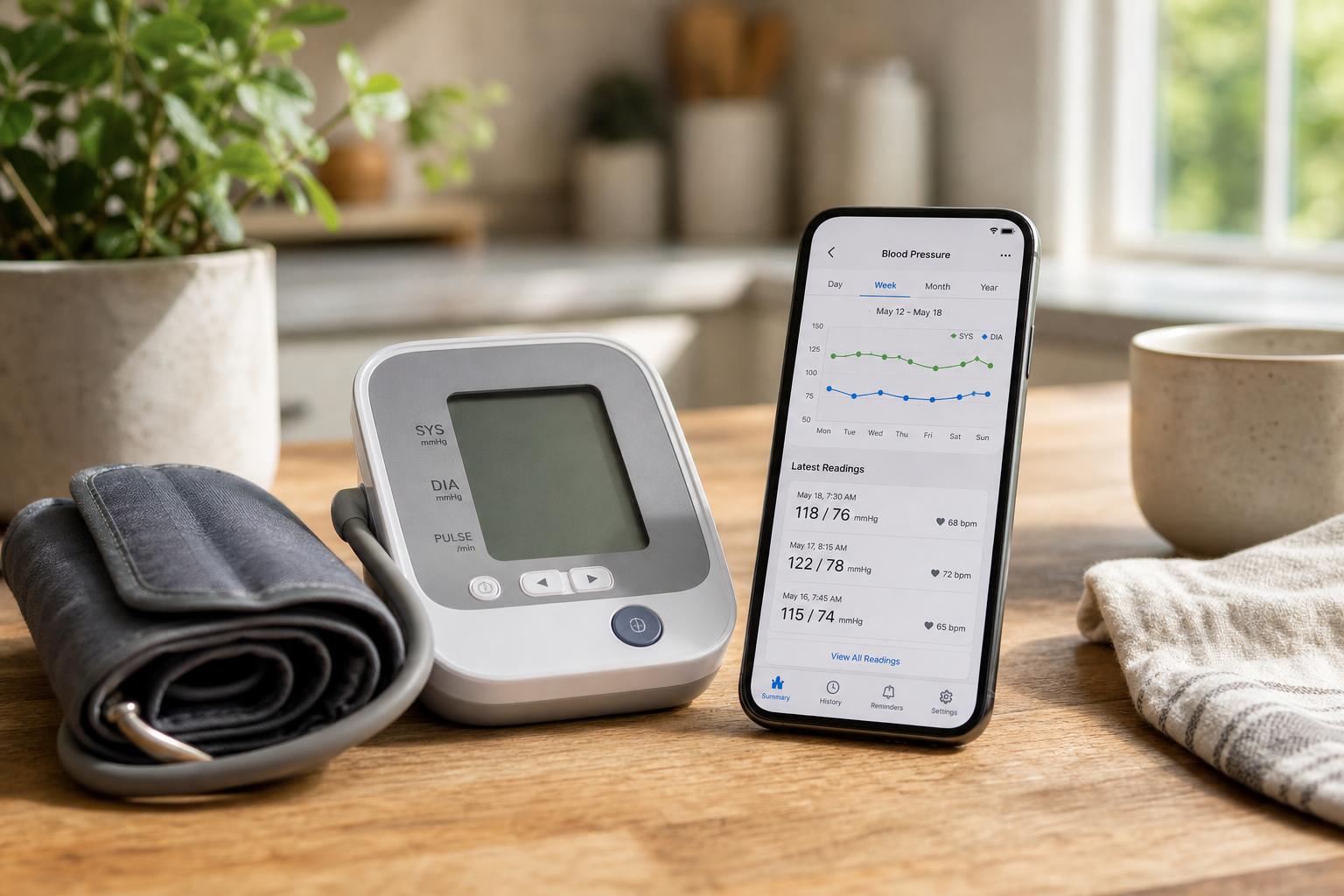
If you want a lighter way to keep that record organized, a dedicated tracker can help.
When your blood pressure log should trigger follow-up
A home log is especially worth sharing with a clinician when:
- your readings are repeatedly elevated across several days
- your average is clearly higher than your usual baseline
- your numbers are rising over time instead of staying stable
- high readings come with symptoms like chest pain, severe headache, shortness of breath, confusion, or vision changes
- treatment has recently changed and the numbers are not moving the way you expected
If you get an extremely high reading, repeat it after several quiet minutes with proper technique. If it stays very high or comes with concerning symptoms, seek urgent medical care.
Bottom line
The best way to read a blood pressure log is to stop asking, “Which single number is the real one?” and start asking, “What pattern keeps repeating?”
Look at averages first. Separate morning from evening. Treat obvious outliers as context, not the whole story. And when something is changing over time, pay more attention to the trend than to the loudest one-off reading.
A useful log does not need to be complicated. It just needs to be consistent enough to show what your blood pressure usually does when measured well.
FAQ
Is one high reading in a blood pressure log a big deal?
Usually not by itself. One high reading can happen because of stress, caffeine, pain, timing, or poor technique. What matters more is whether the pattern repeats across several properly taken readings.
Should I ignore the first reading?
You should not ignore it completely, but many people get a higher first reading than they do on the second and third attempts. That is one reason home monitoring often works better with two or three readings taken one minute apart.
What matters more in a blood pressure log: systolic or diastolic?
Both matter. The top number and bottom number can each change the interpretation. If you want a clearer explanation of what each number means, read what blood pressure numbers mean.
How many days of readings make a useful blood pressure log?
A week of consistent morning and evening readings is often enough to show a baseline pattern. More can help in some situations, especially after a medication change, but random readings over months are often less useful than one focused week.
If you are still choosing a monitor, our Best Home Blood Pressure Monitors for 2026 guide compares five models as our Top 5 picks with published scorecards.
This article is educational and not medical advice. Consult a qualified clinician before making treatment decisions or changing medication based on home readings.
Top 5 picks
Best Blood Pressure Monitors For Seniors 2026
Five upper-arm monitors ranked with published scorecards—setup friction, comfort, readability, power convenience, and repeatable accuracy—so you can compare models before you buy.
See our Top 5 blood pressure monitor picksHome-monitoring advice is only useful if it is easy to verify and act on correctly.
We write explainers to be understandable to readers, search engines, and AI answer systems.
Compare our Top 5 blood pressure monitor picks for 2026, then track readings over time with consistent technique.