24-Hour Blood Pressure Monitor Missed a Reading? What to Do
A 24-hour blood pressure monitor may miss a reading because of movement or cuff trouble. Learn what to do and when to call the clinic.
A 24-hour blood pressure monitor may miss a reading because of movement or cuff trouble. Learn what to do and when to call the clinic.
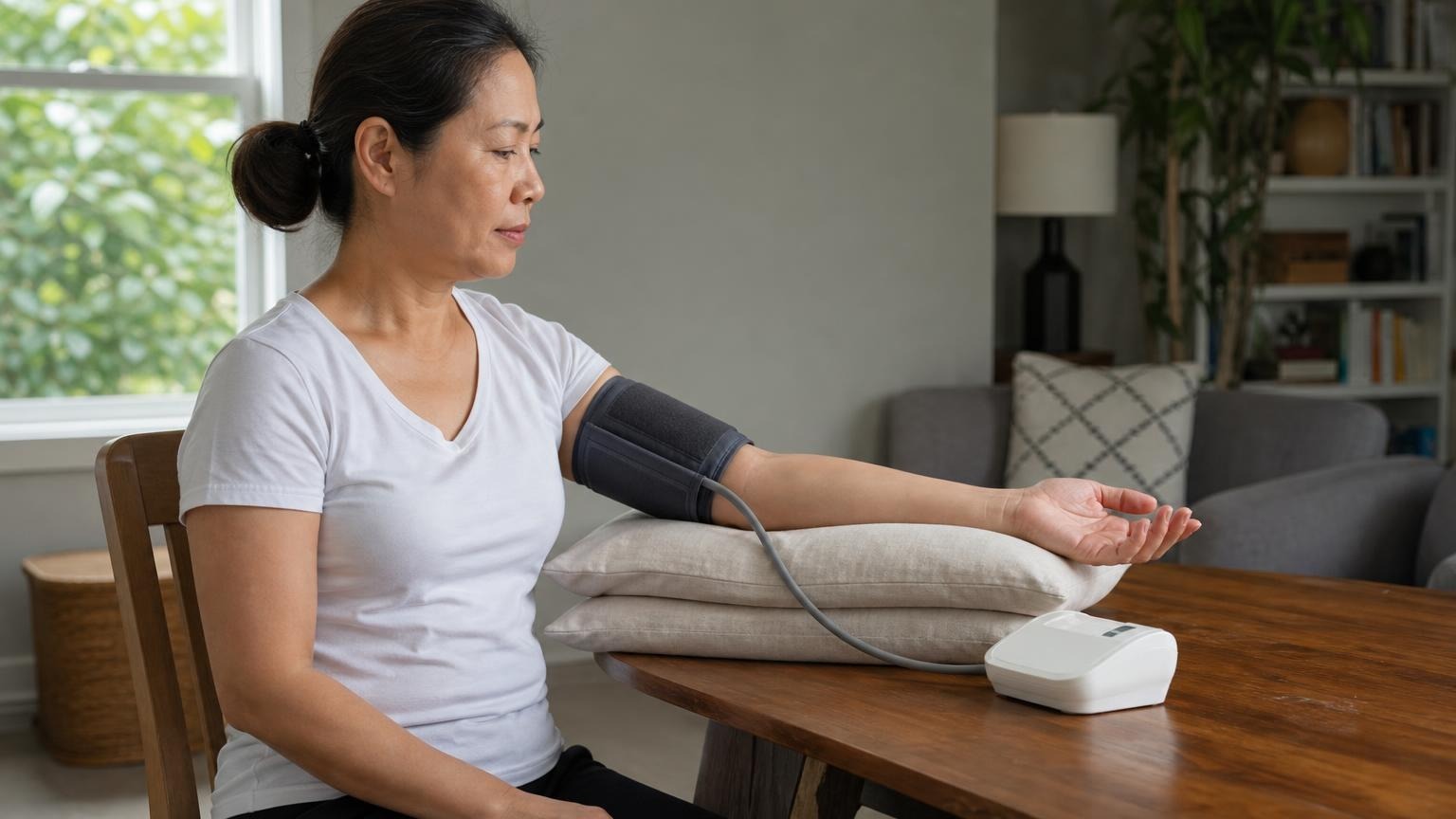
If your 24-hour blood pressure monitor missed a reading, keep the cuff and recorder in place, let the programmed device continue, and follow the instructions from the clinic that fitted it. When the next inflation starts, stop moving if it is safe, relax and straighten the cuffed arm, and stay quiet until the attempt ends. Note the time, activity, symptoms, and any screen message in your diary.
Do not replace batteries, reset the recorder, disconnect the tube, or remove the cuff just to fix one failed attempt unless your clinic specifically told you to. Ambulatory blood pressure monitors are programmed clinical equipment, and home-monitor reset advice may erase data or interrupt the test.
24-hour blood pressure monitor missed a reading: the quick answer
A failed attempt is not a blood pressure result. It usually means the recorder could not obtain a usable signal during that inflation. It does not tell you that your pressure was high or low, and it does not diagnose a heart-rhythm problem.
Use this sequence:
- Leave the equipment alone. Do not press controls or open the battery compartment unless your fitting instructions say to.
- Prepare for the next inflation. If safe, pause, let the arm hang relaxed or rest it as instructed, straighten the elbow, and keep still and quiet.
- Let the recorder follow its program. Some systems retry a failed reading; the timing and number of attempts vary.
- Write down the context. Record the time, what you were doing, any error message, and whether the cuff moved or became uncomfortable.
- Continue the test. Carry on with the ordinary activities your clinic approved between measurements.
- Call the fitting clinic if failures repeat. Use its after-hours instructions if the device stops taking readings, repeatedly reinflates, or causes a problem you cannot resolve safely.
One current Princess Alexandra Hospital NHS patient guide says its recorder automatically retries 5 minutes after an unsuccessful attempt. That is a useful example, not a universal setting. Your clinic may program a different interval or give different controls.
Why an ambulatory blood pressure reading can fail
Ambulatory blood pressure monitoring, often shortened to ABPM, uses a cuff and a small portable recorder to collect readings during normal daytime activity and sleep. The U.S. Preventive Services Task Force describes ABPM as a programmed device that typically measures at frequent intervals over 12 to 24 hours. Home blood pressure monitoring is different: you start each measurement yourself and take readings much less often.
A 24-hour recorder still needs a quiet pressure signal while each individual measurement is happening. An attempt may fail when:
- the arm, shoulder, or hand moves during inflation or deflation
- the elbow stays sharply bent or the arm muscles remain tense
- the cuff shifts, loosens, or sits under a tight sleeve
- the air tube becomes pulled, trapped, or sharply bent
- the recorder is bumped during activity
- the device encounters a technical problem
These are possibilities, not a way to identify the cause from one blank entry. The American Heart Association’s scientific statement on blood pressure measurement emphasizes standardized positioning and minimizing movement because technique affects cuff measurements. For ambulatory monitoring, the fitting clinic’s instructions remain more important than a generic troubleshooting list.
Clothing matters mainly because the cuff needs room to inflate without being displaced. North Bristol NHS Trust’s ABPM instructions recommend a top with wide or flexible sleeves. Do not pull a tight sleeve over the cuff or rewrap it unless you were shown how.
What to do when the cuff reinflates
A second inflation can be an intentional retry rather than a new problem. When you feel it begin:
- stop walking or using the cuffed arm if you can do so safely
- relax your hand instead of making a fist
- keep the arm still and reasonably straight
- stay quiet until the cuff releases
- avoid watching or pressing the recorder during the attempt
Do not make an abrupt move in traffic, on stairs, around machinery, or anywhere stopping would be unsafe. Oxford University Hospitals’ ABPM guidance tells patients who are driving when inflation starts to continue until it is safe to stop. Your own clinic may advise avoiding driving during the monitoring period, so follow the instructions you were given.
Oxford’s guidance also says one or two repeat inflations can occur when its monitor needs a better result, while more persistent cycling should trigger its specific removal-and-contact instructions. Do not copy that numerical threshold to another clinic’s recorder. If repeated inflation is painful or continues beyond what your own leaflet describes, contact the fitting service.
Record the failed attempt in your diary
The diary helps the clinician match measurements with activity, sleep, medication timing, and symptoms. A failed attempt can be useful context even though it is not a blood pressure value.
Write down:
- the time of the error or unexpected reinflation
- what you were doing immediately before it
- whether you were sitting, standing, walking, driving, or asleep
- whether the cuff slipped, twisted, or felt unusually tight
- any message, code, sound, or visible symbol
- any symptoms and when they began
- whether the next scheduled attempt appeared to work normally
Do not invent a number for the missing reading or substitute a reading from a personal home monitor into the ambulatory record. Keep the two data sets separate. Cleveland Clinic’s ABPM overview recommends keeping a journal and contacting the healthcare provider about technical problems.
One missed measurement does not tell you whether the entire study is usable. The recorder is intended to collect many readings, but the clinic must decide whether the completed data are sufficient for the question it is investigating. Return the equipment at the agreed time even if several attempts failed.
When to call the clinic during the 24-hour test
Contact the fitting department using the number or after-hours plan it provided when:
- the monitor repeatedly fails or no longer appears to run at scheduled times
- the cuff keeps reinflating beyond the pattern described in your instructions
- the cuff or tube comes off and you were not shown how to refit it
- the recorder displays a persistent technical message
- the device becomes wet, damaged, unusually hot, or physically unsafe
- the cuff remains inflated and does not release normally
- pain, numbness, swelling, discoloration, or tingling does not settle after deflation
- you accidentally press a control, remove the cuff, or disconnect part of the system
Do not open the recorder, patch the cuff, swap accessories, or use an undocumented reset sequence. Also do not stop, skip, delay, or retime medication because of a missed reading. Take medicines exactly as the ordering clinician directed for the test and record the time in the diary.
Severe symptoms matter more than the recorder. Seek urgent medical help for chest pain, severe shortness of breath, fainting, new confusion, one-sided weakness, trouble speaking, or another severe new symptom rather than waiting for the next cuff cycle or trying to repair the monitor.
Why home-monitor error fixes do not apply to ABPM
An ordinary automatic blood pressure monitor belongs to you and usually has user-accessible batteries, memory, and a Start/Stop button. A 24-hour ambulatory recorder is fitted, programmed, and interpreted by a clinical service. Its controls may be locked, its readings may be hidden, and its data need to stay intact for download.
That is why familiar home fixes—changing batteries, clearing memory, restarting Bluetooth, factory-resetting, or repeatedly pressing Start—can be the wrong response during ABPM. If you are troubleshooting your own device after the ambulatory test is over, use our separate guide to blood pressure monitor error codes. During the 24-hour study, use the clinic’s leaflet and contact number instead.
ABPM is often used to examine patterns that occasional readings can miss, including masked hypertension and blood pressure during sleep. A missing attempt should be documented, not interpreted on its own.
After the ambulatory test
Return the cuff and recorder when instructed, along with the completed diary. Tell the staff about repeated errors, discomfort, loose equipment, interrupted sleep, removed components, and anything else that may affect interpretation. The ordering clinician—not the recorder’s screen—should explain whether the study collected enough information and what the pattern means.
If the clinician later asks you to keep a longer home log, use a validated upper-arm monitor with a cuff that fits and keep the home series separate from the 24-hour test. Our current guide compares practical home options only after the clinical test has served its purpose:
Frequently asked questions
Q: Does one failed 24-hour blood pressure reading mean the monitor is broken?
A: No. Movement, arm tension, cuff position, clothing, tubing, or a temporary signal problem can interrupt one attempt. Let the programmed test continue and document the event. Call the fitting clinic if errors repeat or the equipment behaves abnormally.
Q: Why did my ambulatory blood pressure cuff inflate again?
A: The recorder may be retrying because the prior attempt did not produce a usable reading. Retry timing varies by program and device. Keep the arm still and quiet, do not press controls unless instructed, and contact the clinic if reinflation becomes persistent or painful.
Q: Can I press a button after an ABPM error?
A: Only if the clinic showed you which button to use and when. Do not reset the recorder, remove batteries, clear data, or guess at controls. Record the error and follow the fitting service’s written instructions.
Q: What should I do if the 24-hour blood pressure cuff hurts?
A: Brief pressure or mild temporary discomfort can occur, but the cuff should release after the attempt. Follow the clinic’s stop or removal instructions and contact it if pain is sharp, the cuff stays inflated, or numbness, swelling, discoloration, or tingling persists after deflation.
This article is educational and not medical advice. Follow the instructions from the clinician or service that fitted your ambulatory monitor, and consult a qualified clinician before making treatment decisions.
Top 5 picks
Best Blood Pressure Monitors For Seniors 2026
Five upper-arm monitors ranked with published scorecards—setup friction, comfort, readability, power convenience, and repeatable accuracy—so you can compare models before you buy.
See our Top 5 blood pressure monitor picksHome-monitoring advice is only useful if it is easy to verify and act on correctly.
We write explainers to be understandable to readers, search engines, and AI answer systems.
Compare our Top 5 blood pressure monitor picks for 2026, then track readings over time with consistent technique.