How to Check for a Blood Pressure Monitor Recall
Check a blood pressure monitor recall by matching the exact model and affected identifiers, then follow the official instructions—not a headline alone.
Check a blood pressure monitor recall by matching the exact model and affected identifiers, then follow the official instructions—not a headline alone.
To check for a blood pressure monitor recall, identify your exact monitor, search the FDA’s Medical Device Recalls database, and compare the affected model and production identifiers with your unit. Then read the manufacturer’s instructions for that specific action. A familiar brand name in a headline does not mean every monitor from that brand is affected, and an empty search result does not certify your monitor as safe.
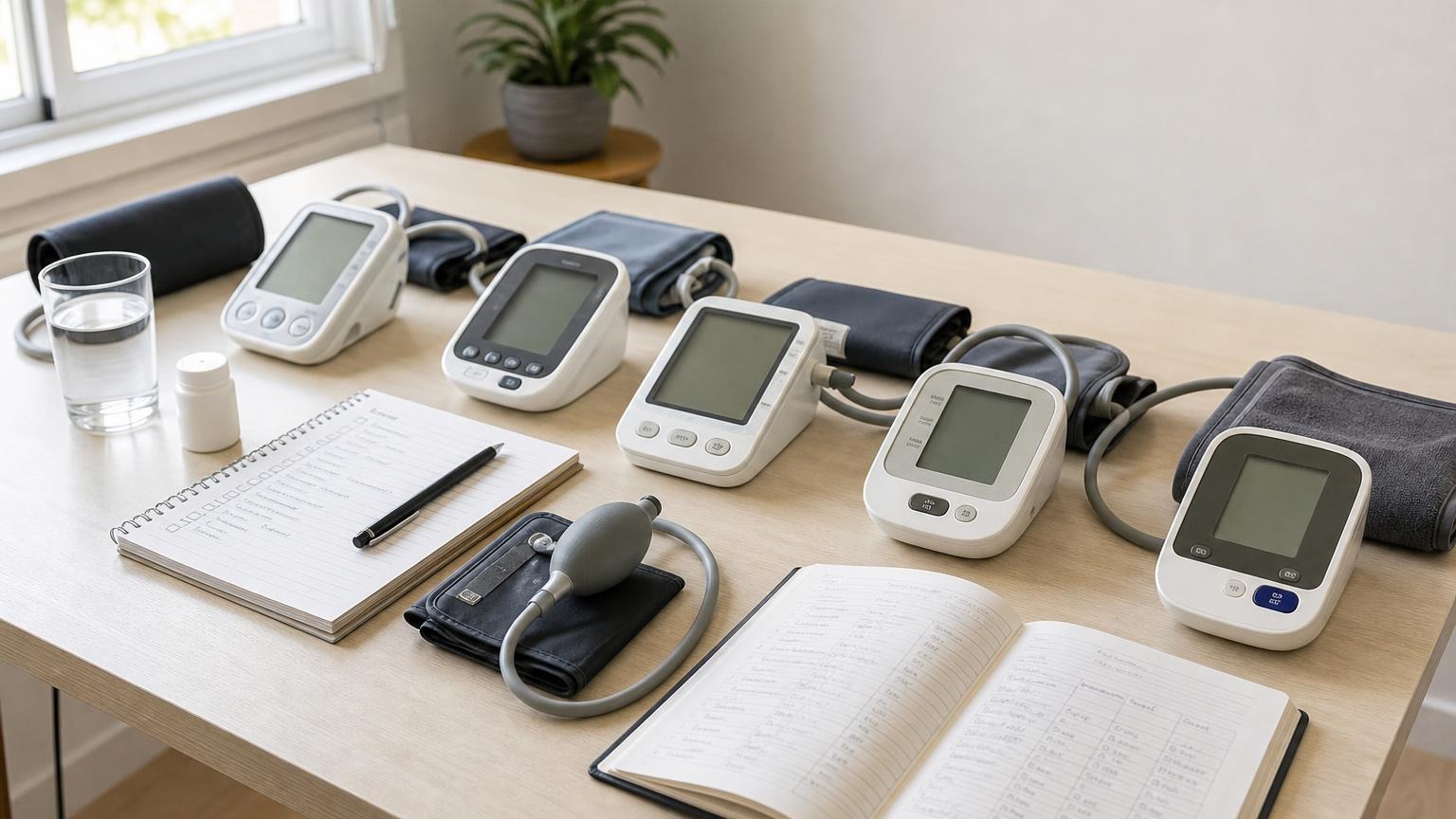
This guide covers a U.S. recall check, not a list of currently recalled products. If you bought your monitor elsewhere, check the relevant national regulator and the manufacturer for that market. The feature image is illustrative; it does not identify a recalled product.
How to check for a blood pressure monitor recall
1. Record the identifiers before searching
With the monitor switched off and the cuff removed from your arm, inspect its label and the original packaging if available. Write down or photograph:
- the brand and manufacturer or distributor shown on the label
- the complete model or catalog number, including suffixes
- the serial number and any lot or batch number
- the cuff or accessory part number if the notice concerns that component
- the purchase country and approximate purchase date
These identifiers answer different questions. The model identifies a product version; a serial or lot number may determine whether your particular unit falls within an affected group. Do not substitute a marketplace listing title, app name, or the cuff’s number for the monitor’s model number.
You do not need to open the housing to look for an identifier. If the label is missing or illegible, ask manufacturer support how to identify the unit. Our guide to checking a secondhand blood pressure monitor explains why missing labels and an uncertain equipment history deserve attention.
2. Search the official FDA database
Open the FDA Medical Device Recalls database. It includes classified recalls dating from November 2002 and may also include certain firm-initiated actions before FDA review.
Start with the Product Name field. Try the model or product name from the label. If that finds nothing, broaden the search rather than concluding there is no issue:
- try the core model number without extra marketing words
- try the product description, such as “blood pressure”
- use the Recalling Firm field to check the named manufacturer or distributor
- clear a narrow date or recall-class filter that might exclude a relevant record
Search one approach at a time. A broad result needs careful reading: a hospital monitoring system, a cuff accessory, and a home upper-arm monitor are not interchangeable products.
Also check the manufacturer’s official support or safety-notice pages. The FDA notes that a company may contact customers before FDA classification, so the database posting date is not necessarily the date a problem first became known. Do not wait for a particular classification label before responding to an authentic notice that applies to your unit.
3. Match the affected products, not just the headline
Read the complete recall record and the linked manufacturer notice where available. Compare the product description, model, affected serial or lot range, and distribution information with what you own. Some actions affect a particular production group; others can cover an entire model or product line.
If a detail does not match—or the notice does not make the boundaries clear—contact the manufacturer rather than deciding from a photograph. Ask a precise question:
Does this action apply to my exact model and serial or lot number, and what should I do before the next measurement?
Use contact information from the official manufacturer site or verified notice, not an unsolicited message asking you to pay for a “recall check.” Keep the response and the notice with your equipment records.
Read the instructions, not just the recall class
A recall does not always mean “throw it away.” The FDA’s explanation of what a medical device recall means distinguishes a correction, which addresses a problem where the product is used or sold, from a removal, which takes it away from that location.
Depending on the action, instructions may involve inspection, repair, changed labeling, a settings adjustment, or returning the product. Those are examples of recall actions generally—not permission to adjust or repair your monitor yourself.
The FDA assigns a class to describe the relative health risk:
| Recall class | FDA’s general meaning | What it means for your next step |
|---|---|---|
| Class I | A reasonable chance of serious health problems or death | Read and act on the applicable instructions promptly |
| Class II | Possible temporary or reversible health problems, or a slight chance of serious health problems or death | Follow the specified correction or removal instructions; do not dismiss it as minor |
| Class III | The product is not likely to cause a health problem or injury | Follow the notice; the lower risk category does not cancel the action |
A recall class is not an accuracy score, a blood pressure category, or a diagnosis. It does not tell you whether one previous reading was right or wrong.
The FDA’s separate Medical Device Recalls and Early Alerts page highlights the most serious recalls and certain early alerts. It is useful for safety communications, but it is not a substitute for searching the broader recall database.
What to do if your monitor is affected
Follow the instructions for that exact action. If they say to stop using an affected unit, do not take another reading merely to see whether the number looks normal. If the action instead requires a correction while use continues, follow its stated conditions and ask support about anything unclear.
Avoid improvising a fix. A factory reset, different cuff, new adapter, or firmware change is not a recall remedy unless the official instructions specify it. Do not donate or resell an affected unit to make the problem someone else’s responsibility.
Before an instructed return or replacement:
- retain a copy of the notice and your support case number
- preserve existing readings if this can be done without using the affected unit contrary to the notice
- note when you stopped using the monitor and when any replacement began
- follow the specified return or disposal process rather than guessing
- ask how completion of the correction or replacement will be confirmed
Keep your care team informed if you rely on regular home measurements. Ask how to continue monitoring during the interruption, especially if readings are part of an agreed care plan. Do not invent missing measurements or silently merge readings from a replacement into the old record without noting the equipment change.
Do not stop, skip, retime, or change medication because a monitor is recalled. A clinician should help decide whether earlier readings need review and how to obtain dependable measurements next.
If the equipment caused an injury or a serious product problem, you can also use the FDA’s MedWatch reporting guidance. Consumers can submit a voluntary report themselves. Reporting does not replace medical care, manufacturer contact, or the recall instructions.
No search result does not prove the monitor is safe
A search can miss a record because of naming, filters, or timing. More importantly, a unit can be damaged or malfunctioning without being part of a recall. “I found no recall” and “this monitor works properly for me” are separate conclusions.
An error message alone does not establish a recall either. Use the exact manual and our blood pressure monitor error-code guide for routine troubleshooting, but stop ordinary testing when the manual or an applicable safety notice says to stop.
Similarly, a recall search is not an independent accuracy-validation check. If you are evaluating a monitor for regular use, our guide to checking a monitor’s validation status addresses that different question. Neither a validation listing nor a familiar brand name cancels a later applicable safety notice.
If the monitor behaves abnormally and you cannot resolve whether a notice applies, contact its manufacturer and arrange another measurement option with your care team. Do not use reassuring-looking numbers to override unresolved equipment concerns.
Frequently asked questions
Q: Does a blood pressure monitor recall affect every monitor from that brand?
A: Not necessarily. An action may cover particular models, lots, serial-number ranges, or a whole product line. Match your identifiers to the complete notice and ask the manufacturer if the boundaries are unclear.
Q: Should I return my monitor immediately if I see a recall notice?
A: Follow the instructions for the action that applies to your unit. Some recalls require stopping use and returning a product; others involve a correction. Do not assume continued use is permitted, and do not invent a repair or return procedure.
Q: Can I trust my monitor if the FDA recall search finds nothing?
A: An empty search result is not a safety or accuracy certificate. Check alternate product and company names, review manufacturer notices, and investigate abnormal equipment behavior separately. A recall search does not replace validation, proper cuff fit, or an appropriate accuracy check.
Sources
- FDA Medical Device Recalls database — search fields, coverage, and the distinction between posting and action dates.
- FDA: What is a Medical Device Recall? — corrections, removals, affected product groups, and recall classes.
- FDA: Medical Device Recalls and Early Alerts — serious-recall and early-alert communications.
- FDA: Reporting Serious Problems — MedWatch and voluntary consumer reporting.
Bottom line
A useful recall check ends with an exact product match and a clear action—not a reassuring headline or a blank search page. Keep the model and production identifiers, read the full notice, confirm uncertain details with the manufacturer, and arrange continued monitoring when necessary.
If the instructed remedy leaves you needing a replacement, compare upper-arm options after confirming the cuff fit and monitoring needs you require.
This article is educational and not medical advice. Consult a qualified clinician before making treatment decisions or changing how you monitor blood pressure.
Top 5 picks
Best Blood Pressure Monitors For Seniors 2026
Five upper-arm monitors ranked with published scorecards—setup friction, comfort, readability, power convenience, and repeatable accuracy—so you can compare models before you buy.
See our Top 5 blood pressure monitor picksHome-monitoring advice is only useful if it is easy to verify and act on correctly.
We write explainers to be understandable to readers, search engines, and AI answer systems.
Compare our Top 5 blood pressure monitor picks for 2026, then track readings over time with consistent technique.