Blood Pressure Cuff Rash: What to Check Before Using It Again
A rash after using a blood pressure cuff needs more than a tighter wrap. Check skin irritation, cleaning products, cuff materials, and safe next steps.
A rash after using a blood pressure cuff needs more than a tighter wrap. Check skin irritation, cleaning products, cuff materials, and safe next steps.
A blood pressure cuff rash is a reason to pause use of that cuff and check what touched your skin—not to keep repeating measurements until the irritation disappears. A rash after a reading does not, by itself, prove a latex allergy. Cuff materials, cleaning products, and rubbing or pressure deserve separate checks. Contact a clinician if symptoms persist, recur, or are severe, and ask how to continue monitoring safely.
The distinction matters: fixing a tight wrap is different from identifying an irritant or allergen. Neither problem should be solved by hiding irritated skin under a sleeve and measuring as usual.
Get emergency help for a sudden serious reaction. Trouble breathing, throat or tongue swelling, or fainting after a possible exposure needs immediate medical attention. Call 911 in the United States or your local emergency number. Do not wait for a blood pressure reading to decide whether to get help. The NHS guidance on anaphylaxis explains these warning signs.
What can cause a blood pressure cuff rash?
Start with uncertainty rather than a diagnosis. The timing and location of a skin change are useful clues, but they do not establish its cause.
Irritation from something touching the skin
Contact dermatitis can result from an irritant or an allergic reaction to a substance. The NHS lists soaps and detergents among common irritants. Symptoms can include itching, dryness, cracking, and blistering, and may appear hours or days after exposure.
For a cuff user, that makes a recent change in cleaning products worth recording. A cuff cleaned with a new spray or wipe presents a different question from one that has never been cleaned. Neither history proves the explanation; it helps a clinician and manufacturer narrow the possibilities.
Redness is not the only visible sign. Irritated skin may look dark brown, purple, or grey on darker skin tones. Pay attention to itching, swelling, broken skin, or discomfort as well as color.
Pressure, rubbing, or an awkward wrap
A cuff squeezes during a normal measurement. But pain, pinching at an edge, folded fabric, or repeated rubbing calls for a fit check. These mechanical problems are not the same as an allergy, and a mark after inflation should not automatically be labeled a rash.
If the main problem is squeezing or pain while the pump runs, our guide to why a blood pressure cuff gets too tight addresses that separate issue. Do not assume that every skin symptom will disappear after loosening the cuff.
An allergy to a material
Natural rubber latex is one possible allergen—not a diagnosis you can make from the shape of a mark. MedlinePlus’s latex-allergy overview explains that reactions can include a rash, breathing symptoms, and, rarely, anaphylaxis. Diagnosis belongs with a qualified health professional.
Cuffs and accessories differ. Do not assume that every black tube contains natural rubber latex, that every fabric cuff is free of it, or that a familiar brand uses identical materials in every model.
Check the cuff before another measurement
Stop the current measurement if it is painful or irritating, and remove the cuff once pressure releases. Do not repeatedly reapply it to test whether the reaction happens again.
This is consistent with a specific manufacturer’s safety advice: the official OMRON BP5465 instruction manual tells users to stop using the monitor and consult a physician if they experience skin irritation or discomfort. That is a model-specific instruction, not a claim about the materials in every OMRON cuff.
With the equipment off, check:
- The skin-contact surface. Look for dampness, residue, rough areas, frayed seams, or exposed fastening material.
- Recent changes. Note a different cuff, new cleaning product, shared use, or a change in skin products applied to that area.
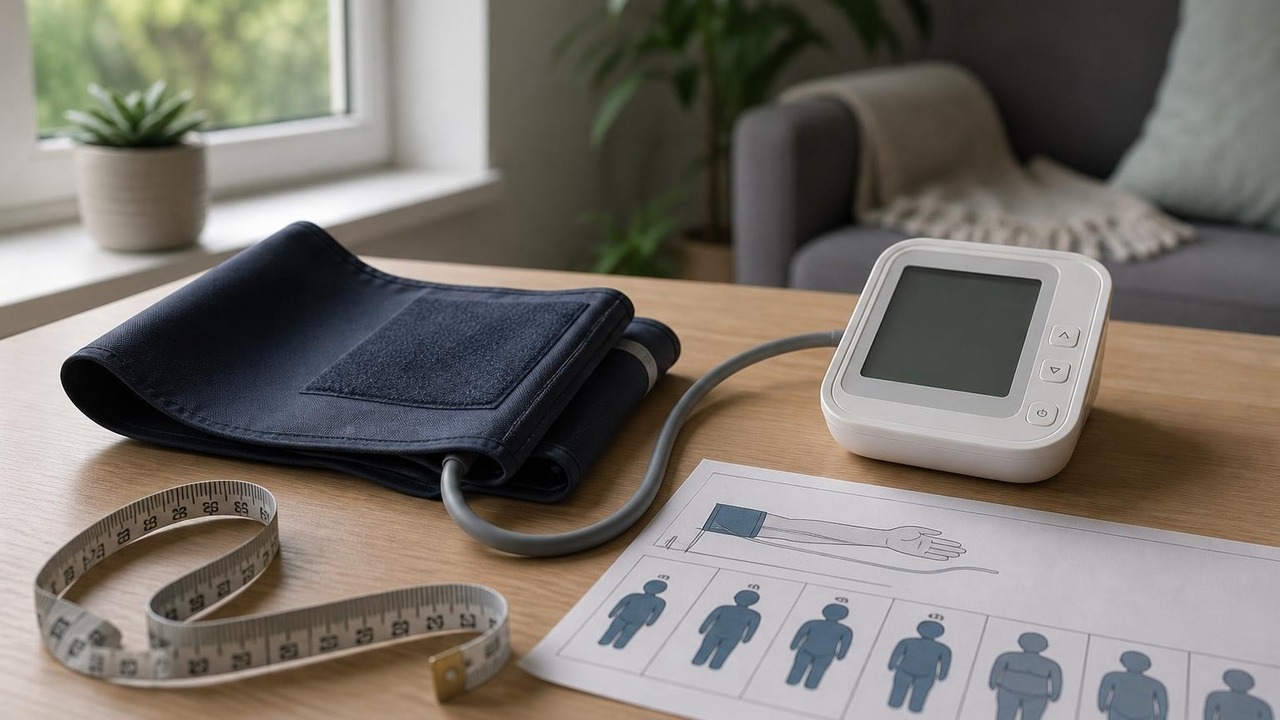
- The fit. Confirm the cuff’s printed range includes your measured upper-arm circumference. Do not make an undersized cuff work by pulling harder.
- The exact identifiers. Record both the monitor model and cuff part number. A replacement cuff may have different materials from the original.
- The instructions. Check the manual’s cleaning method, drying requirements, warnings, and approved accessories.
Do not soak, bleach, scrub, or disinfect the cuff more aggressively in an attempt to remove an unknown allergen. Follow the manufacturer’s instructions, and ask for advice when those instructions do not address the problem. Our guide to cleaning a home blood pressure cuff explains the equipment-care limits; it is not a treatment for a rash.
What to ask about latex and replacement materials
If you have a known latex allergy or a clinician suspects a material reaction, contact the manufacturer with the exact cuff part number. Useful questions include:
- Does this cuff or its tubing contain natural rubber latex?
- What materials are used on the surface that touches skin?
- Are there warnings relevant to the allergy my clinician identified?
- Is there a documented compatible replacement with different materials?
- Does that replacement come in the correct range for my arm?
Keep the response with the manual. A seller’s broad claim about a product family is less useful than documentation for the cuff you actually own.
Even when the manufacturer confirms that natural rubber latex is not used, that does not identify the cause of an unexplained rash or rule out sensitivity to another substance. Do not keep exposing the skin simply because one possible allergen has been excluded.
A replacement also needs to work with the monitor. A matching plug and comfortable fabric are not enough. Use our replacement blood pressure cuff compatibility guide to check the approved part number and arm range rather than buying an unspecified “universal” cuff.
Avoid makeshift barriers and keep a monitoring plan
A towel, sleeve, plastic wrap, or homemade cuff liner is not a general solution. The CDC’s measurement guidance recommends placing the cuff against bare skin, not over clothing. Adding a layer changes the usual measurement setup without necessarily resolving the skin problem.
Do not place the cuff over broken, inflamed, or injured skin and press through discomfort. Ask your clinician whether another arm or a different measurement arrangement is appropriate. Do not assume switching to the other arm, forearm, or wrist is suitable for everyone, especially if you already have an arm restriction.
Pausing an irritating cuff should not become an indefinite end to needed monitoring. If you have been told to measure on a particular schedule, contact the care team promptly for an alternative. Tell them what happened rather than submitting invented or incomplete readings.
Keep a short record of:
- when the skin change appeared and how long it lasted
- the cuff model and any recent cleaning or equipment change
- whether discomfort occurred during inflation or afterward
- which readings were completed and which measurements were stopped
- any symptoms that continued after removing the cuff
A photograph can help document a changing mark for your clinician. Keep it private rather than posting it in a product review for a diagnosis.
Do not delete a completed high reading just because irritation occurred, and do not change, skip, or retime medication because of a cuff problem. Once a safe setup is agreed, return to consistent home blood pressure technique and label any cuff or arm change in the log.
Frequently asked questions
Q: Does a blood pressure cuff rash mean I am allergic to latex?
A: No. A rash after cuff use does not establish its cause. Irritants, materials, and mechanical discomfort need different checks. Stop using the irritating cuff, record the exact model and exposures, and consult a clinician if symptoms persist, recur, or are severe.
Q: Can I put a sleeve under the cuff to protect irritated skin?
A: Do not use a sleeve or homemade liner as a routine workaround. Standard home guidance calls for a cuff on bare skin. Ask your clinician how to measure safely while the skin problem is assessed, especially if you have wounds or an arm restriction.
Q: Should I buy a latex-free replacement cuff immediately?
A: First establish what materials the current cuff contains and whether a clinician suspects an allergy. If a replacement is appropriate, confirm its materials, exact monitor compatibility, and arm-size range. Excluding latex does not rule out every other cause of irritation.
Q: When does a reaction after cuff use need urgent help?
A: Sudden trouble breathing, throat or tongue swelling, or fainting after a possible exposure needs emergency medical attention. Call 911 in the United States or your local emergency number. Do not delay help to take another blood pressure reading.
Sources
- NHS: Contact dermatitis — irritants, allergens, symptoms, and when to seek clinical advice.
- MedlinePlus: Latex allergy — allergy symptoms and the need for professional assessment.
- OMRON BP5465 instruction manual — model-specific skin-irritation warning and equipment instructions.
- CDC: Measuring your blood pressure — bare-skin placement and consistent home technique.
- NHS: Anaphylaxis — serious allergic-reaction warning signs.
Bottom line
A blood pressure cuff rash calls for a skin assessment and a careful look at the cuff—not a tighter wrap, harsher cleaner, or improvised barrier. Pause the irritating cuff, document what changed, verify materials and compatibility, and arrange a safe way to keep monitoring with your care team.
If that process shows you need a different monitor rather than an approved replacement cuff, compare upper-arm options only after confirming the cuff materials and fit you require.
This article is educational and not medical advice. Consult a qualified clinician before making treatment decisions or changing how you monitor blood pressure.
Top 5 picks
Best Blood Pressure Monitors For Seniors 2026
Five upper-arm monitors ranked with published scorecards—setup friction, comfort, readability, power convenience, and repeatable accuracy—so you can compare models before you buy.
See our Top 5 blood pressure monitor picksHome-monitoring advice is only useful if it is easy to verify and act on correctly.
We write explainers to be understandable to readers, search engines, and AI answer systems.
Compare our Top 5 blood pressure monitor picks for 2026, then track readings over time with consistent technique.