Why Your Blood Pressure Cuff Gets Too Tight
A blood pressure cuff should feel snug, but not alarming. Learn why cuffs get very tight, when discomfort is normal, and when to adjust your setup.
A blood pressure cuff should feel snug, but not alarming. Learn why cuffs get very tight, when discomfort is normal, and when to adjust your setup.
A blood pressure cuff getting too tight is one of the most common complaints with home monitors. Some squeezing is normal because the cuff has to briefly stop blood flow in the artery before it can estimate your pressure. But it should not feel scary, leave significant marks, or make you dread taking readings.
The practical question is whether the cuff is doing its job, whether your setup is making it inflate harder than necessary, or whether the cuff size is simply wrong for your arm.
Why a blood pressure cuff gets too tight
An automatic upper-arm blood pressure monitor works by inflating the cuff until it can detect pressure changes from blood flow in the artery. The monitor then slowly releases air while its sensors read those pressure waves.
That means a short period of firm squeezing is expected. It may feel intense, especially near the peak of inflation. Many people notice pressure, tightness, or a brief pinching feeling before the cuff begins to deflate.
What is not ideal is a cuff that repeatedly feels painful, inflates again and again, or leaves bruising. Those patterns can point to a fit problem, placement issue, movement error, or monitor behavior that needs attention.
Normal tightness vs. too tight
A normal reading usually feels like this:
- the cuff becomes snug, then firm
- the pressure peaks for a short time
- your arm may feel squeezed but not sharply painful
- the cuff starts deflating after a few seconds
- any indentation on the skin fades quickly
A cuff may be too tight or poorly matched if:
- it causes sharp pain instead of firm pressure
- your hand becomes very numb or discolored during ordinary readings
- it leaves deep marks that last a long time
- it repeatedly has to inflate twice before giving a result
- you see frequent error messages
- you avoid checking because the cuff experience is uncomfortable
Do not use pain as a badge of accuracy. A reading does not become more trustworthy because the cuff was unpleasant. Good fit and good technique are what matter.
The most common reason: the cuff size is wrong
Cuff size is the first thing to check. A cuff that is too small for your arm often has to squeeze harder and may give misleadingly high readings. A cuff that is too large can also create unreliable results because the bladder inside the cuff does not line up with the arm as intended.
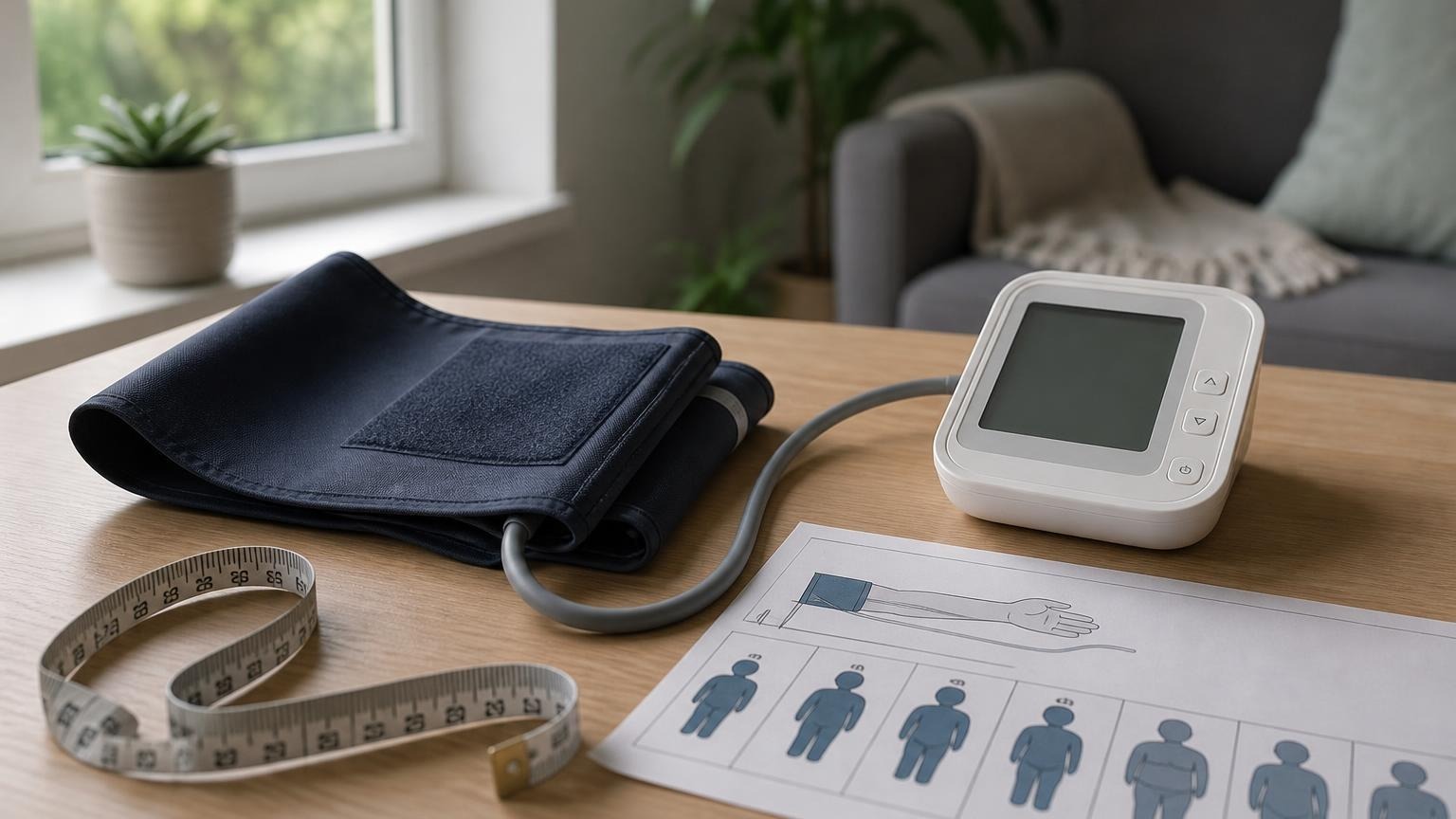
Look for the arm circumference range printed on the cuff or in the monitor manual. Then measure your bare upper arm around the midpoint between shoulder and elbow. Do not guess based on shirt size or body weight.
If your measurement falls near the upper edge of the cuff range, the cuff may technically fit but still feel uncomfortable. In that case, an appropriate larger cuff or a monitor with a wider cuff range may be a better match. Our blood pressure cuff size chart explains how to measure and interpret cuff ranges.
Placement can make the cuff feel worse
Even the right cuff can feel too tight if it is placed poorly.
Common placement problems include:
- wrapping the cuff over clothing
- placing it too low near the elbow crease
- placing it too high near the shoulder
- leaving the cuff crooked or twisted
- pulling it extremely tight before the monitor starts
- letting the air tube pull against the cuff
The cuff should sit on bare skin, usually about one inch above the bend of the elbow, with the artery marker aligned as directed by the manufacturer. It should be snug enough to stay in place, but you should not have to cinch it down aggressively before pressing start.
If clothing is under the cuff, the monitor may struggle to read the pressure waves clearly. That can make the reading less reliable and may lead to extra inflation. We cover that mistake in more detail in can you take blood pressure over clothing?.
Movement and tension can trigger extra inflation
Automatic monitors are sensitive to movement. If you talk, tense your arm, move your fingers, shift in the chair, or hold your breath, the device may have trouble detecting a clean signal. Some monitors respond by inflating higher or restarting the measurement.
This is one reason a cuff can feel worse on the second attempt. You feel the first squeeze, tense up, then the monitor has an even harder time getting a clean reading.
Before starting, try to make the setup boring:
- Sit with your back supported.
- Keep both feet flat on the floor.
- Rest for 5 minutes.
- Support your cuffed arm at heart level.
- Keep your hand relaxed, not clenched.
- Stay quiet until the reading is finished.
That routine will not make cuff pressure disappear, but it can reduce avoidable re-inflation and noisy readings.
When the monitor keeps inflating
A cuff that inflates once, deflates, and gives a reading is usually behaving normally. A cuff that keeps inflating, stops, reinflates, or ends with an error code is different.
Possible causes include:
- cuff wrapped too loosely at the start
- wrong cuff size
- movement or talking during the reading
- arm not supported
- low batteries or weak power
- air tube not fully connected
- worn cuff bladder or tubing
If it happens once, repeat the reading after a few quiet minutes. If it happens repeatedly, check the manual, inspect the tube and cuff, and compare the behavior with another monitor if available. Our troubleshooting guide on why a blood pressure monitor keeps inflating walks through that problem step by step.
Can a blood pressure cuff bruise your arm?
A properly fitted cuff used occasionally should not usually cause significant bruising. Mild temporary marks can happen, especially if the cuff is firm or your skin is sensitive. But repeated bruising, sharp pain, swelling, or unusual skin changes are worth taking seriously.
Bruising may be more likely if you take many readings in a row, use a cuff that is too small, place it over bunched clothing, or have a medical reason you bruise easily. If you take blood thinners, have a bleeding disorder, or notice unexplained bruising, ask a qualified clinician how often and how tightly you should measure.
Do not keep repeating readings on the same arm if the cuff is causing pain or bruising. Give the arm a rest, check the fit, and use clinician guidance if monitoring is medically necessary.
How to make blood pressure cuff readings more comfortable
Start with the basics:
- measure your arm and confirm the cuff range
- use bare skin, not clothing
- position the cuff evenly, without twists
- support your arm instead of holding it up
- relax your hand and shoulder
- take two readings, not five or six in a row
- replace a stiff, cracked, or leaking cuff
If you need frequent home readings and your current cuff is consistently uncomfortable, consider a monitor with a cuff range that better matches your arm. Comfort is not just a convenience issue. A monitor you avoid using is less useful than one you can use consistently.
If you are comparing home monitors, prioritize fit, clear cuff instructions, and repeatable readings over extra app features.
FAQ
Is it normal for a blood pressure cuff to hurt?
Firm pressure is normal; sharp or repeated pain is not. If the cuff regularly hurts, check cuff size, placement, arm support, and whether the monitor is re-inflating because of movement or poor signal.
Should I loosen the cuff before taking a reading?
The cuff should be snug, not loose. If it slides around, the monitor may inflate more or fail. If you have to pull it painfully tight before starting, the cuff may be the wrong size or wrapped incorrectly.
Can a tight cuff make blood pressure read high?
A cuff that is too small for your arm can contribute to higher or less reliable readings. Poor placement, movement, talking, and arm position can also distort the result.
What should I do if the cuff keeps inflating?
Stop, rest for a few minutes, check the cuff position and tubing, and try again with your arm supported. If the problem keeps happening, consult the monitor manual or consider whether the cuff or device needs replacement.
Bottom line
A blood pressure cuff is supposed to get tight for a short time, but it should not be painful, alarming, or repeatedly bruising your arm. Most discomfort comes from wrong cuff size, poor placement, movement, or repeated re-inflation. Fix the setup first, then judge the readings by the pattern rather than by one uncomfortable measurement.
This article is educational and not medical advice. Consult a qualified clinician before making treatment decisions or changing your monitoring routine because of pain, bruising, symptoms, or repeated unusual readings.
Top 5 picks
Best Blood Pressure Monitors For Seniors 2026
Five upper-arm monitors ranked with published scorecards—setup friction, comfort, readability, power convenience, and repeatable accuracy—so you can compare models before you buy.
See our Top 5 blood pressure monitor picksHome-monitoring advice is only useful if it is easy to verify and act on correctly.
We write explainers to be understandable to readers, search engines, and AI answer systems.
Compare our Top 5 blood pressure monitor picks for 2026, then track readings over time with consistent technique.