Can You Take Blood Pressure Standing Up?
Can you take blood pressure standing up? Learn when standing readings are useful, how to take them correctly, and how to log them safely.
Can you take blood pressure standing up? Learn when standing readings are useful, how to take them correctly, and how to log them safely.
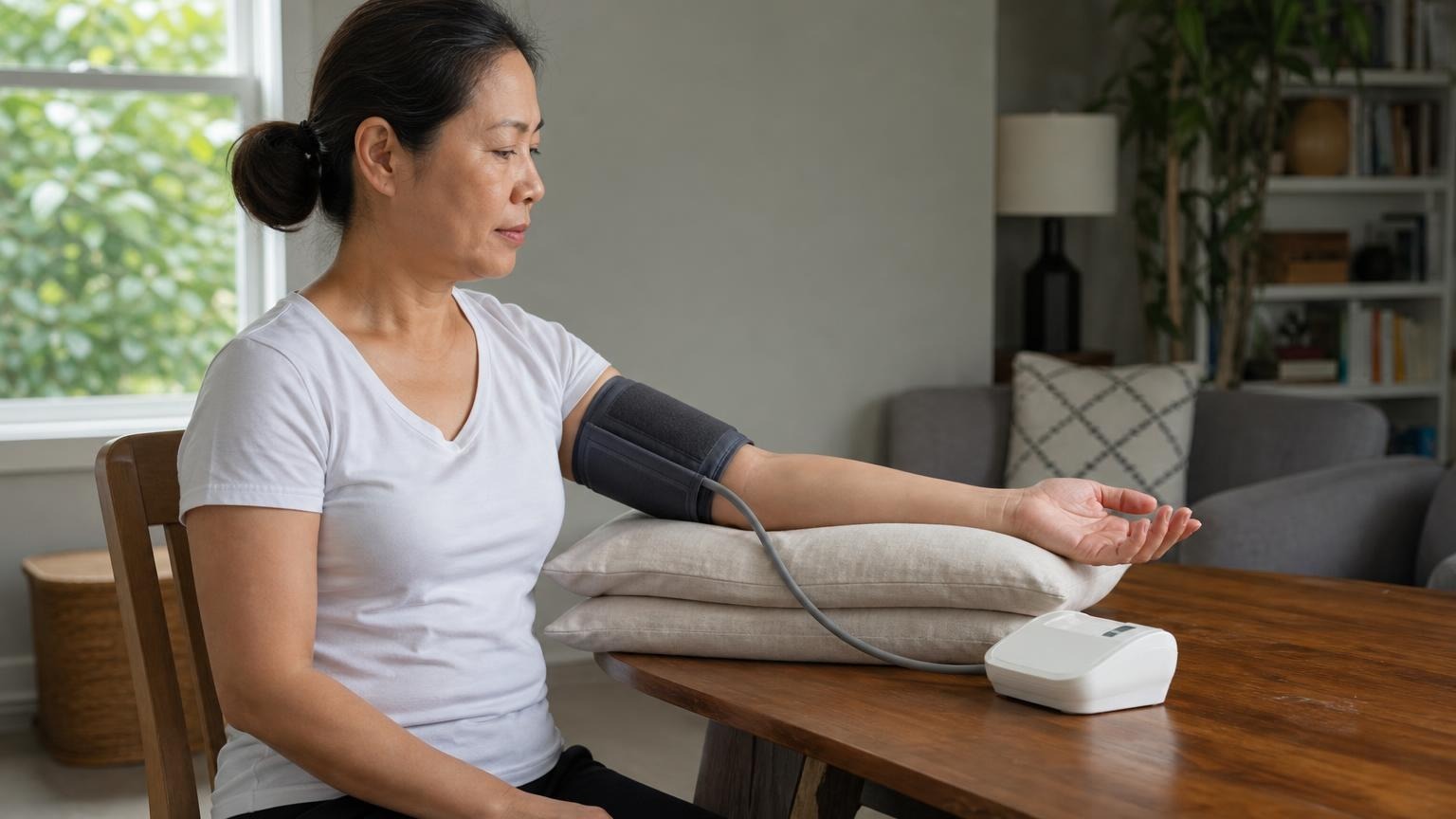
Can you take blood pressure standing up? Yes, but a standing blood pressure reading is usually for a specific question, not your everyday home baseline. For routine tracking, the better default is seated: back supported, feet flat, arm supported at heart level, and a few minutes of quiet rest first.
Standing readings can still be useful. They may help document symptoms such as lightheadedness when you get up, or they may be part of a clinician-directed check for position-related blood pressure changes. The key is to label them clearly and avoid mixing them into your normal seated average.
Can you take blood pressure standing up at home?
You can take blood pressure standing up if you do it carefully, but do not replace your regular seated log with standing readings unless a qualified clinician asked you to.
A standard home blood pressure log is meant to answer a basic question: what are your readings under repeatable resting conditions? Standing changes that condition. Gravity shifts blood toward the legs, muscles may tense to keep you upright, and the arm can be harder to keep at heart level. That does not make the reading useless. It makes it a different kind of reading.
Use standing readings when the position itself matters, such as:
- you feel dizzy, faint, weak, or unsteady after standing
- your clinician asked for lying, sitting, and standing readings
- you are comparing symptoms that appear only after you get up
- you are trying to show a position-related pattern rather than a normal baseline
For ordinary morning and evening tracking, use the same seated setup each time. If you need a refresher, start with our guide to taking an accurate blood pressure reading at home.
Why standing can change the number
Blood pressure is not a fixed score. It changes with posture, breathing, stress, pain, activity, caffeine, meals, and the way the cuff is positioned.
When you stand, your body has to maintain blood flow to the brain while gravity pulls blood downward. Blood vessels and heart rate adjust quickly in most people. If that adjustment is slow, exaggerated, or affected by dehydration, illness, medication timing, or other health factors, the standing reading may look different from a seated one.
That difference is not automatically dangerous, and it is not automatically a measurement error. It is context. A standing reading can be valuable when paired with notes about symptoms and timing. It becomes less useful when it is treated as interchangeable with a calm seated reading.
Arm position is another problem. If your cuffed arm hangs by your side while you stand, the cuff is below heart level and the reading may look higher than it would with proper support. If you hold your arm up without support, muscle tension can add noise. Standing readings are easiest to interpret when the arm is still supported at roughly heart level.
For more detail on cuff height, see how to position your arm for a blood pressure reading.
How to take a standing blood pressure reading correctly
If you have been asked to take standing readings, use a repeatable method. Do not improvise a different setup every time.
- Take your usual seated reading first, unless your clinician gave a different sequence.
- Stand up carefully and stay near a chair, counter, or another stable support.
- Keep your feet about shoulder-width apart and avoid locking your knees.
- Support the cuffed arm so the middle of the cuff is close to heart level.
- Stay quiet and still while the cuff inflates.
- Record the reading, pulse, time, body position, and any symptoms.
- Write down relevant context, such as recent meals, exercise, caffeine, illness, dehydration, or medication timing.
If you feel faint, unsteady, short of breath, or unsafe while standing, sit or lie down instead of trying to finish the reading. A home monitor is not worth a fall.
If a clinician gives you a specific protocol, follow that protocol over any general website guidance. They may want the reading at a particular time after standing or in a particular sequence because they are looking for a specific pattern.
Do not mix standing and seated readings in one average
The main mistake is not taking a standing reading. The mistake is averaging it with regular seated readings as if they all mean the same thing.
A clean home log should separate positions:
| Reading type | Best use | How to label it |
|---|---|---|
| Seated reading | Routine home baseline | “Seated” or no label if all routine readings are seated |
| Standing reading | Dizziness, position-change symptoms, clinician-directed checks | “Standing” plus symptom notes |
| Lying reading | Mobility limits or specific position comparisons | “Lying down” plus reason |
If your seated average is based on six readings and one of them was taken while standing after a shower, that average is no longer clean. It may still be useful as a note, but it is not the same as a quiet seated trend.
Our guide to how many blood pressure readings you should take explains why repeated, comparable readings usually tell a better story than a single outlier.
When standing readings are worth sharing with a clinician
Share standing readings with a qualified clinician if you see a repeated pattern or symptoms are part of the story. Do not use them to self-diagnose or to change medication timing on your own.
Useful details to bring include:
- seated and standing readings taken close together
- pulse with each reading, if your monitor shows it
- how long you were standing before the reading
- whether you felt dizzy, faint, weak, confused, short of breath, or had chest pain
- whether the reading was before or after medication
- whether you were dehydrated, sick, overheated, or had recently eaten
A single odd standing number may simply reflect setup, timing, or ordinary fluctuation. A repeated pattern with symptoms is more meaningful and deserves a clinical conversation.
Seek urgent care if blood pressure symptoms are severe or concerning, especially with chest pain, shortness of breath, fainting, severe weakness, new neurologic symptoms, or a very high reading that stays high after rest. Home readings add context, but they do not replace medical evaluation when symptoms are serious.
FAQ
Is standing blood pressure higher or lower than sitting?
It can be either, depending on the person, timing, symptoms, hydration, medication context, and technique. Standing is a different measurement condition, so compare it with seated readings only when the position change is the point of the check.
Should I take my daily blood pressure standing up?
For most people, no. Daily home tracking is usually best done seated with the same chair, arm, cuff, and rest period each time. Use standing readings only when your clinician asks for them or when you are documenting position-related symptoms.
How long should I stand before taking blood pressure?
Follow your clinician’s instructions if you were given a standing-reading protocol. If you were not given one, record exactly how long you stood before the reading so the number has context. Consistency matters more than guessing a universal timing rule.
Can a home blood pressure monitor check orthostatic hypotension?
A home monitor can help document seated, lying, and standing patterns, but it cannot diagnose the cause of dizziness or a position-related blood pressure drop by itself. Bring the numbers and symptom notes to a clinician for interpretation.
Bottom line
You can take blood pressure standing up, but it is usually a position-specific reading, not your everyday baseline. Keep routine monitoring seated, use standing readings only when they answer a clear question, and label them clearly in your log.
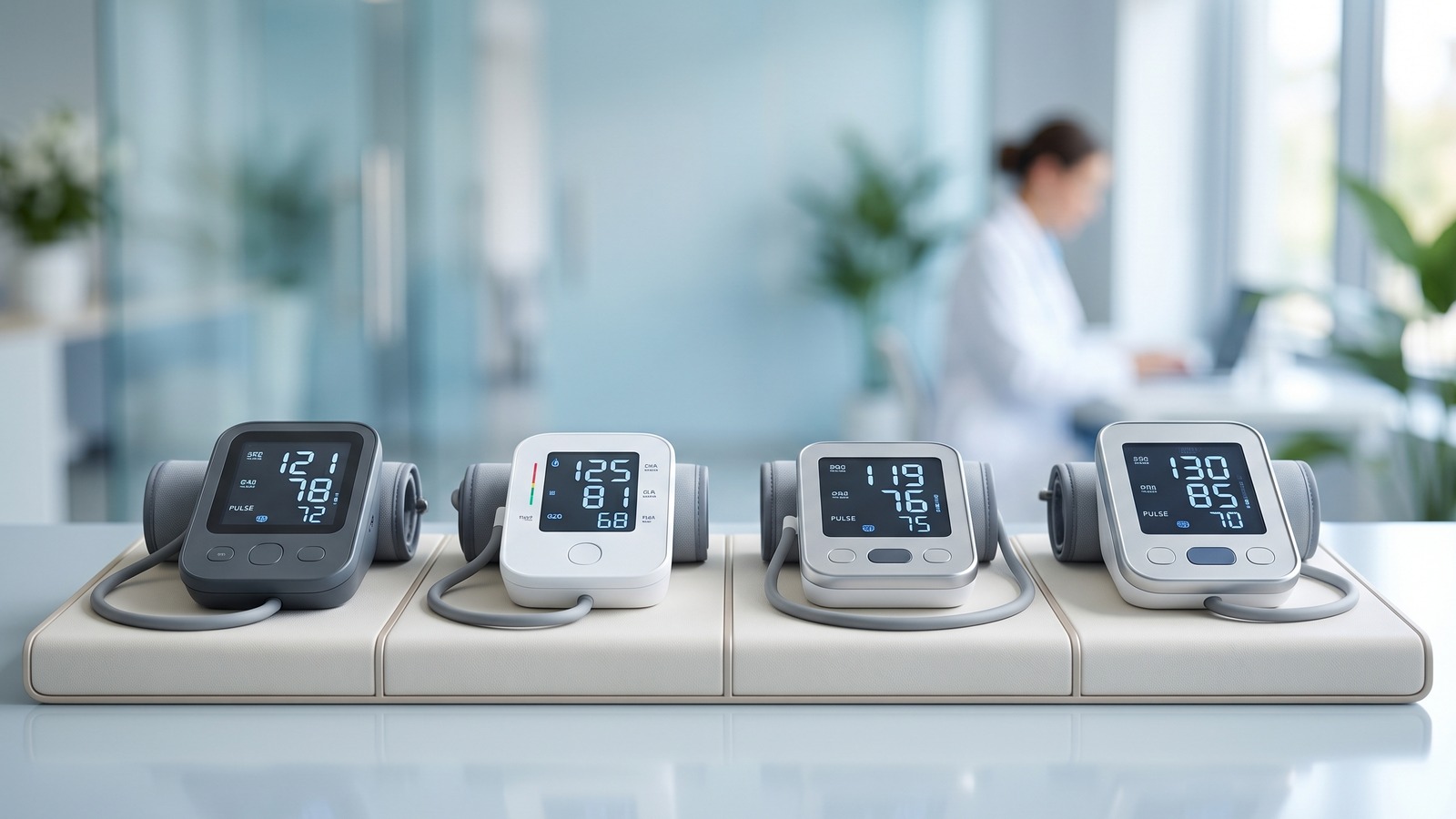
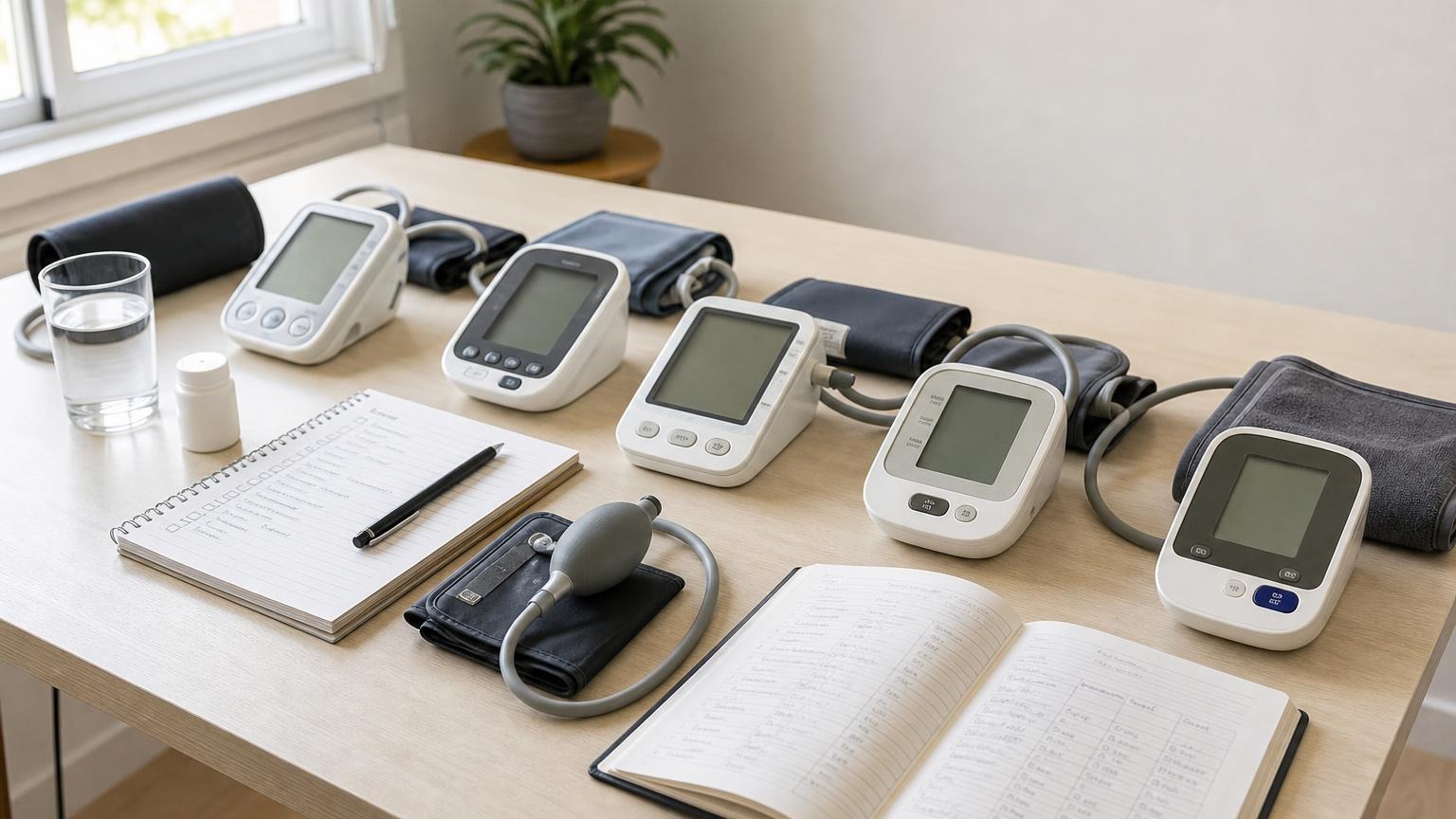
If you are building a home setup for cleaner, easier repeat readings, compare upper-arm monitors that make consistent tracking simpler:
This article is educational and not medical advice. Consult a qualified clinician before making treatment decisions or interpreting symptoms from home readings.
Top 5 picks
Best Blood Pressure Monitors For Seniors 2026
Five upper-arm monitors ranked with published scorecards—setup friction, comfort, readability, power convenience, and repeatable accuracy—so you can compare models before you buy.
See our Top 5 blood pressure monitor picksHome-monitoring advice is only useful if it is easy to verify and act on correctly.
We write explainers to be understandable to readers, search engines, and AI answer systems.
Compare our Top 5 blood pressure monitor picks for 2026, then track readings over time with consistent technique.