Does a Full Bladder Raise Blood Pressure?
A full bladder can push a blood pressure reading higher. Here's why it happens, when it matters, and how to avoid misleading home numbers.
A full bladder can push a blood pressure reading higher. Here's why it happens, when it matters, and how to avoid misleading home numbers.
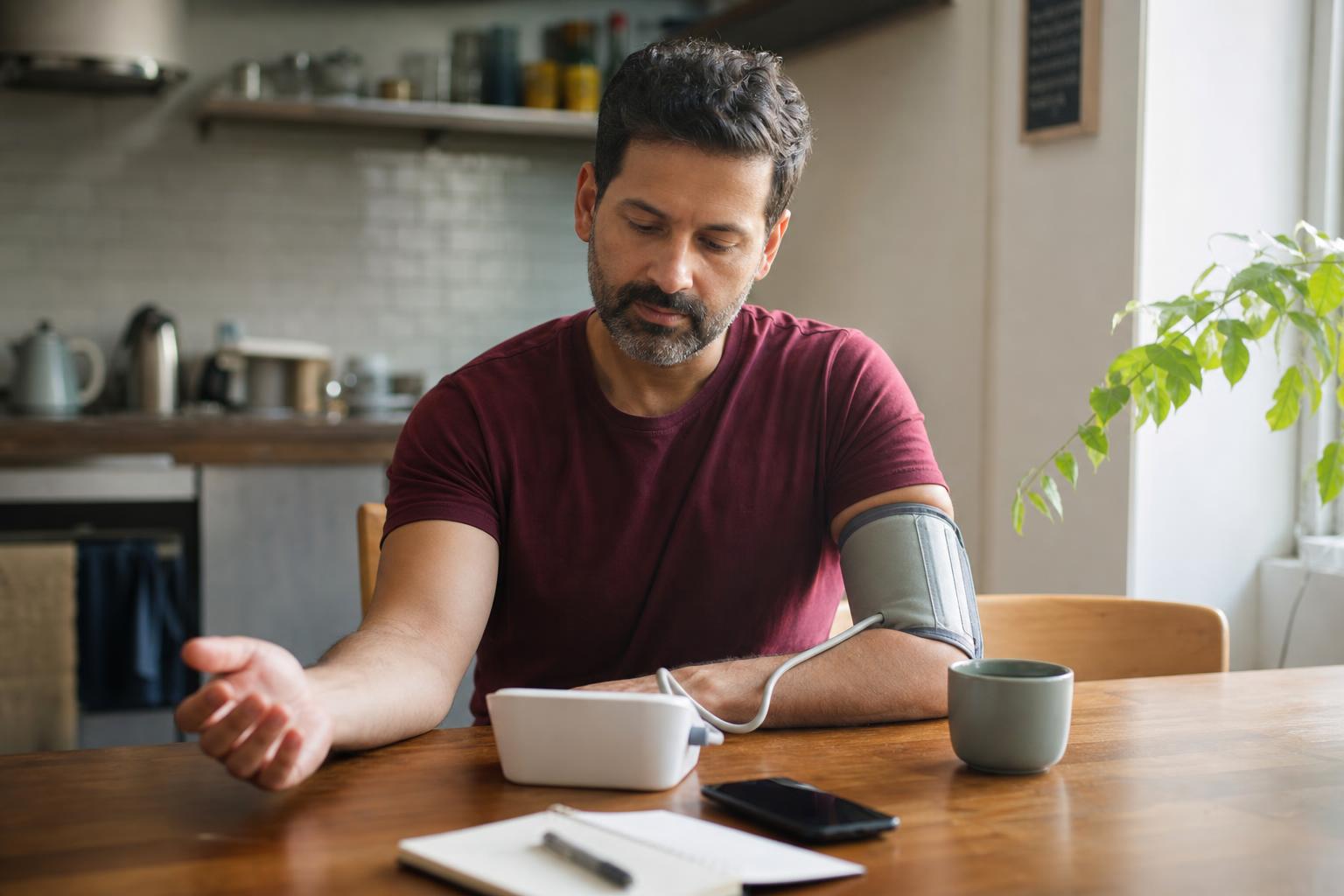
Yes — a full bladder can raise blood pressure, and sometimes by enough to make a home reading less useful. That does not mean every reading taken before a bathroom trip is wildly wrong. It means bladder fullness is one of several small setup details that can push a number upward when you are trying to measure your usual resting baseline.
This matters because home blood pressure monitoring works best when the conditions are boring and repeatable. If you measure one morning after using the bathroom and the next morning while rushing, uncomfortable, and holding urine, you are not really comparing like with like.
Why a full bladder can raise blood pressure
The short version is that physical discomfort changes how your body responds.
When your bladder is full, the body may activate parts of the sympathetic nervous system — the same broad stress-response system that can raise heart rate and tighten blood vessels. A full bladder also creates low-grade internal pressure and discomfort. For some people, that combination is enough to nudge a blood pressure reading upward for a short time.
This does not mean the bladder is causing hypertension in the long-term sense. It means the reading you get in that moment may reflect discomfort and body tension rather than your clean resting baseline.
That is why many home-monitoring checklists tell you to use the bathroom before measuring. It is the same logic behind avoiding conversation, recent caffeine, or a rushed setup. The goal is not perfection. The goal is to remove obvious short-term distortions.
How much can a full bladder affect a blood pressure reading?
The effect is not identical for everyone. Some people may see only a small change. Others may see enough of a rise to move a reading from one category to another, especially if they are already near a clinical threshold.
That is the important part. A small temporary bump may not matter much if your typical readings are clearly normal. But it matters more when:
- your numbers already run borderline high
- you are tracking a new baseline at home
- your clinician asked for a week of careful readings
- you are deciding whether a pattern is real or just noisy technique
If the difference between a useful reading and a misleading one is only a few points, small setup errors suddenly matter a lot.
Does this mainly affect home blood pressure monitoring?
Mostly, yes, because home monitoring depends on consistency.
In a clinic, one imperfect reading is usually interpreted alongside repeat checks, symptoms, history, and other context. At home, people often put more weight on a single number than they should. That makes technique details more important, not less.
A reading taken with a full bladder is similar to a reading taken right after climbing stairs or while talking during the cuff inflation. It may tell you something real about what your body was doing at that exact moment, but it is not the best number to use when you are trying to judge your usual pattern.
If you are not sure what counts as a clean home setup, our guides to how to take an accurate blood pressure reading at home and why blood pressure fluctuates give the bigger picture.
When a full bladder matters most
Bladder-related error is more likely to matter when you measure at predictable times, especially in the morning.
Many people check blood pressure soon after waking because that is one of the easiest times to standardize. But morning readings are also when people are most likely to cut corners. They may grab the cuff before using the bathroom, before sitting quietly, or while thinking about coffee, work, or medication.
If you are building a morning routine, going to the bathroom first is one of the simplest ways to improve the signal. Our full morning blood pressure routine covers that step in context with the rest of the setup.
It can also matter if:
- you are older and more sensitive to discomfort
- you already feel rushed or physically tense
- you are taking multiple readings and wondering why the first one runs high
- you are trying to compare readings day to day under nearly identical conditions
What to do if you forgot and already took the reading
Do not panic, and do not automatically throw the number away.
Instead, treat it as a reading with imperfect conditions.
A practical approach is:
- Use the bathroom.
- Sit quietly for a few minutes.
- Reset your position with feet flat, back supported, and arm at heart level.
- Repeat the reading one or two more times.
- Log the better-controlled reading and note what happened if you are keeping a careful record.
That approach is much more useful than staring at the first number and assuming it represents your real baseline.
Other setup mistakes that often travel with a full bladder
This issue rarely happens by itself. A full bladder often shows up as part of a rushed measurement routine.
Common combinations include:
- checking blood pressure immediately after getting out of bed
- measuring before sitting quietly for five minutes
- taking the reading after poor sleep or a stressful wake-up
- talking during the measurement
- checking before and after coffee on different days and comparing them as if they were equivalent
If your readings seem inconsistent, it is worth looking at the whole routine rather than blaming the monitor first. In many cases, the device is fine and the setup is not.
Should you ignore one high reading if your bladder was full?
Not completely. A high reading is still information. It just may not be the best basis for a conclusion.
The safer interpretation is: conditions may have pushed this reading up, so repeat it properly before deciding what it means.
That is especially true if you have no symptoms and the number is only mildly above your usual range. On the other hand, if a reading is very high, stays high after repeating it under better conditions, or comes with concerning symptoms such as chest pain, severe shortness of breath, confusion, severe headache, or vision changes, you should treat that more seriously and seek urgent care.
Bottom line
Yes, a full bladder can raise blood pressure enough to muddy a home reading. It does not create chronic high blood pressure by itself, but it can make a supposedly routine measurement less comparable and less trustworthy.
If you want cleaner numbers, make your routine a little more boring: use the bathroom first, sit quietly, take multiple readings, and judge the pattern instead of one isolated result.
FAQ
Should I always use the bathroom before checking my blood pressure?
If you can, yes. It is an easy way to reduce one avoidable source of short-term distortion.
Can a full bladder make the first blood pressure reading higher than the second?
It can be part of the reason, especially if you were also rushed, tense, or not fully settled when you started measuring.
If my blood pressure drops after I use the bathroom, which reading counts?
The better-controlled reading is usually more useful for home monitoring. What matters most is which reading was taken under more standard, repeatable conditions.
Is this enough to explain consistently high blood pressure?
Usually no. A full bladder can temporarily push a reading up, but repeated high readings across good conditions deserve proper follow-up.
For validated monitor options, see our Best Home Blood Pressure Monitors for 2026 roundup with Top 5 ranked picks.
This article is educational and not medical advice. Consult a qualified clinician before making treatment decisions based on home blood pressure readings.
Top 5 picks
Best Blood Pressure Monitors For Seniors 2026
Five upper-arm monitors ranked with published scorecards—setup friction, comfort, readability, power convenience, and repeatable accuracy—so you can compare models before you buy.
See our Top 5 blood pressure monitor picksHome-monitoring advice is only useful if it is easy to verify and act on correctly.
We write explainers to be understandable to readers, search engines, and AI answer systems.
Compare our Top 5 blood pressure monitor picks for 2026, then track readings over time with consistent technique.