Morning Blood Pressure Routine: 7 Steps for Better Readings
Use this morning blood pressure routine to get cleaner home readings before coffee, breakfast, or medication timing muddies the picture.
Use this morning blood pressure routine to get cleaner home readings before coffee, breakfast, or medication timing muddies the picture.
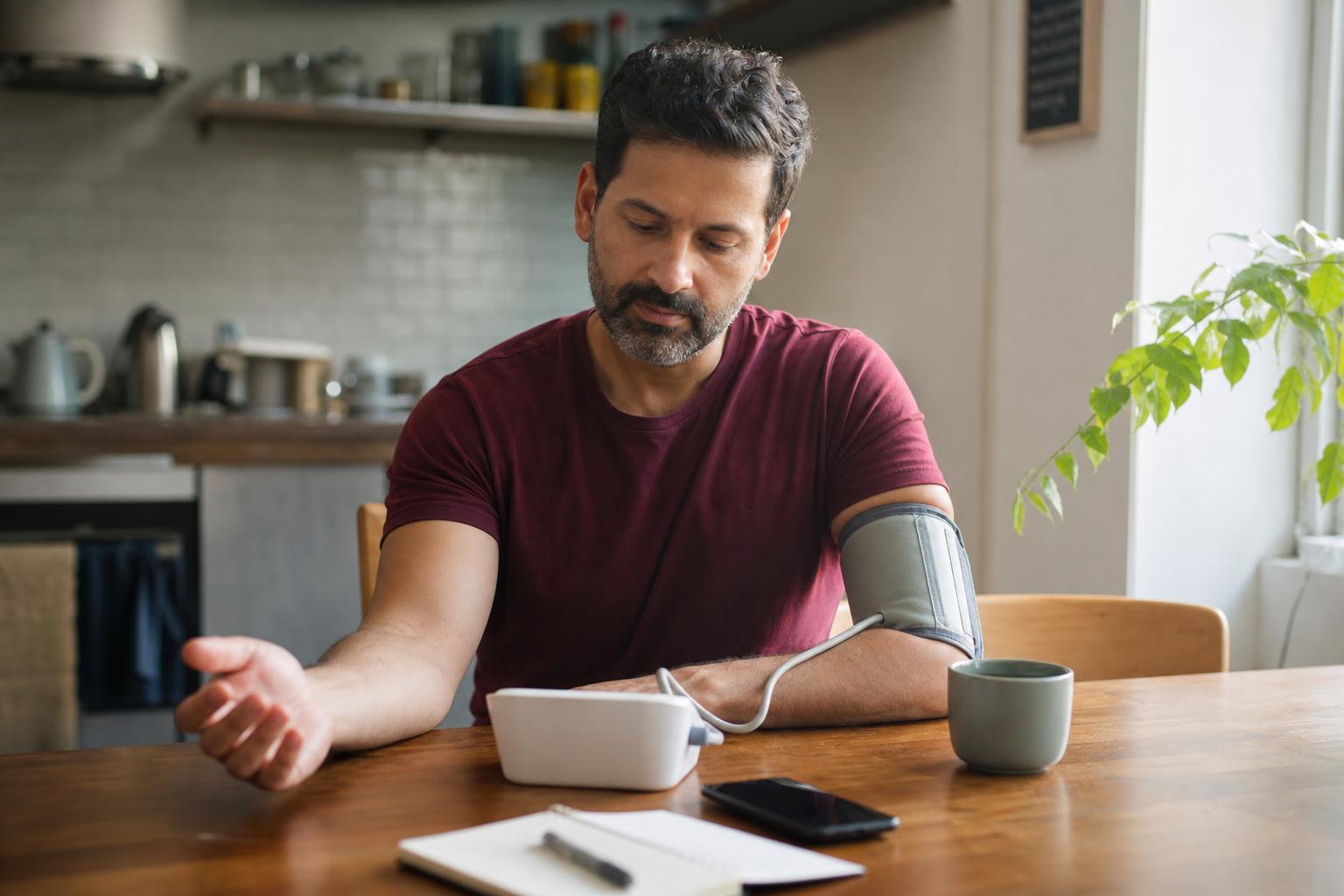
A morning blood pressure routine is one of the simplest ways to make your home numbers more useful. If you measure before coffee, before breakfast, and before the rest of the day starts pushing your blood pressure around, you are more likely to get a reading you can actually compare from one day to the next.
That does not mean morning is the only time that matters. But it is often the cleanest baseline. A rushed reading after emails, stairs, caffeine, or a stressful commute may tell you more about that moment than about your usual pattern.
If you are trying to build a reliable baseline, the goal is not to chase the lowest number. The goal is to create the same conditions often enough that a trend becomes visible.
Why a morning blood pressure routine helps
Blood pressure changes through the day. That is normal. Morning readings are useful because they are easier to standardize than random daytime checks.
Before breakfast, before caffeine, and before most daily activity, there are fewer moving parts. That makes it easier to answer a practical question: what does your blood pressure look like when you are rested and measuring under similar conditions?
This is also why articles like why blood pressure fluctuates and best time of day to check blood pressure matter. The number itself is only half the story. The timing and setup shape what that number means.
The 7-step morning blood pressure routine
Use this routine in the same order each day whenever you are establishing a baseline or checking how stable your home readings are.
1. Go to the bathroom first
A full bladder can push a reading higher than it would otherwise be. This is one of the least glamorous parts of blood pressure technique, but it is one of the easiest errors to fix.
2. Do not drink coffee or eat breakfast yet
If you want a clean morning baseline, measure before caffeine and before food. Coffee can temporarily raise blood pressure in some people, and breakfast changes the conditions you are trying to keep consistent.
If you normally take blood pressure medication in the morning, many clinicians also prefer readings before that dose when the goal is to compare day-to-day baseline numbers. If your own clinician gave you a different schedule, follow that plan instead.
3. Sit quietly for five minutes
Do not measure the moment you walk into the kitchen. Sit in a chair with back support and let your body settle first.
Those five minutes are not filler. They help strip out the noise from getting out of bed, moving around, checking your phone, or reacting to whatever your morning has already thrown at you.
4. Set up your position the same way every time
A good morning reading depends on boring consistency:
- feet flat on the floor
- legs uncrossed
- back supported
- cuff on bare upper arm
- arm supported at heart level
- no talking during the reading
If this part is shaky, the rest of the routine does not help much. Our deeper guide on how to take an accurate blood pressure reading at home covers the mechanics in more detail.
5. Take the first reading and treat it as a warm-up
Many people get a slightly higher first reading. That does not mean it is fake. It just means you should avoid building your whole interpretation around one number taken the instant the cuff starts squeezing.
If your monitor stores multiple readings automatically, use that feature. If not, write the first number down and keep going.
6. Wait one minute and take two more readings
A more useful morning routine is usually three readings, about one minute apart. That gives your blood pressure a chance to settle and gives you better context than a single snapshot.
For many people, the second and third readings are the ones that best reflect the resting baseline they were trying to capture in the first place.
7. Record the average, not just the highest number
If you only remember one part of this routine, make it this one: track the average pattern, not the scariest outlier.
A simple log should include:
- date
- time
- the three readings, if you take them
- the average you plan to use
- any obvious notes, such as poor sleep, illness, pain, or unusual stress
If you are not sure how to make sense of that data afterward, our post on how to read a blood pressure log like a clinician walks through what matters and what is probably just noise.
Common mistakes that ruin morning readings
A lot of bad morning data comes from small, repeatable mistakes.
Measuring after coffee because it feels more convenient
Convenient is not the same as comparable. If you sometimes measure before coffee and sometimes after, you are mixing two different conditions and making the trend harder to interpret.
Measuring while standing in the kitchen
A blood pressure monitor is not a thermometer. You cannot treat it like a quick grab-and-go check. If you are standing, balancing, or half-distracted, the number is less trustworthy.
Checking right after a stressful trigger
Bad news, work email, a crying child, a barking dog, a rushed school morning, or an argument can all distort a reading. That does not mean the number is meaningless. It means it may not be your baseline.
Taking only one reading because the first number looked fine
One reading is easy. A pattern is better. If you are trying to build a clinically useful home record, one number is usually not enough.
How long should you follow the routine?
If you are trying to establish a baseline, a practical approach is to use the same morning blood pressure routine for about a week. That is often enough to show whether the numbers are generally calm, consistently elevated, or simply inconsistent because the setup still needs work.
Some people also pair morning readings with evening readings, especially when they are starting home monitoring, adjusting treatment, or bringing data to a clinician. The point is not to measure forever. The point is to collect enough clean readings that the pattern becomes believable.
When a morning reading deserves follow-up
A single high morning reading does not automatically mean something is wrong. Repeat it with good technique and look at the pattern across several days.
Follow-up matters more when:
- morning readings stay elevated across repeated days
- morning values are consistently much higher than the rest of your usual home readings
- the trend is drifting upward over time
- high readings come with symptoms such as chest pain, shortness of breath, severe headache, confusion, or vision changes
If you get a very high reading, repeat it after several quiet minutes. If it remains very high or is paired with concerning symptoms, seek urgent medical care.
Bottom line
The best morning blood pressure routine is not complicated. It is just consistent.
Use the bathroom, wait on coffee and breakfast, sit quietly, set up the same way each time, take multiple readings, and log the average. That small routine turns home blood pressure monitoring from a source of random anxiety into something much closer to useful data.
FAQ
Should I take my blood pressure before coffee in the morning?
Yes, if your goal is a clean baseline. Measuring before coffee removes one common short-term variable and makes your readings easier to compare from day to day.
Should I take my morning blood pressure before medication?
Often yes when you are tracking a baseline, but medication timing questions are individual. If your clinician has asked you to measure at a specific point relative to your dose, follow that instruction.
Is one morning blood pressure reading enough?
Usually no. Two or three readings taken one minute apart are often more useful than a single number, especially when the first reading runs high.
What if my morning blood pressure is always higher?
A mild morning-evening difference is common. What matters is whether the higher morning pattern is consistent and whether the average stays elevated over time.
This article is educational and not medical advice. Consult a qualified clinician before making treatment decisions or changing medication based on home readings.
Top 5 picks
Best Blood Pressure Monitors For Seniors 2026
Five upper-arm monitors ranked with published scorecards—setup friction, comfort, readability, power convenience, and repeatable accuracy—so you can compare models before you buy.
See our Top 5 blood pressure monitor picksHome-monitoring advice is only useful if it is easy to verify and act on correctly.
We write explainers to be understandable to readers, search engines, and AI answer systems.
Compare our Top 5 blood pressure monitor picks for 2026, then track readings over time with consistent technique.