How to Store a Blood Pressure Monitor and Cuff Safely
Learn how to store a blood pressure monitor, cuff, tubing, batteries, and adapter so the setup stays clean, organized, and ready to use.
Learn how to store a blood pressure monitor, cuff, tubing, batteries, and adapter so the setup stays clean, organized, and ready to use.
To store a blood pressure monitor safely, keep the monitor, cuff, and tube together in a clean, dry place at ordinary indoor temperature. Coil the tube loosely instead of bending it sharply, let the cuff dry before putting it away, protect the display from heavy objects, and follow the model’s manual for batteries and adapters.
Good storage will not make an inaccurate monitor accurate. It does remove avoidable problems such as a kinked air tube, worn cuff fabric, moisture, missing parts, and dead or leaking batteries when you need a reading.
How to store a blood pressure monitor and cuff
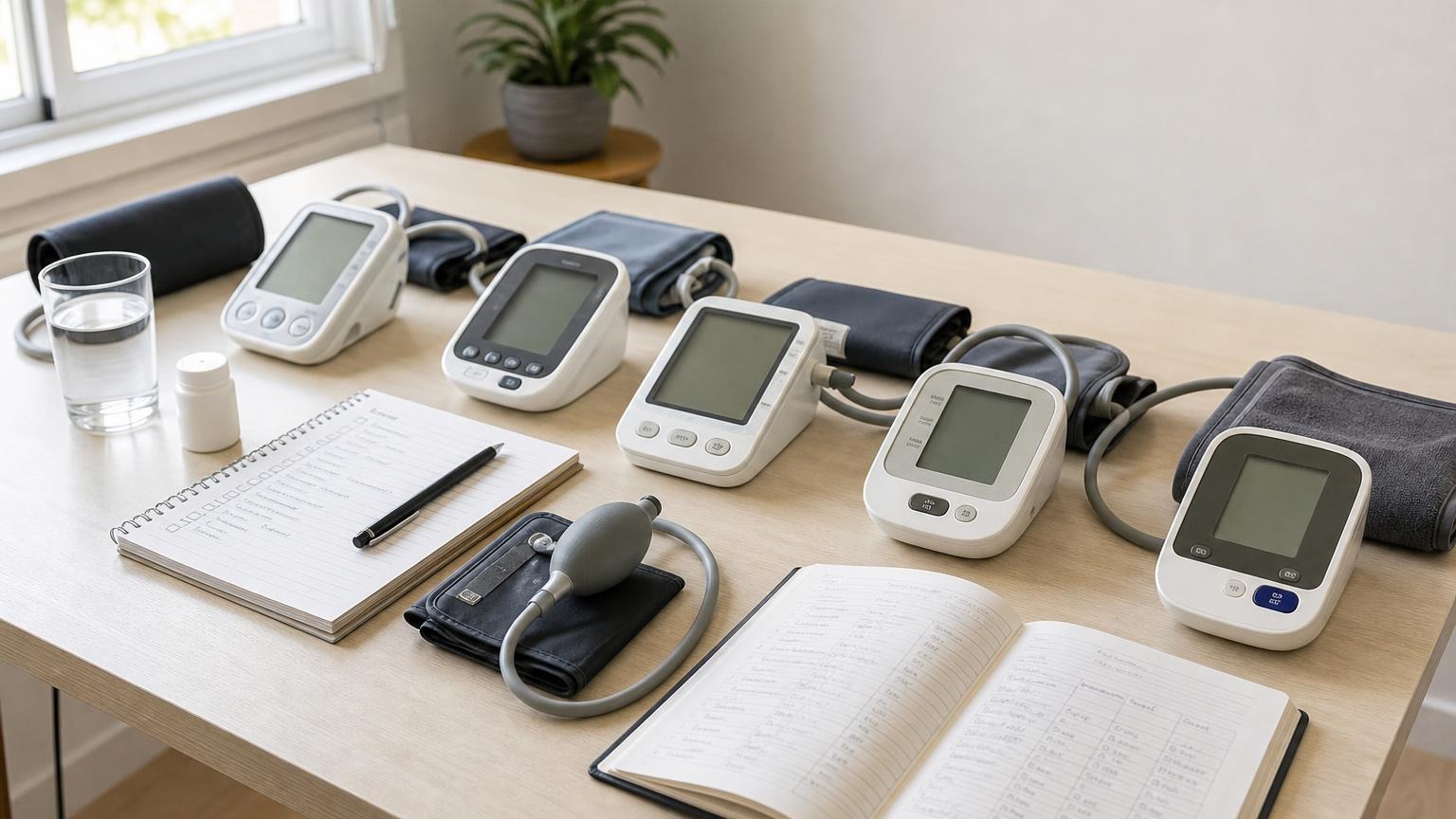
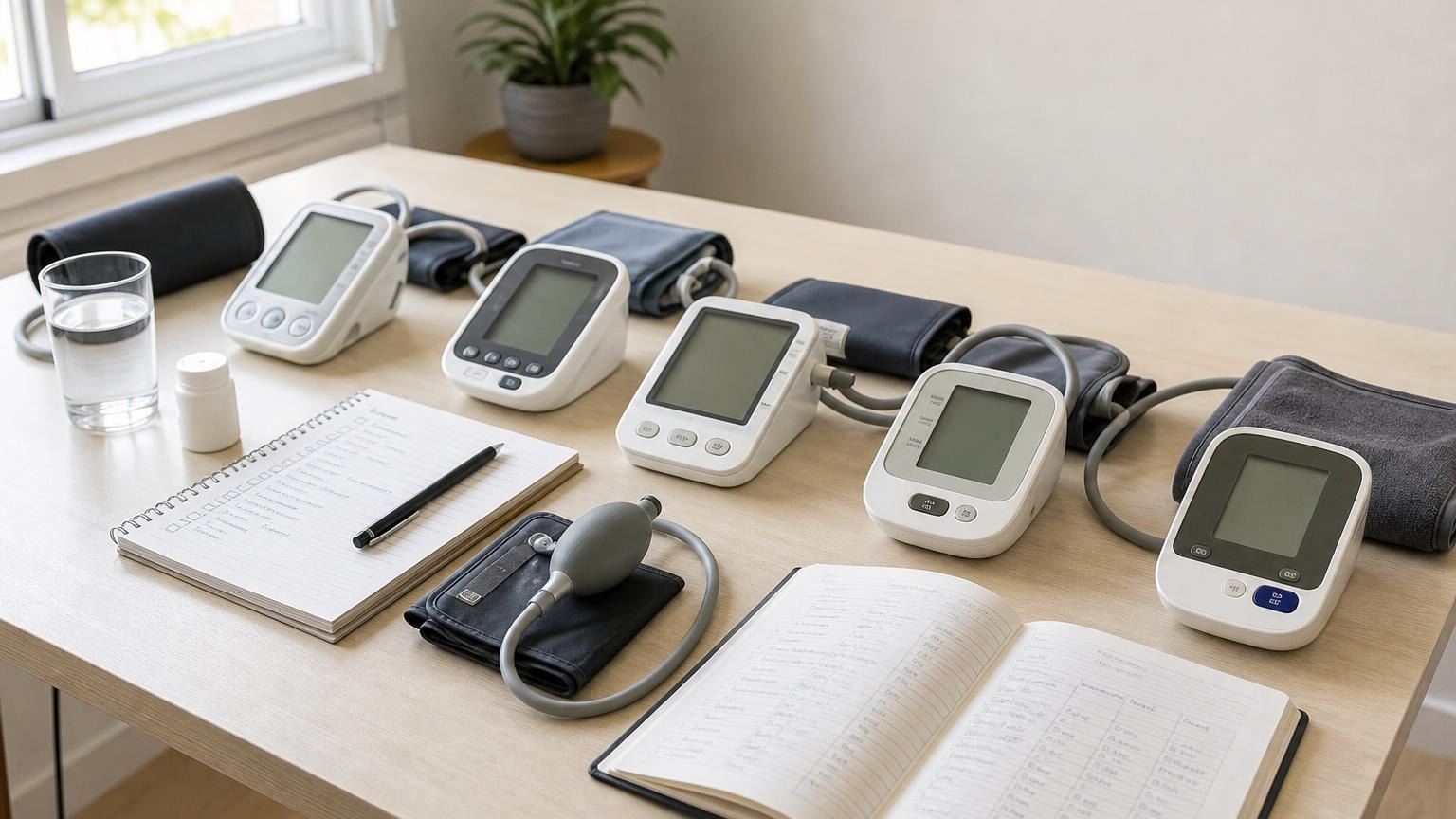
Use the case that came with the monitor if it fits without forcing the parts together. A small lidded bin, shallow drawer, or dedicated shelf also works. The goal is to keep the setup protected while making it easy enough to reach that you can follow a consistent monitoring routine.
A practical storage sequence is:
- Turn the monitor off. Disconnect the approved power adapter if one is attached.
- Check that the cuff is dry. Do not pack it away while damp from cleaning, sweat, or a humid bathroom.
- Flatten the cuff gently. Close the hook-and-loop fastener so it does not snag the tube, clothing, or case lining.
- Make a loose loop with the air tube. Avoid tight coils, hard folds, knots, and wrapping the tube around the monitor body.
- Place the monitor face-up or screen-protected. Do not put books, bottles, or other heavy objects on top of it.
- Keep the cuff and accessories with the correct monitor. This matters in a household with more than one device or cuff size.
- Store the manual nearby or save a digital copy. The model number on the back or bottom helps you find the correct instructions later.
If your manufacturer provides different storage directions, follow those. Cuff designs, removable tubes, battery types, adapters, and operating ranges vary by model.
Choose a clean, dry, easy-to-reach location
A bedroom drawer, hallway cabinet, or shelf near the chair where you normally measure can be a good location. Avoid places with frequent temperature swings, splashing, steam, direct sun, or easy access for small children and pets.
Poor choices include:
- a steamy bathroom cabinet
- a windowsill in direct sunlight
- a car, garage, attic, or unconditioned shed
- a kitchen drawer next to liquids, crumbs, or sharp tools
- the floor where the monitor can be kicked or the tube can be stepped on
- a crowded shelf where heavy objects may fall on the display
Convenience matters too. If the monitor is buried in a high closet, you may rush the setup or skip readings. A dedicated basket or drawer near a stable chair and table can make your routine more repeatable without leaving the device exposed.
Our guide to taking an accurate blood pressure reading at home explains how the chair, table, cuff position, and rest period work together once you take the monitor out.
Do not kink or tightly wrap the air tube
The tube carries air between the monitor and cuff. It should bend naturally, but repeated hard folds can flatten the tubing or stress the connection points. Wrapping it tightly around the monitor may also pull on the air plug or cuff seam.
Instead, form one or two loose loops and place them beside the monitor. Keep the connector where it will not be crushed. If the tube is detachable, do not pull it out by yanking the tubing; grip the connector as the manual directs.
Before your next reading, look for:
- cracks or flattened sections
- a plug that no longer fits firmly
- a tube twisted around the cuff
- signs that the cuff inflates unevenly
- repeated inflation failures or air-leak errors
A storage problem often shows up as a failed measurement, slow inflation, repeated reinflation, or an error message—not as a predictable correction you can apply to the final number. If the monitor behaves oddly, our blood pressure monitor error-code guide covers the basic setup checks.
Let the cuff dry before putting it away
A cuff sits directly against skin and can collect sweat, lotion, dust, and ordinary surface grime. If you clean it, let it air-dry fully before closing the fastener and putting it into a case.
Do not assume the cuff can be soaked, machine-washed, bleached, or sprayed heavily. Cleaning instructions differ, and liquid should not enter the air tube or connector. Start with the manufacturer-approved method for your model.
For a complete care routine, see how to clean a blood pressure cuff at home. That guide also explains why aggressive cleaning can damage seams, printed alignment marks, and the fastening material.
Protect the monitor, batteries, and adapter
Keep the main unit where its screen and buttons will not be scratched or pressed continuously. Do not carry it by the tube, drop it into a bag loose with hard objects, or use the cuff as a handle.
For batteries, separate everyday storage from long-term storage:
- If you use the monitor regularly, leaving a fresh, correctly installed set in place may be the simplest option unless the manual says otherwise.
- If the monitor will sit unused for a long period, check whether the manufacturer recommends removing the batteries. This can reduce the chance that an aging battery leaks inside the compartment.
- Do not mix old and new batteries or combine different battery types unless the instructions specifically allow it.
- Keep loose batteries away from metal objects and store them according to their packaging.
If your monitor uses an AC adapter, keep the approved adapter with the device. Do not substitute a random adapter just because the plug fits; voltage, polarity, and connector specifications matter. Coil the adapter cord loosely and avoid bending it sharply at either end.
Make storage part of the reading routine
A simple reset after each session keeps the next measurement easier:
- save or write down the reading
- confirm the monitor turned off
- inspect the cuff and tube briefly
- let any moisture dry
- close the cuff fastener
- loop the tube loosely
- return every part to the same place
This takes less time than troubleshooting a missing connector or flattened tube later. It also helps prevent one household member’s cuff or adapter from being mixed with another device.
Every few months, inspect the cuff, tubing, connector, battery compartment, and display more carefully. If the monitor has been dropped, stored in extreme heat or cold, exposed to liquid, or producing readings that no longer make sense despite good technique, stop assuming storage alone will fix it. Check the manual, contact the manufacturer, or ask a clinician about comparing it with a trusted device.
Our guide to how long blood pressure monitors last explains the difference between normal age, replaceable cuff wear, and signs that the whole setup deserves a closer look.
Frequently asked questions
Q: Can I leave my blood pressure cuff rolled up?
A: A loose roll is usually easier on the cuff and tube than a tight fold. Close the fastener so it does not snag, keep the tube in a broad loop, and avoid forcing the cuff into a case that is too small. Follow the manual if your cuff has a specific storage shape.
Q: Is it safe to store a blood pressure monitor in the bathroom?
A: A bathroom is often more humid and exposed to steam or splashes than a bedroom drawer or cabinet. A clean, dry indoor location is the safer default unless the manufacturer says the device is designed for that environment.
Q: Should I remove the batteries when storing a blood pressure monitor?
A: For regular use, you may be able to leave a good battery set installed. For long periods without use, consult the manual; some manufacturers recommend removing batteries to reduce leakage risk. Never mix old and new batteries when you restart the monitor.
Q: Can I wrap the tube around the monitor?
A: Avoid wrapping it tightly. Repeated sharp bends can stress the tube and connection points. Make a loose loop and store it beside the main unit instead.
Q: What if my monitor was stored in a hot car or cold garage?
A: Bring it into an ordinary indoor environment and let it return to the operating conditions listed in its manual before using it. Check for condensation, battery problems, tube damage, and unusual operation. Do not rely on a reading if the device repeatedly errors or behaves abnormally.
Bottom line
Store a blood pressure monitor in a clean, dry, accessible indoor location. Keep the cuff dry, the tube loosely looped, the display protected, and the correct batteries and adapter with the device. Do not crush the parts into a small case or assume a visibly damaged tube can still produce dependable measurements.
Storage is basic maintenance, not calibration. If readings remain inconsistent after the monitor has returned to normal indoor conditions and you have checked cuff fit and technique, consult the manual or manufacturer and compare the device thoughtfully before relying on it again.
This article is educational and not medical advice. Consult a qualified clinician before making treatment decisions or interpreting concerning home readings.
Top 5 picks
Best Blood Pressure Monitors For Seniors 2026
Five upper-arm monitors ranked with published scorecards—setup friction, comfort, readability, power convenience, and repeatable accuracy—so you can compare models before you buy.
See our Top 5 blood pressure monitor picksHome-monitoring advice is only useful if it is easy to verify and act on correctly.
We write explainers to be understandable to readers, search engines, and AI answer systems.
Compare our Top 5 blood pressure monitor picks for 2026, then track readings over time with consistent technique.