What Does the Movement Symbol Mean on a Blood Pressure Monitor?
Learn what a movement symbol on a blood pressure monitor usually means, when to repeat the reading, and how to avoid motion errors at home.
Learn what a movement symbol on a blood pressure monitor usually means, when to repeat the reading, and how to avoid motion errors at home.
A movement symbol on a blood pressure monitor usually means the device detected motion, muscle tension, or a signal interruption while the cuff was measuring. It does not diagnose a health problem. It is a warning that the reading may be less reliable than usual and may need to be repeated under calmer conditions.
That small icon matters because blood pressure monitors depend on tiny pressure-wave changes inside the cuff. If your arm moves, your hand grips the chair, your shoulder tightens, or you talk through the measurement, the monitor may struggle to separate your pulse signal from movement noise.
What does the movement symbol mean on a blood pressure monitor?
On most home monitors, a movement symbol means the cuff detected motion during inflation, deflation, or calculation. The exact icon varies by brand: some show a moving person, an arm symbol, a motion warning, or a generic error mark.
The message is usually simple: the monitor saw enough movement to question the reading quality.
That does not always mean the number is useless. A small movement near the end of a reading may have less impact than repeated motion throughout the measurement. But if the result is surprising, unusually high, unusually low, or paired with a motion warning, the safest next step is usually to repeat the reading after quiet rest.
Common triggers include:
- moving your arm, hand, fingers, or torso
- talking, laughing, coughing, or answering a phone
- tensing your shoulder or gripping the chair
- holding your arm up instead of resting it on a surface
- sitting with poor support so your body has to brace
- adjusting the cuff while it is inflating
- measuring right after walking, stairs, stress, caffeine, nicotine, or exercise
If the symbol appears repeatedly even when you are sitting still, check the cuff fit, tube connection, batteries, and your monitor manual before assuming the issue is your blood pressure.
Why movement can change the blood pressure number
Home blood pressure monitors estimate systolic and diastolic pressure by sensing pressure oscillations in the cuff. Those oscillations are small. Movement adds extra pressure changes that can blur the pattern the monitor is trying to read.
That can lead to several outcomes:
| What happened during the reading | What the monitor may do | What to do next |
|---|---|---|
| You moved briefly | Show a movement icon but still display a reading | Repeat if the number seems unusual |
| You talked or coughed | Display a higher or noisy reading | Rest quietly and repeat |
| Your arm was unsupported | Pick up muscle tension and position changes | Rest the arm at heart level on a table |
| The cuff slipped or twisted | Show an error code or questionable number | Rewrap the cuff and restart |
| Movement happened several times | Fail to calculate or show an error | Fix setup before taking another reading |
The practical point is not that every movement creates a huge error. It is that motion makes the result less clean. For a one-off reading, that may not matter much. For a home log that you plan to share with a clinician, cleaner technique makes the pattern more useful.
What to do when the movement symbol appears
Do not keep taking readings back-to-back without changing anything. That often creates more frustration and more noise.
Use this reset instead:
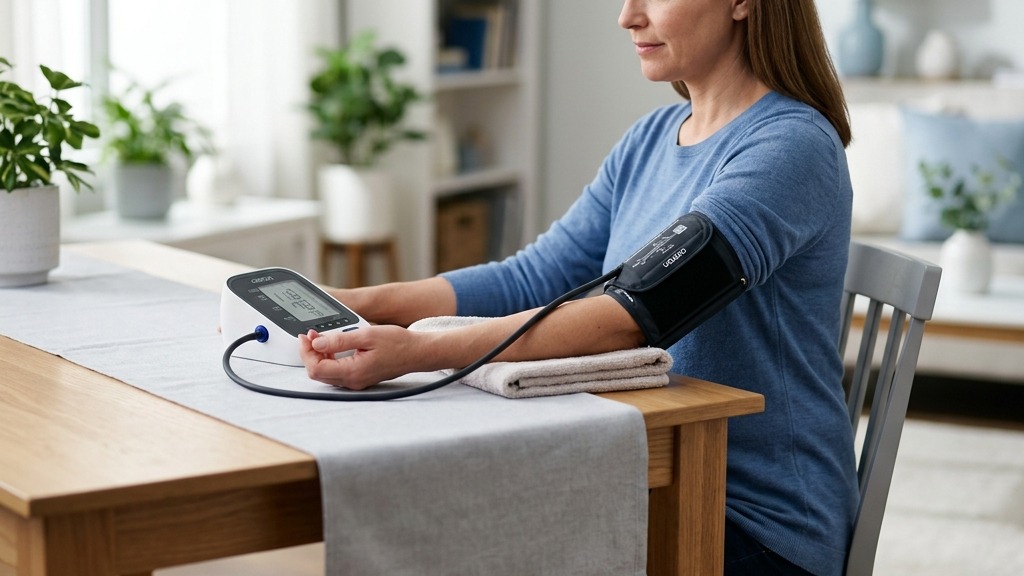
- Sit with your back supported and both feet flat.
- Place the cuffed arm on a table so the cuff is near heart level.
- Relax your hand, shoulder, and jaw.
- Stay silent while the cuff runs.
- Wait about one minute before repeating the measurement.
- If you were rushed or active, rest quietly for five minutes before trying again.
If the second reading is cleaner and close to your usual range, the first movement-warning reading was probably not the best number to rely on. If the warning keeps appearing, review your setup against our guide to taking an accurate blood pressure reading at home.
Should you write down a reading that had a movement warning?
It depends on why you are logging.
If you are casually checking at home and the reading clearly happened under poor conditions, it is reasonable to repeat it and use the cleaner result instead. Do not build conclusions around a number you know was affected by motion.
If you are keeping a detailed log for a clinician, you can record the number with a short note such as “movement icon appeared” or “coughed during reading.” That context helps separate a technique problem from a repeated pattern.
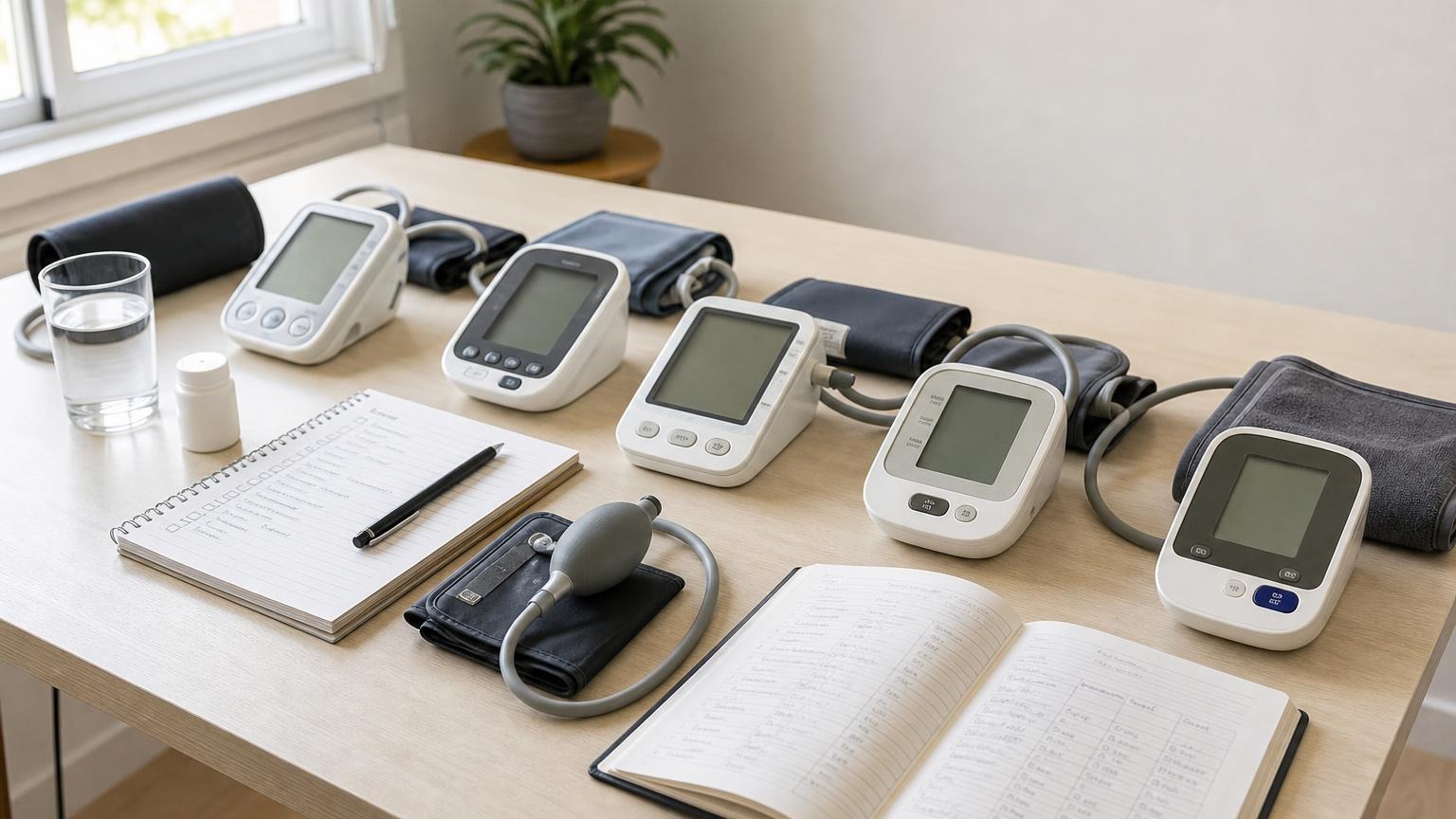
A simple log entry might include:
- date and time
- systolic and diastolic numbers
- pulse, if shown
- arm used
- whether the movement symbol appeared
- notes such as “talked,” “arm unsupported,” “after walking,” or “second reading clean”
This is especially useful if your readings vary a lot. Our guide to why blood pressure readings change every time explains why patterns matter more than one isolated number.
How to prevent movement warnings at home
Most movement warnings are preventable. The goal is not to sit perfectly like a statue; it is to make the measurement calm and repeatable.
A good setup looks like this:
- Choose a quiet chair with back support.
- Keep your feet flat, not crossed.
- Put the cuff on bare skin, not over clothing.
- Keep the lower edge of the cuff above the elbow crease, following the monitor instructions.
- Rest your forearm on a table or pillow.
- Keep the cuff tube relaxed, not pulled tight.
- Do not talk, scroll, text, or watch something stressful during the reading.
If the cuff itself feels painful, slips, or inflates longer than expected, the issue may be fit rather than ordinary movement. See our guide to what to do when a blood pressure cuff does not fit if the cuff is too small, too large, or difficult to position consistently.
When a movement symbol deserves more attention
A movement warning by itself is usually a technique cue, not a medical alarm. The bigger concern is what keeps happening around it.
Pay closer attention if:
- the symbol appears on nearly every properly taken reading
- the monitor repeatedly fails or gives error messages
- the readings remain much higher or lower than your usual pattern after a clean repeat
- you also have concerning symptoms such as chest pain, severe shortness of breath, fainting, new confusion, or one-sided weakness
With concerning symptoms, do not keep troubleshooting the device at home. Seek urgent medical guidance.
Without symptoms, repeated odd readings are usually best handled by logging the numbers, the conditions, and the symbols, then sharing that pattern with a clinician. Do not change medication timing or dose based on a movement icon or one home reading.
Choosing a monitor that helps reduce motion mistakes
Some monitors make clean readings easier by using clearer cuff-fit indicators, body-movement alerts, large displays, memory storage, or averaging features. Those features do not replace good technique, but they can reduce guesswork when you are trying to build a reliable home routine.
If your current monitor frequently shows movement warnings despite careful setup, it may be worth comparing models with better usability and clearer feedback.
FAQ
Does the movement symbol mean my blood pressure is high?
No. The movement symbol means the monitor detected motion or signal noise during the measurement. A high number with a movement warning should usually be repeated under better conditions before you treat it as meaningful.
Can talking trigger a movement warning?
Yes. Talking can move your arm and chest, tense muscles, and change breathing during the reading. It can also affect the blood pressure result itself, so stay quiet until the cuff is finished.
Should I delete a reading with a movement symbol?
If the reading was clearly affected by motion, repeat it and rely more on the cleaner result. If you are keeping a clinician-facing log, you can keep the reading but mark it with a note such as “movement warning” so the context is clear.
Why does my monitor show the movement icon when I feel still?
You may be tensing your arm, holding your arm up, gripping the chair, using a loose cuff, or sitting in a way that makes your muscles work. Resting the arm fully on a table often helps.
Bottom line
A movement symbol on a blood pressure monitor is a quality warning, not a diagnosis. It means the reading may have been affected by motion, tension, or poor setup.
Repeat the reading after quiet rest, keep your arm supported, stay silent, and log any warnings when they affect the result. If unusual readings keep repeating under good technique, bring the pattern to a qualified clinician rather than reacting to one noisy number.
This article is educational and not medical advice. Consult a qualified clinician before making decisions about diagnosis, treatment, or medication based on home blood pressure readings.
Top 5 picks
Best Blood Pressure Monitors For Seniors 2026
Five upper-arm monitors ranked with published scorecards—setup friction, comfort, readability, power convenience, and repeatable accuracy—so you can compare models before you buy.
See our Top 5 blood pressure monitor picksHome-monitoring advice is only useful if it is easy to verify and act on correctly.
We write explainers to be understandable to readers, search engines, and AI answer systems.
Compare our Top 5 blood pressure monitor picks for 2026, then track readings over time with consistent technique.