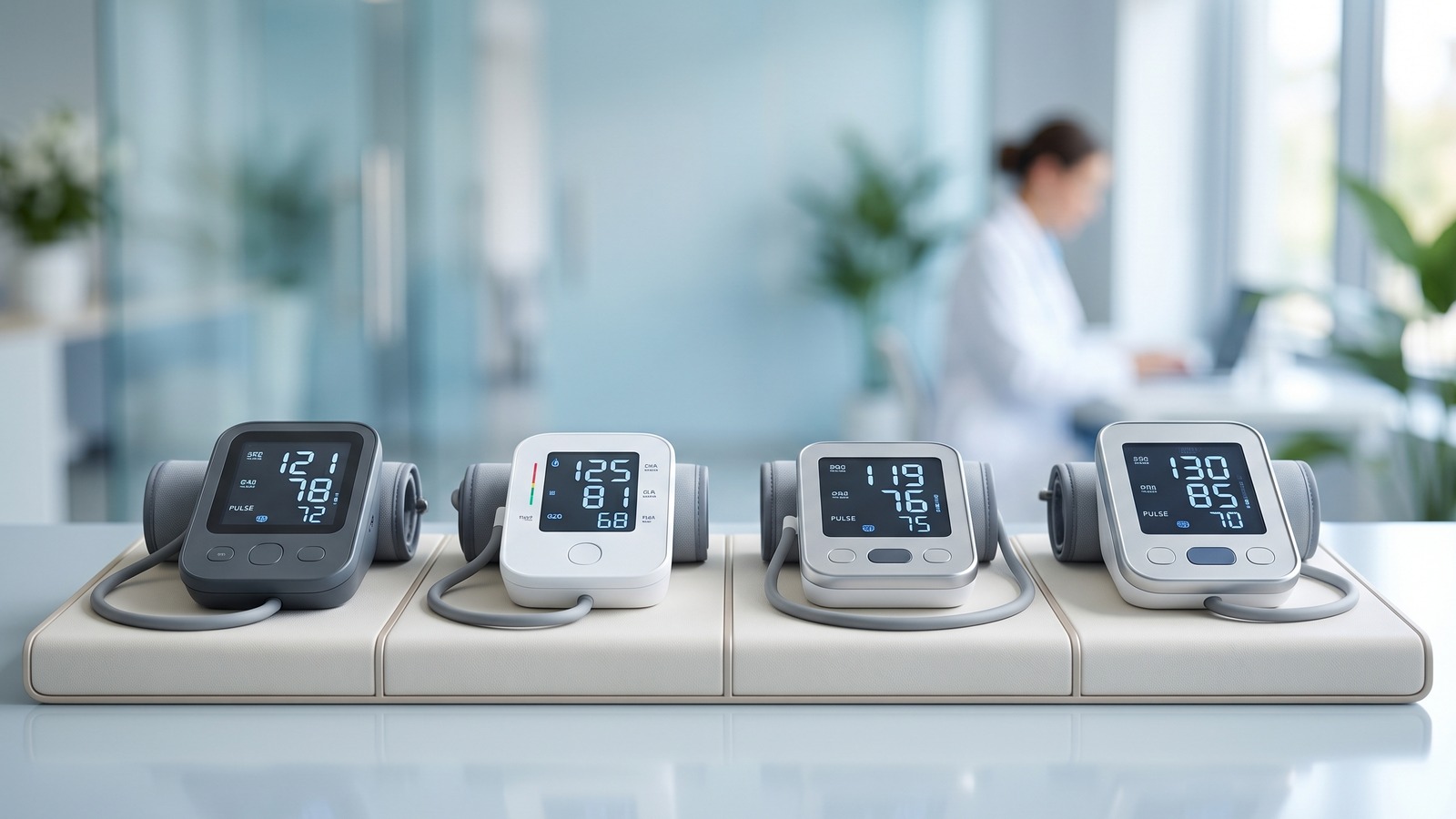
Why Does My Blood Pressure Reading Change Every Time?
Blood pressure readings can change from minute to minute. Learn what normal variation looks like, what affects repeat readings, and when to follow up.
Blood pressure readings can change from minute to minute. Learn what normal variation looks like, what affects repeat readings, and when to follow up.
If your blood pressure reading changes every time, the monitor is not automatically broken and your body is not automatically in danger. Blood pressure is a moving measurement. It responds to posture, breathing, recent movement, stress, cuff position, arm support, conversation, caffeine, meals, pain, temperature, and the simple fact that you are watching a cuff squeeze your arm.
That does not mean every changing number should be ignored. The useful question is whether the variation makes sense in context, settles with good technique, or keeps repeating as a pattern.
Why blood pressure readings change every time
Blood pressure is not a fixed score. It is closer to a live pressure reading inside a flexible system. Your heart, blood vessels, nervous system, kidneys, breathing, and muscles are constantly adjusting to what you are doing.
A few points of difference between readings can be completely ordinary. Larger swings are often caused by a measurement condition that changed between attempts.
Common reasons include:
- You were not fully rested before the first reading. Walking in, sitting down, adjusting the cuff, or feeling rushed can raise the first number.
- Your arm position changed. A cuffed arm hanging low can read differently from an arm supported near heart level.
- The cuff moved or tightened differently. Placement, fit, and how the cuff wraps around your arm all matter.
- You talked, looked at your phone, or tensed up. Small distractions can change the measurement environment.
- Recent triggers are still active. Coffee, nicotine, exercise, meals, cold exposure, pain, stress, or a full bladder can affect readings.
- Your body is settling across repeated measurements. Many people see the first reading come in higher, then the next one or two look lower after they sit quietly.
For the full setup checklist, start with our guide to taking an accurate blood pressure reading at home.
How much variation between blood pressure readings is normal?
Small differences are expected. If two properly taken readings are only a few points apart, that is usually not meaningful by itself. Even a 5 to 10 mmHg difference can happen when you are still settling, the cuff position changed slightly, or the first reading was rushed.
Variation deserves more attention when:
- readings stay high after several quiet minutes and careful technique
- systolic readings differ widely over and over in the same session
- the pattern is new for you
- high or low readings come with symptoms
- one arm is consistently much higher than the other
- your clinician is using the log to make medication or diagnosis decisions
Do not try to explain everything from one session. A week of consistent morning and evening readings usually tells a clearer story than three anxious measurements in a row.
If your readings change mainly across the day, our explainer on why blood pressure fluctuates covers timing, circadian rhythm, meals, stress, and activity in more detail.
Why the first blood pressure reading is often different
The first reading often happens during the messiest part of the process. You have just sat down, wrapped the cuff, adjusted your sleeve, checked the display, wondered what the result will be, and maybe held your arm awkwardly while getting ready.
That is why the first number can be higher than the next one. The second reading is often taken after you have been sitting longer, breathing more normally, and keeping your arm in a more stable position.
A practical routine is:
- Sit with your back supported and both feet flat.
- Place the cuff on bare upper arm.
- Support the cuffed arm so the cuff is near heart level.
- Rest quietly for 5 minutes.
- Take the first reading without talking.
- Wait about one minute.
- Take a second reading in the same position.
- Take a third only if the first two are far apart or the first attempt was clearly flawed.
Record the numbers honestly. If the first reading was rushed and the next two settled, write that down instead of deleting the first number. Context is useful.
For a deeper repeat-reading routine, see how many blood pressure readings you should take.
When changing readings may mean technique is the problem
If the numbers jump around every time you press start, check the setup before blaming your blood pressure or the monitor.
Use this troubleshooting list:
| What changed? | Why it matters | What to do |
|---|---|---|
| Arm height | A low or unsupported arm can distort the reading | Rest your forearm on a table or pillow near heart level |
| Cuff placement | Too high, too low, loose, or wrinkled placement adds noise | Put the cuff on bare skin and align it according to the monitor instructions |
| Body position | Crossed legs, unsupported back, or dangling feet can affect pressure | Sit in a chair with back support and feet flat |
| Talking or scrolling | Attention, speech, and movement change the measurement condition | Stay quiet and still until the reading finishes |
| Timing | Recent activity, meals, caffeine, or stress can still be active | Label the context or wait longer before measuring |
If one correction suddenly makes your readings much more consistent, that is useful information. It suggests the earlier variation was at least partly a measurement problem.
Related technique guides: how to position your arm for blood pressure, blood pressure cuff placement, and how long to rest before taking blood pressure.
When to pay attention to changing blood pressure readings
Changing readings matter most when they form a repeated pattern or come with symptoms.
Contact a qualified clinician for guidance if:
- your readings are repeatedly above the range your clinician gave you
- your readings are repeatedly much lower than usual and you feel dizzy, weak, faint, or unsteady
- your home log has become more variable without an obvious reason
- one arm is consistently higher than the other across properly taken readings
- your monitor repeatedly shows irregular heartbeat alerts
- you are unsure how to interpret readings around medication timing
Seek urgent medical care if a very high or very low reading comes with concerning symptoms such as chest pain, shortness of breath, fainting, confusion, sudden weakness on one side, sudden vision changes, or a severe unusual headache. Symptoms should not wait for a perfect home measurement.
Do not change, skip, or retime medication based only on a changing home reading. Log the numbers, note the context, and bring the pattern to your clinician.
How to make repeat readings more consistent
The best way to reduce random variation is not to chase a perfect number. It is to make the measurement boring and repeatable.
Use the same routine each time:
- measure at similar times of day
- use the same arm unless your clinician says otherwise
- avoid caffeine, nicotine, exercise, meals, and hot showers shortly before a baseline reading
- use the bathroom first
- sit quietly for 5 minutes
- keep your feet flat and back supported
- support your cuffed arm at heart level
- take two readings about one minute apart
- record both readings, the average, and any obvious context
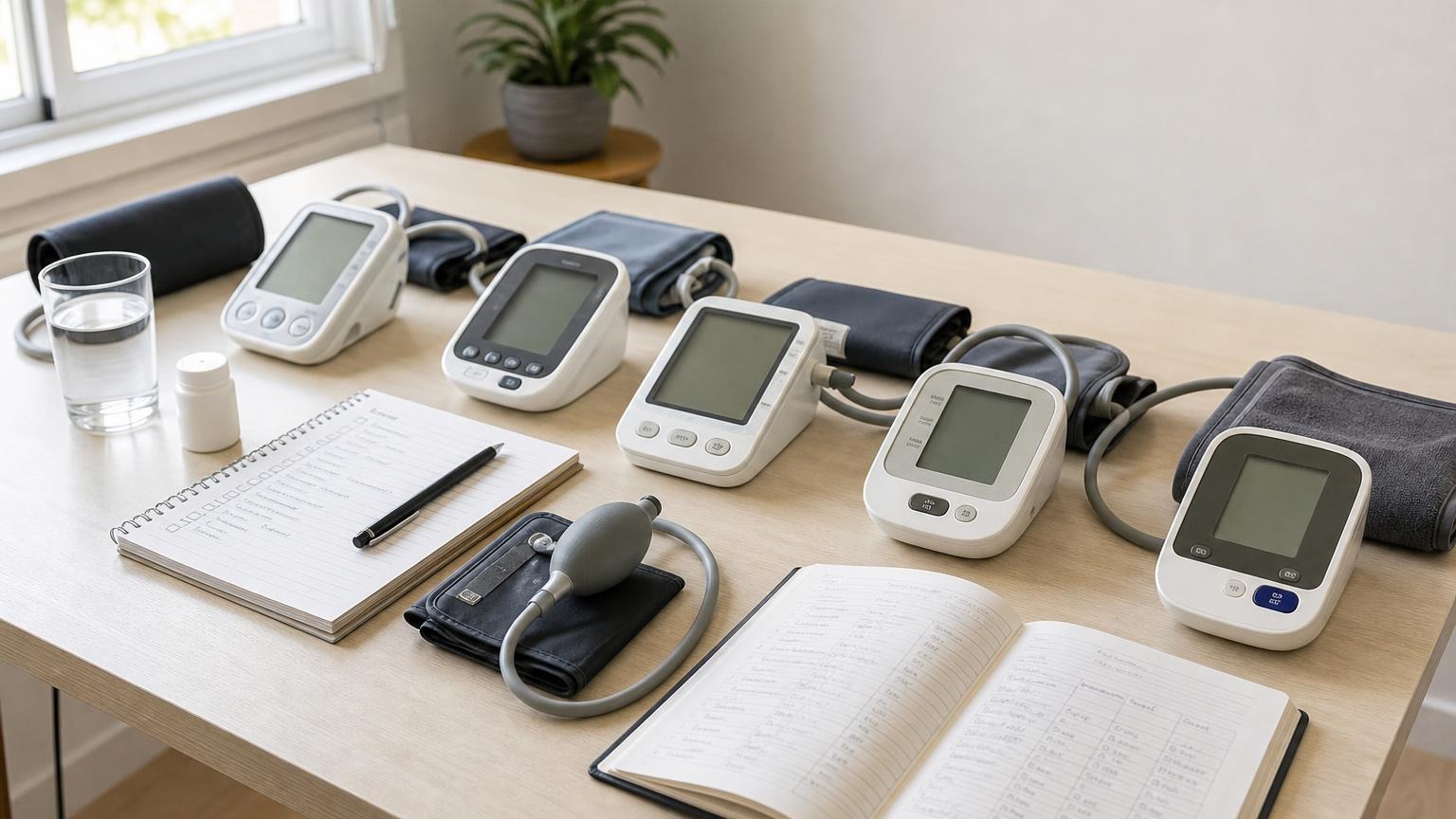
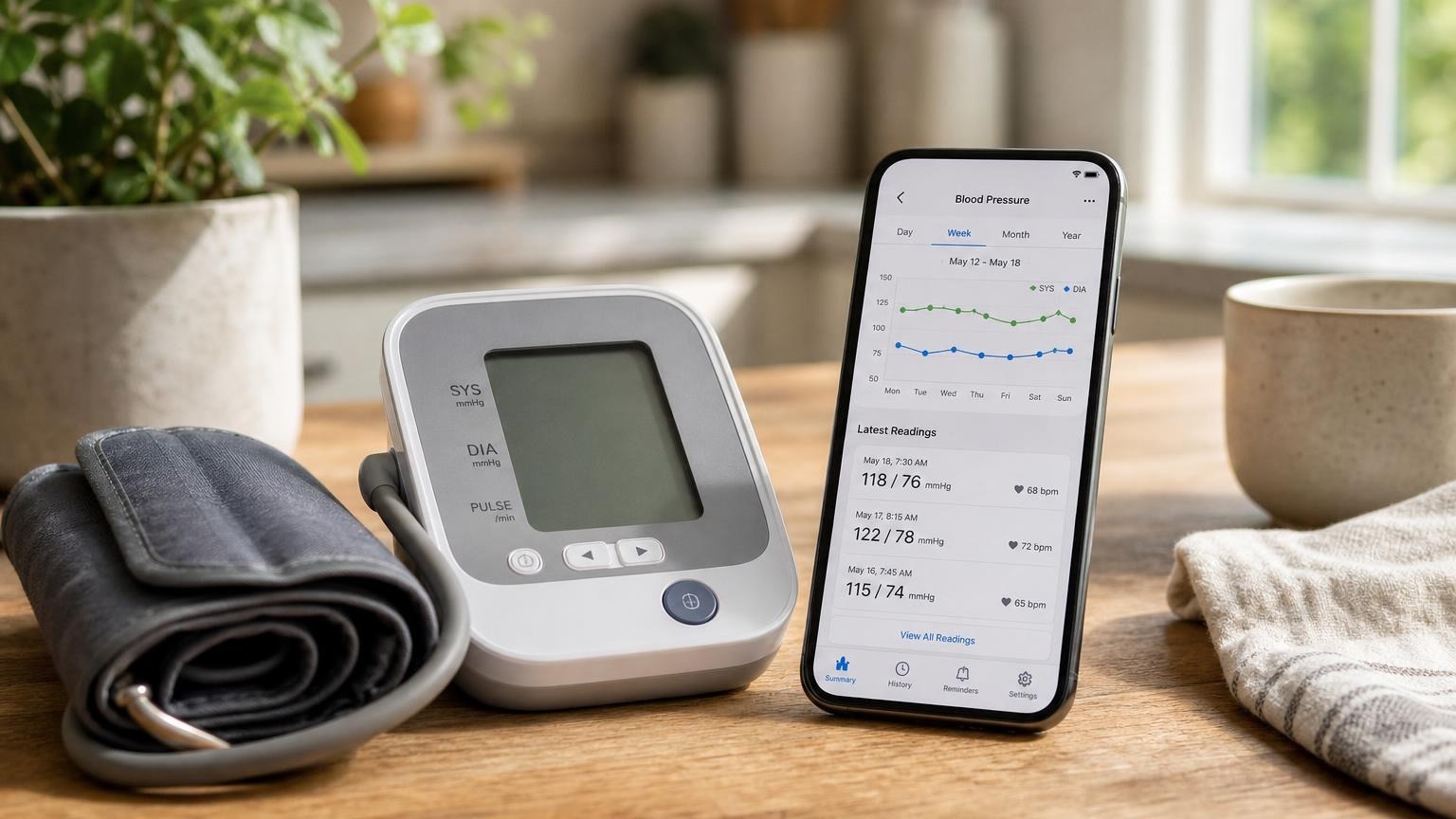
A monitor with memory or an organized log can make this easier, especially if you are sharing readings with a clinician.
FAQ
Is it normal for blood pressure to be different each time?
Yes. Some variation is normal because blood pressure responds to posture, timing, stress, activity, breathing, and measurement technique. The pattern over several properly taken readings is more useful than one isolated change.
Which blood pressure reading should I trust?
Trust the reading taken under the cleanest, most repeatable conditions: seated, rested, quiet, cuff on bare upper arm, arm supported at heart level. If two or three readings are close, the average is usually more useful than picking the highest or lowest number.
Why is my second blood pressure reading lower?
The second reading is often lower because you have been sitting longer and are more settled. If the first number was rushed or tense and the next two are similar, note the pattern rather than reacting to the first reading alone.
Should I keep retaking blood pressure until it is normal?
No. Rechecking too many times can increase anxiety and arm discomfort, which may make the numbers less useful. For routine home monitoring, two readings are usually enough, with a third only when the first two are far apart or the first attempt was clearly flawed.
Bottom line
Blood pressure readings change because blood pressure is dynamic and the measurement setup is sensitive. Small differences are expected. Bigger swings are often explained by rest time, cuff position, arm support, talking, recent triggers, or anxiety around the reading itself.
Use a consistent routine, take two readings about one minute apart, and look for patterns over days rather than reacting to one changing number. If readings remain concerning, come with symptoms, or do not make sense despite good technique, bring the log to a qualified clinician.
This article is educational and not medical advice. Consult a qualified clinician before making treatment decisions or interpreting symptoms from home readings.
Top 5 picks
Best Blood Pressure Monitors For Seniors 2026
Five upper-arm monitors ranked with published scorecards—setup friction, comfort, readability, power convenience, and repeatable accuracy—so you can compare models before you buy.
See our Top 5 blood pressure monitor picksHome-monitoring advice is only useful if it is easy to verify and act on correctly.
We write explainers to be understandable to readers, search engines, and AI answer systems.
Compare our Top 5 blood pressure monitor picks for 2026, then track readings over time with consistent technique.