Why Your Blood Pressure Monitor Pulse Differs From Your Smartwatch
A blood pressure monitor pulse and smartwatch heart rate may not match. Learn why timing, sensor method, fit, and movement can change the result.
A blood pressure monitor pulse and smartwatch heart rate may not match. Learn why timing, sensor method, fit, and movement can change the result.
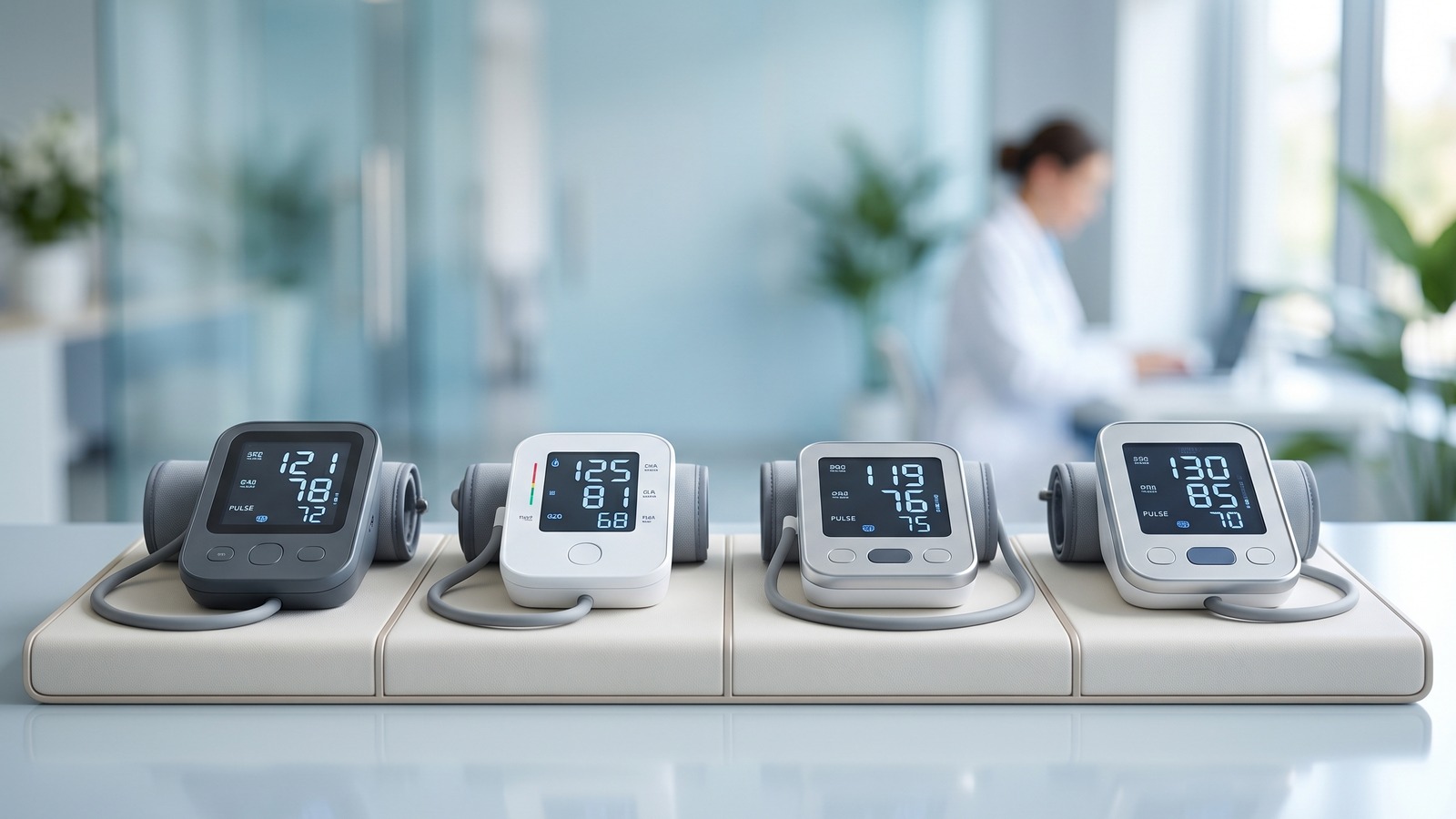
Your blood pressure monitor pulse and smartwatch heart rate can differ even when both devices are working normally. They may use different sensors, sample different moments, and average the heartbeat signal over different windows. A cuff reading taken while you sit still is not always directly comparable with a watch value captured a few seconds earlier or updated from recent activity.
A small one-time mismatch is usually a reason to check the setup and timing—not to decide immediately that one device is broken. Compare both tools under the same quiet conditions, then pay attention to repeated differences or changes that come with symptoms.
Why a blood pressure monitor pulse differs from a smartwatch
An automatic upper-arm monitor estimates pulse from the pressure waves it detects while the cuff inflates or deflates. Each heartbeat changes pressure inside the cuff slightly. The monitor uses that signal to estimate blood pressure and heart rate during a short, controlled measurement.
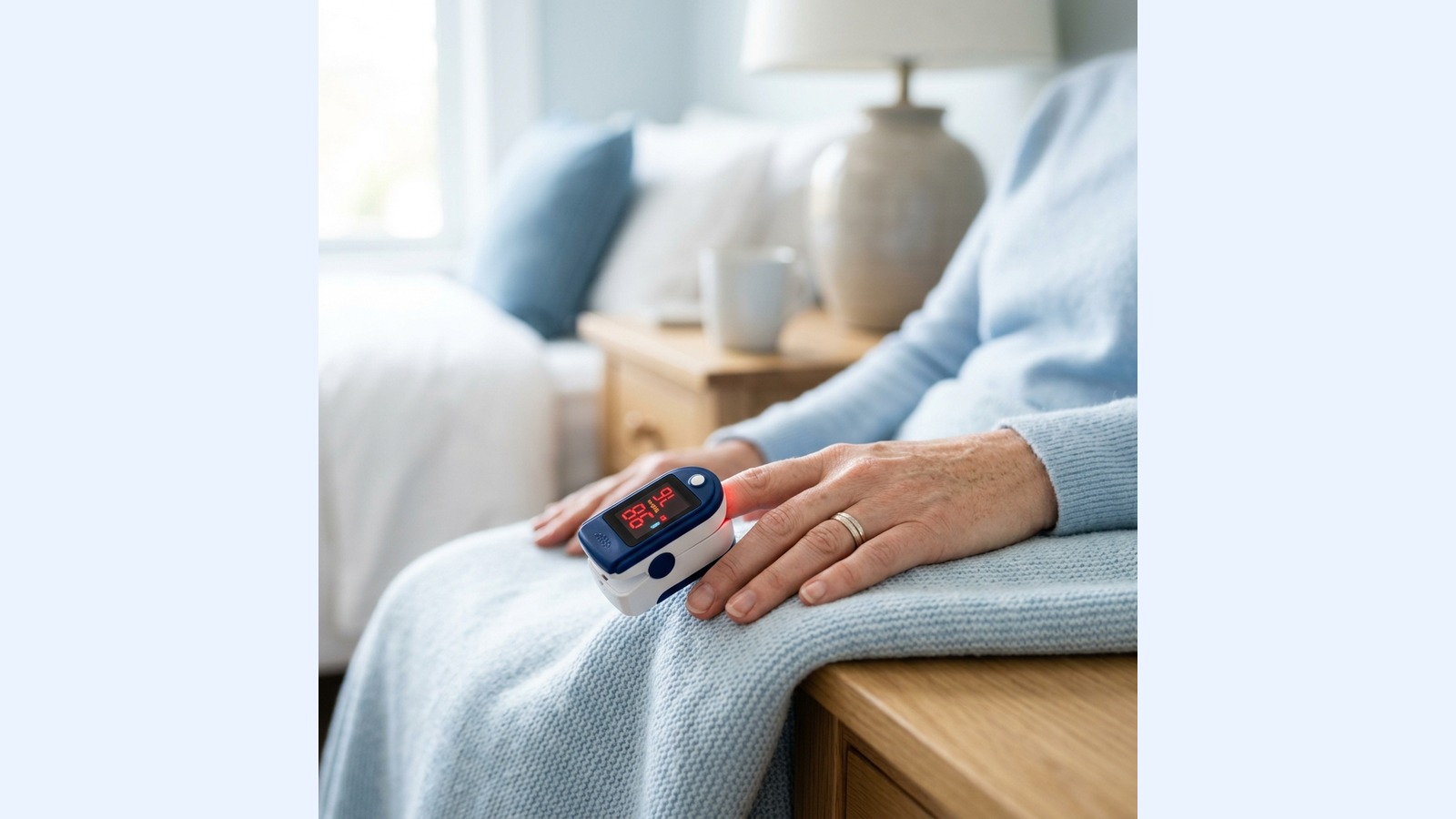
Most smartwatches estimate heart rate with optical sensors on the wrist. Lights shine into the skin, and the watch analyzes changes associated with blood flow. The watch may display a current estimate, a recent value, or an average, depending on the model, activity mode, and software.
That creates several reasons for a mismatch:
- The readings were not taken at exactly the same time. Heart rate can change within seconds as you settle, breathe, move, or anticipate the cuff squeeze.
- The measurement windows differ. One device may average several beats during the cuff cycle while the other updates on its own schedule.
- The sensors use different body sites. The cuff reads pulse-related pressure changes at the upper arm; the watch reads an optical signal at the wrist.
- Movement affects the devices differently. A shifting arm may interfere with the cuff, while typing, gripping, or wrist motion may add noise to the watch.
- Fit changes signal quality. A loose watch band can reduce sensor contact, while a loose, poorly placed, or wrong-size cuff can make the monitor work harder to detect a clean signal.
The pulse number on a cuff monitor is still your estimated heart rate, not a separate blood pressure value. Our guide to what pulse means on a blood pressure monitor explains the PUL label in more detail.
How far apart is too far apart?
There is no universal home correction such as “the watch is always five beats higher.” The meaningful question is whether the gap repeats when both readings are taken carefully and whether either result is unusual for you.
A modest difference from one comparison can happen because the devices did not capture the same beats. If your heart rate was settling after walking to the chair, the watch may have sampled the faster period while the cuff captured a later, calmer period. The order can reverse if the cuff pressure makes you tense or if the watch refreshes after you relax.
Larger or inconsistent gaps deserve a setup check before you interpret them as a health change. Look for:
- a watch worn too loosely or too close to the wrist bone
- cold skin, sweat, lotion, tattoos, or poor sensor contact at the watch site
- a cuff over clothing, the wrong cuff size, or poor upper-arm placement
- talking, scrolling, clenching your hand, or moving during the cuff reading
- a watch display that is showing a recent value rather than a live measurement
- recent exercise, caffeine, nicotine, pain, illness, stress, or dehydration
Do not average the cuff pulse and watch heart rate into one number. Keep the source attached to each result so a repeated pattern remains understandable.
How to compare cuff pulse and smartwatch heart rate
Use a simple side-by-side check rather than looking back and forth at devices throughout the day.
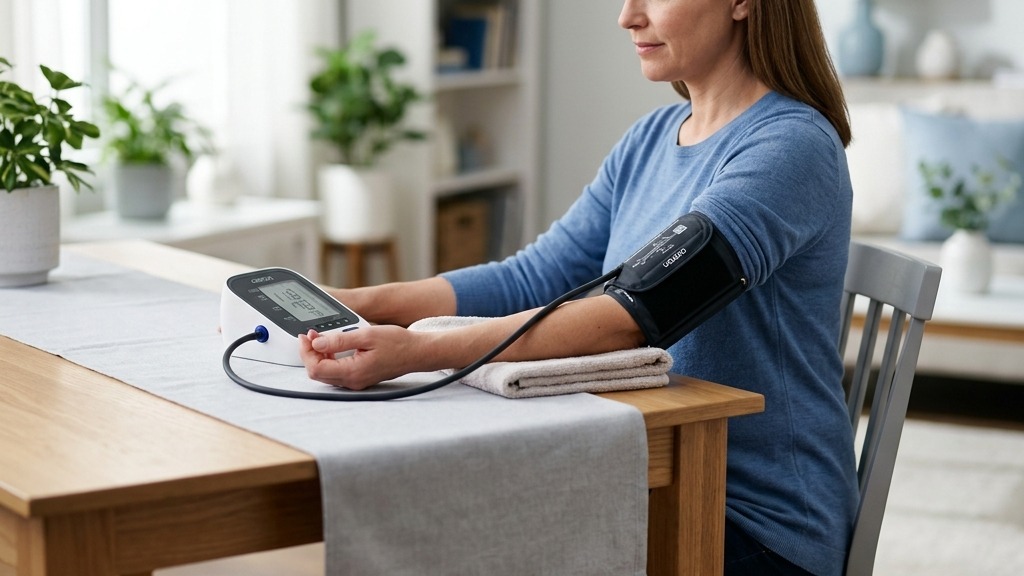
- Sit in a chair with your back supported, feet flat, and legs uncrossed.
- Place the blood pressure cuff on bare upper arm and support that arm near heart level.
- Wear the watch as its instructions recommend, with clean sensor contact and a comfortably snug band.
- Rest quietly for about 5 minutes. Do not talk, scroll, or perform a deliberate breathing exercise.
- Open the watch’s live heart-rate screen, if the model provides one, and note the time and value without moving the cuffed arm.
- Take the blood pressure reading while staying still and breathing normally.
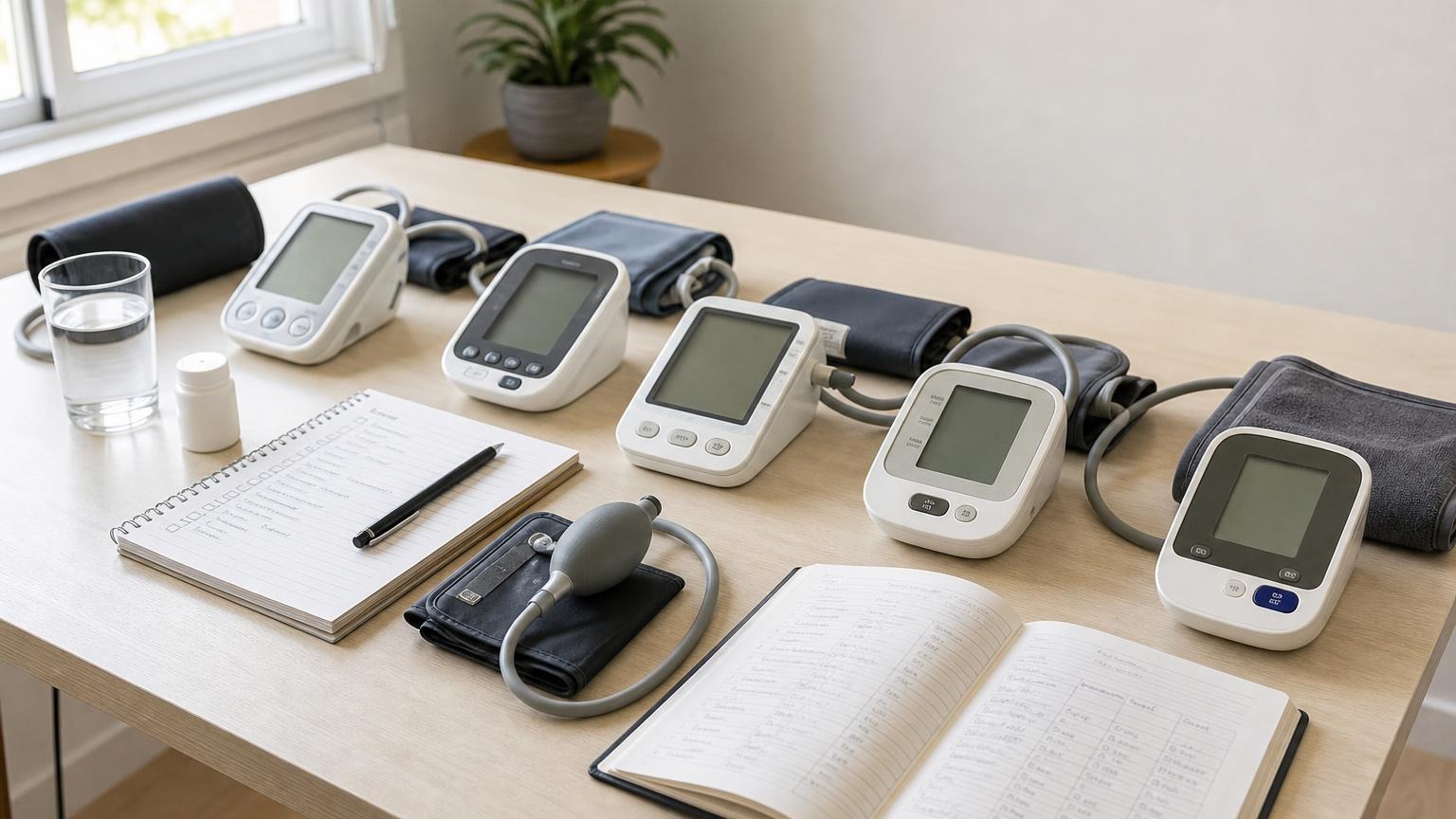
- Record the cuff pulse, watch heart rate, time, and any irregular-heartbeat or movement symbol.
- Repeat on another quiet session instead of repeatedly testing until the numbers match.
The goal is not to prove that two different devices always show the identical number. It is to remove obvious timing and technique differences so you can see whether the mismatch is occasional or consistent.
For a complete cuff setup, follow our accurate home blood pressure reading guide. If either device reports an unexpected value after recent activity, allow enough recovery time before comparing it with a resting baseline.
Which heart-rate reading should you trust?
For a home blood pressure session, keep the pulse value recorded by the cuff with that blood pressure reading. It describes the pulse signal the monitor detected during the same measurement window. Do not replace it with a smartwatch number taken at a different moment.
For all-day activity trends, a smartwatch may provide more context because it collects heart-rate estimates across many situations. That does not make every wrist reading more accurate, and it does not turn the watch into a diagnosis tool. It means the watch and cuff serve different jobs.
If you need to check a surprising heart rate, you can also count your pulse manually while resting. A clinician may recommend a different method or a dedicated monitor when rhythm questions need more precise evaluation. A home blood pressure cuff and a consumer watch are not substitutes for an ECG.
Repeated disagreement can also come from an irregular rhythm or poor signal quality. Some cuff monitors display an irregular-heartbeat icon, but that symbol cannot identify a specific rhythm. See our guide to the irregular heartbeat symbol on a blood pressure monitor for a cautious way to respond.
When to contact a clinician
Bring the pattern to a qualified clinician when the difference remains large across several careful, resting comparisons, when either device repeatedly shows a new unusually fast or slow rate for you, or when an irregular-heartbeat warning keeps returning during well-taken readings.
Record the details rather than reporting only that the devices “disagree.” Useful notes include:
- date and time
- blood pressure and cuff pulse
- smartwatch heart rate and whether it was a live reading
- recent activity, caffeine, illness, pain, or medication timing
- movement or irregular-heartbeat symbols
- symptoms present during the reading
Seek urgent medical help for symptoms such as chest pain, fainting, severe shortness of breath, confusion, sudden weakness, or a new severe feeling of being unwell. Do not delay care while trying to make the watch and cuff match.
Frequently asked questions
Q: Why is my smartwatch heart rate higher than my blood pressure monitor pulse?
A: The watch may have captured an earlier, more active moment, while the cuff averaged your pulse after you settled. Wrist movement, band fit, sensor contact, and different averaging windows can also make the watch read differently. Compare both during the same quiet session before drawing a conclusion.
Q: Can a blood pressure monitor measure heart rate accurately?
A: It can provide a useful pulse estimate when you are still, the cuff fits, and the signal is regular. Movement, cuff problems, or an irregular rhythm can make the estimate less reliable. Treat repeated unusual values as a pattern to review, not a diagnosis from one reading.
Q: Should my smartwatch and blood pressure monitor show the same pulse?
A: They may be close, but they do not have to be identical. The devices use different sensor methods and may not measure the same seconds. Consistent technique and repeated comparisons are more informative than one exact match.
Q: Can an irregular heartbeat make the devices disagree?
A: It can. Uneven beat timing may be averaged or filtered differently by a cuff and an optical wrist sensor. Neither device can identify the cause by itself. Save repeated alerts or mismatches and discuss them with a clinician, especially if symptoms are present.
Q: Should I log the cuff pulse or smartwatch heart rate?
A: Log the cuff pulse beside the blood pressure reading because both came from the same measurement. You can record the smartwatch value separately with the device source and time. Do not blend the two into one average.
Bottom line
A blood pressure monitor pulse and smartwatch heart rate may differ because the devices measure at different sites, with different sensors, over different windows. First compare them during the same quiet, well-controlled session and check cuff placement, watch fit, movement, and timing.
Keep each value labeled by source. An occasional small mismatch is less useful than a repeated pattern, especially one paired with symptoms or recurring irregular-heartbeat alerts.
This article is educational and not medical advice. Consult a qualified clinician before making treatment decisions or changing medication based on home readings or wearable data.
Top 5 picks
Best Blood Pressure Monitors For Seniors 2026
Five upper-arm monitors ranked with published scorecards—setup friction, comfort, readability, power convenience, and repeatable accuracy—so you can compare models before you buy.
See our Top 5 blood pressure monitor picksHome-monitoring advice is only useful if it is easy to verify and act on correctly.
We write explainers to be understandable to readers, search engines, and AI answer systems.
Compare our Top 5 blood pressure monitor picks for 2026, then track readings over time with consistent technique.