Should You Delete High Blood Pressure Readings From Your Monitor?
Learn when to keep, label, repeat, or exclude a high blood pressure reading from your monitor memory without hiding a meaningful pattern.
Learn when to keep, label, repeat, or exclude a high blood pressure reading from your monitor memory without hiding a meaningful pattern.
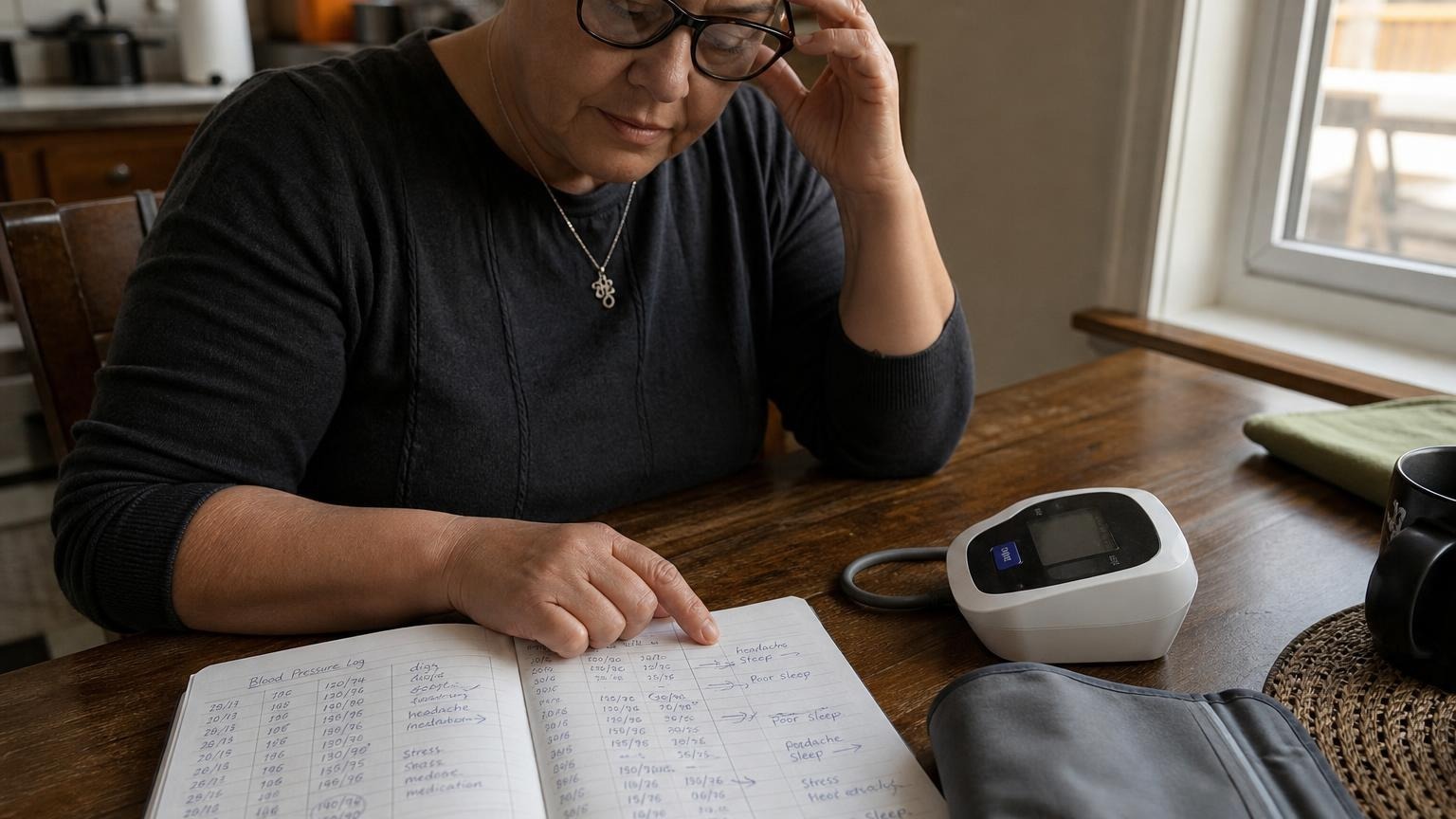
If your monitor saves a number that looks alarmingly high, it is tempting to delete it and try again. But deleting high blood pressure readings is usually the wrong first move. A high reading may be noise from poor technique, or it may be an early clue that a pattern is changing.
The safer rule is simple: repeat the measurement correctly, label the context, and keep enough information to explain what happened. Do not erase a high number just because it makes the average look worse.
Should you delete high blood pressure readings?
In most cases, no. You should not delete a blood pressure reading only because it is high. A home log is useful because it shows patterns over time, including occasional outliers, technique mistakes, and repeated readings that deserve follow-up.
There are a few situations where a reading may be reasonable to exclude from an average or summary, but even then, “exclude” is not the same as pretending it never happened. If the cuff slipped, the monitor showed a movement error, you talked through the reading, or you measured two minutes after rushing upstairs, write that down and take a clean repeat reading.
A clinician reviewing your log needs context. A perfect-looking history with all the uncomfortable numbers removed is less useful than an honest log that shows what was measured, what changed, and which readings were repeated under better conditions.
When a high reading is probably measurement noise
A single high reading can come from the body, the setup, or the device conditions. Before assuming the number reflects your usual blood pressure, check for common measurement problems:
- you sat down and measured immediately without a quiet rest period
- the cuff was over clothing, loose, twisted, too small, or placed too low
- your arm was hanging below heart level or unsupported
- your feet were crossed or dangling
- you talked, laughed, held your breath, or looked at your phone
- you measured after caffeine, exercise, a hot shower, pain, stress, or a full bladder
- the monitor displayed a movement, cuff, or irregular-heartbeat symbol
If one of those happened, the monitor may have recorded a real reading under bad conditions. That does not make the number medically meaningless, but it does make it a poor baseline reading.
For a cleaner reset, sit quietly, place the cuff on bare skin, support your arm at heart level, stay silent, and repeat after about one minute. Our guide to how to take an accurate blood pressure reading at home covers the full setup if you want a step-by-step check.
What to do instead of deleting the reading
Use a three-part approach: keep, repeat, and label.
First, keep the original number somewhere, especially if it was very different from your usual range. If your monitor memory is messy, write it in a paper log or digital note instead of relying only on the device.
Second, repeat the reading after correcting the setup. If the repeat reading is close to the first, the number may be less of a fluke. If the repeat is much lower after you fixed an obvious problem, the first reading may be best treated as a context-labeled outlier.
Third, label the circumstances. A short note is enough:
- “first reading after rushing, repeated after 5-minute rest”
- “talked during reading, repeated silently”
- “cuff slipped, repositioned and repeated”
- “after coffee”
- “usual morning routine, no symptoms”
That kind of note keeps your log honest without letting one flawed reading distort the whole story.
Should high readings stay in your monitor average?
It depends on what your monitor is averaging.
If the average is meant to represent routine home blood pressure, you generally want it built from readings taken under consistent conditions. A reading taken during obvious setup error, recent exercise, or a stressful one-off event may not belong in the same average as calm morning readings.
But do not remove high readings from the average simply to make the number look better. If repeated readings taken correctly are high, that is exactly the kind of pattern a home monitor is supposed to reveal.
The practical compromise is to keep two records:
- a clean routine average from properly taken readings
- a separate note for outliers and the context around them
This is especially useful if your monitor’s memory average includes everything by default. Our article on what average means on a blood pressure monitor explains why device averages can be confusing when they mix different sessions, users, or measurement conditions.
When a high reading should not be ignored
A high reading deserves more attention when it repeats under good conditions, appears as part of a rising trend, or comes with concerning symptoms.
Do not use a home monitor to diagnose yourself from one number. At the same time, do not delete a high reading that keeps coming back. If your readings are repeatedly higher than your usual range, share the full log with a qualified clinician. Include the dates, times, arm used, cuff size if relevant, and any notes about medication timing, caffeine, pain, stress, sleep, or activity.
If a reading is extremely high or is paired with symptoms such as chest pain, shortness of breath, sudden weakness, trouble speaking, confusion, severe headache, or vision changes, seek urgent medical guidance instead of trying to manage the situation by retesting until the number looks better.
For broader context on repeated numbers, see how many blood pressure readings you should take and why blood pressure readings change every time.
How to keep a cleaner blood pressure log
A clean log is not a log with every high number removed. It is a log with consistent technique and clear labels.
A simple format works well:
| What to record | Why it helps |
|---|---|
| Date and time | Separates morning, evening, and unusual checks |
| Systolic/diastolic and pulse | Keeps the main numbers visible |
| Arm used | Prevents arm-to-arm differences from confusing the trend |
| Reading number | Shows whether it was first, second, or third in a sitting |
| Context note | Explains caffeine, stress, symptoms, movement, or cuff issues |
| Average, if used | Summarizes a clean sitting without hiding variation |
If your monitor has separate user profiles, make sure you are saving readings under the right profile. If two people share one memory bank, your averages can become useless quickly.
FAQ: deleting blood pressure readings
Is it okay to delete a reading if the cuff slipped?
It is reasonable to exclude a cuff-slip reading from your routine average, but write down what happened and repeat the reading correctly. If the cuff slips often, the cuff size, wrap, or Velcro may be the real problem.
Should I delete the first reading if the second is lower?
Not automatically. Many first readings are higher because you are still settling down, but that does not mean every first reading should disappear. Record both when possible, or record the average of properly taken repeat readings with a note.
Can deleting high readings make my blood pressure log misleading?
Yes. If you delete high readings because they are uncomfortable, your log can understate the pattern. That can make it harder for a clinician to understand what is really happening at home.
What if my monitor memory is full?
Export, photograph, write down, or summarize the old readings before clearing the memory. Do not clear the device if it is the only copy of a pattern you planned to discuss at an appointment.
Bottom line
Do not delete high blood pressure readings just to clean up your monitor history. Repeat the measurement with better technique, label what was different, and separate obvious outliers from your routine average. A useful blood pressure log is honest, consistent, and easy to interpret—not artificially perfect.
This article is educational and not medical advice. Consult a qualified clinician before making treatment decisions.
Top 5 picks
Best Blood Pressure Monitors For Seniors 2026
Five upper-arm monitors ranked with published scorecards—setup friction, comfort, readability, power convenience, and repeatable accuracy—so you can compare models before you buy.
See our Top 5 blood pressure monitor picksHome-monitoring advice is only useful if it is easy to verify and act on correctly.
We write explainers to be understandable to readers, search engines, and AI answer systems.
Compare our Top 5 blood pressure monitor picks for 2026, then track readings over time with consistent technique.