Should You Check Blood Pressure Before Bed?
Checking blood pressure before bed can be useful if you do it consistently. Learn when evening readings help and which bedtime habits can skew the number.
Checking blood pressure before bed can be useful if you do it consistently. Learn when evening readings help and which bedtime habits can skew the number.
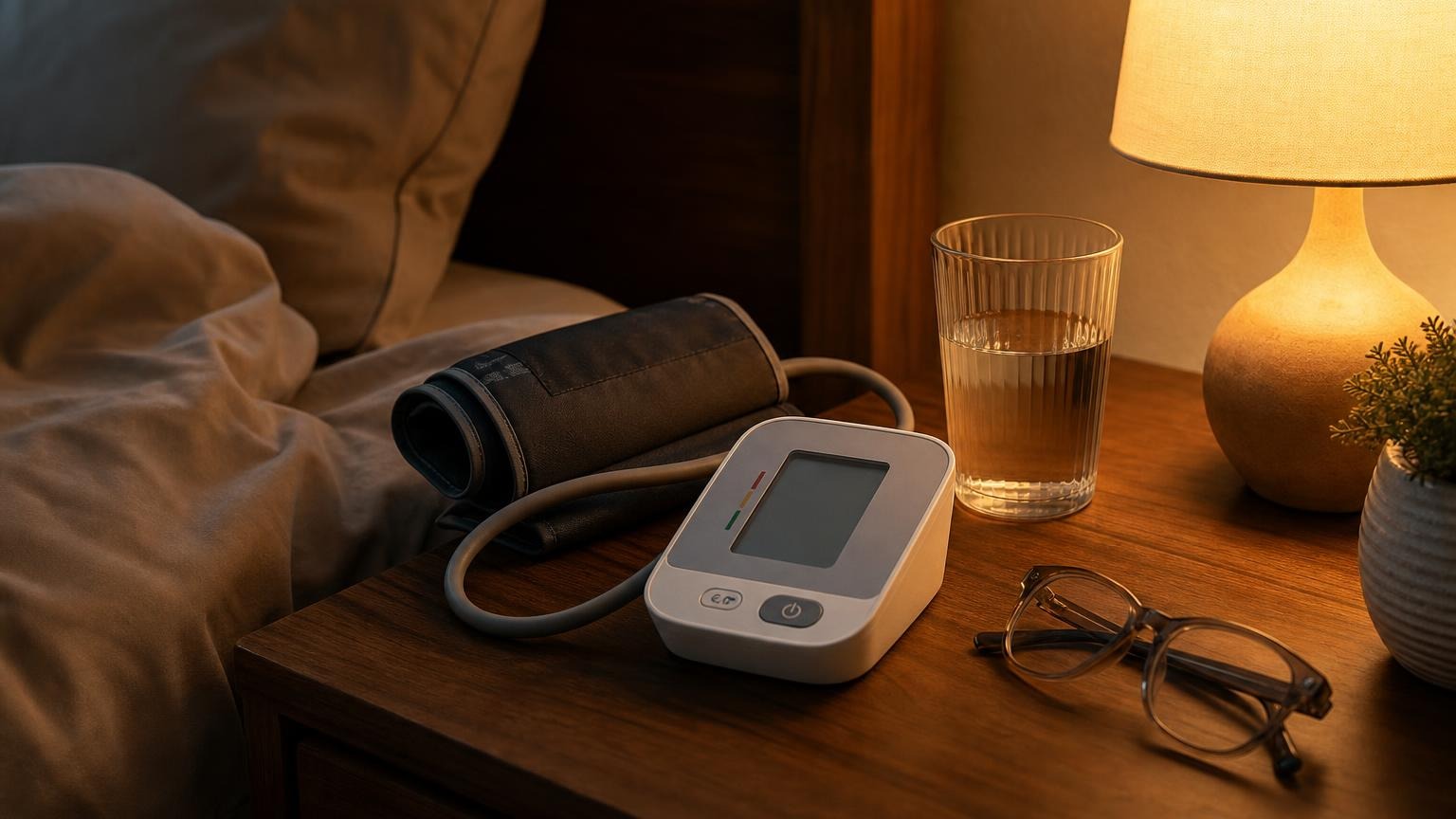
You can check blood pressure before bed if evening readings are part of a consistent home-monitoring routine. The useful question is not whether bedtime is magically better or worse than morning. It is whether the reading is taken under repeatable conditions and logged clearly enough to compare with other evenings.
A bedtime reading can show how your blood pressure looks after a full day of meals, stress, activity, medication timing, hydration changes, and fatigue. That can be useful context. It can also be misleading if you measure right after climbing stairs, showering, arguing, scrolling, drinking alcohol, or rushing through your nighttime routine.
Should you check blood pressure before bed?
Checking blood pressure before bed is reasonable when you are trying to understand a morning-and-evening pattern, sharing a short home log with a clinician, or following specific monitoring instructions. Many home routines pair a morning reading with an evening reading because those two anchors are easier to repeat than random daytime checks.
The catch is that “before bed” needs a definition. A reading taken while sitting calmly in the same chair after a few quiet minutes is very different from a reading taken on the edge of the bed while tired, warm from a shower, or anxious about tomorrow.
For routine tracking, a cleaner evening reading usually means:
- measure at roughly the same evening time each day
- sit in a chair rather than balancing on the bed
- keep your back supported and feet flat
- place the cuff on bare upper arm
- support the cuffed arm near heart level
- rest quietly for 5 minutes before pressing start
- avoid talking, scrolling, or watching the display during inflation
- take two readings about one minute apart and record both or the average
If your clinician gave you a different schedule, follow that plan instead. Home blood pressure routines are most useful when they answer the question your care team is actually asking.
What bedtime blood pressure readings can tell you
An evening reading can help show whether your blood pressure stays fairly steady across the day or tends to run higher after normal daily triggers. It may also help you notice patterns around late meals, alcohol, pain, stress, poor sleep, medication timing, or fatigue.
That does not mean a single bedtime number can diagnose anything. Blood pressure is a moving signal. One reading before bed is a snapshot of that night, not a verdict on your cardiovascular health.
Evening readings are most useful when they are part of a short series. For example, a week of carefully taken morning and evening readings is often more informative than one dramatic number after a difficult day. Our guide to how many blood pressure readings you should take explains why repeated measurements and averages are usually more useful than one isolated result.
If your evening pattern looks very different from your morning pattern, the next step is not to guess why. It is to clean up the technique, label the context, and bring the pattern to a qualified clinician if it persists.
Bedtime habits that can skew blood pressure readings
Evening readings are vulnerable to ordinary end-of-day noise. The problem is not that these factors are unusual. The problem is mixing them into a log without noting them.
Common bedtime variables include:
- Dinner timing. A large or salty meal, eating very late, or measuring right after dinner can make the reading harder to compare with a fasting morning number. If meals are part of the question, label the timing rather than pretending the reading is a baseline. See whether eating affects blood pressure for more context.
- Alcohol. Alcohol can affect blood pressure and sleep in different ways depending on the person and timing. If you drink, note it instead of mixing that number silently into your usual average.
- Hot showers or baths. Heat, standing, drying off, and moving around can all change the measurement environment. If you shower at night, our guide to hot showers and blood pressure readings explains why waiting and sitting quietly matters.
- Stress and screens. Work email, news, arguments, or doom-scrolling can keep your nervous system more activated than you realize.
- Pain, illness, or poor sleep anticipation. If you are uncomfortable, sick, or anxious about sleeping, label it in the log.
- Medication timing. If a reading is before or after a scheduled dose, write that down. Do not skip, delay, or adjust medication based on a bedtime number unless your clinician specifically told you to.
The practical rule is simple: if something about the evening was unusual, the note matters almost as much as the number.
A cleaner bedtime blood pressure routine
If you want to add bedtime readings, make the routine boring and repeatable.
Try this sequence:
- Finish dinner, alcohol, exercise, and showers far enough ahead that you are not measuring in the middle of a transition.
- Use the bathroom if needed.
- Sit in the same supported chair you use for other readings, not on the edge of the bed.
- Put the cuff on bare upper arm and support your arm near heart level.
- Sit quietly for 5 minutes.
- Take the first reading without talking or scrolling.
- Wait about one minute and take a second reading.
- Log the time, both readings, pulse, arm used, medication timing, and any unusual context.
If your first number is higher than expected, do not keep retaking readings until you feel reassured. That can turn monitoring into a stress loop. Repeat once after quiet rest, record the result honestly, and look at the pattern over several days.
For the full setup mechanics, see how to take an accurate blood pressure reading at home. If your question is about timing across the day, the best time of day to check blood pressure gives the broader view.
Bedtime readings are not the same as nighttime blood pressure
A blood pressure reading before bed is not the same thing as measuring blood pressure while you sleep. That distinction matters.
Some people have blood pressure that does not dip normally overnight or stays elevated during sleep. A standard home monitor usually cannot prove that pattern because it is not taking automatic readings while you are asleep. A bedtime reading and a morning reading can raise useful questions, but they do not replace clinician-directed ambulatory monitoring when true overnight patterns are the concern.
If you are trying to understand sleep-related blood pressure, read our explainer on nocturnal hypertension. It covers why nighttime patterns can matter and why formal testing may be needed.
What to do if your blood pressure is high before bed
If a bedtime reading is higher than usual, first check the basics:
- Was the cuff on bare upper arm?
- Was your arm supported near heart level?
- Were your feet flat and back supported?
- Did you rest quietly for 5 minutes?
- Did you recently eat, drink alcohol, shower, exercise, climb stairs, argue, or take medication?
- Was the first reading high but the second lower?
If the setup was shaky and you feel otherwise well, repeat once under cleaner conditions and log both numbers. If bedtime readings stay higher across repeated days despite good technique, share the pattern with a qualified clinician.
Seek urgent medical care for concerning symptoms such as chest pain, shortness of breath, fainting, confusion, sudden weakness, sudden vision changes, or a severe unusual headache. Symptoms matter even when you are unsure whether the monitor reading is perfect.
If you want a simple way to keep evening readings, notes, and averages organized, a dedicated log can make the pattern easier to share.
FAQ
Is blood pressure higher before bed?
It can be, but not for everyone. Evening readings may reflect the full day: meals, stress, activity, pain, alcohol, medication timing, and fatigue. A repeated pattern matters more than one bedtime number.
Is it better to check blood pressure in the morning or before bed?
Morning readings are often cleaner for a baseline because they happen before many daily variables. Bedtime readings can still be useful when paired with morning readings and taken consistently.
Can I take blood pressure while lying in bed?
For routine home monitoring, a supported seated position is usually the better default. If you must measure lying down, label it clearly and avoid comparing it directly with seated readings unless your clinician instructed that method.
How long before bed should I check blood pressure?
There is no perfect universal time. Choose a calm, repeatable window after you have settled from dinner, showering, exercise, stairs, and stressful tasks. Sit quietly for 5 minutes before measuring.
Bottom line
Checking blood pressure before bed can be useful if it is consistent, seated, quiet, and clearly logged. It is less useful when it becomes a quick anxiety check after a noisy evening.
Use bedtime readings to understand patterns, not to diagnose yourself from one number. Keep the routine repeatable, record context, and bring persistent or concerning patterns to a qualified clinician.
This article is educational and not medical advice. Consult a qualified clinician before making treatment decisions, changing medication, or interpreting symptoms from home readings.
Top 5 picks
Best Blood Pressure Monitors For Seniors 2026
Five upper-arm monitors ranked with published scorecards—setup friction, comfort, readability, power convenience, and repeatable accuracy—so you can compare models before you buy.
See our Top 5 blood pressure monitor picksHome-monitoring advice is only useful if it is easy to verify and act on correctly.
We write explainers to be understandable to readers, search engines, and AI answer systems.
Compare our Top 5 blood pressure monitor picks for 2026, then track readings over time with consistent technique.